
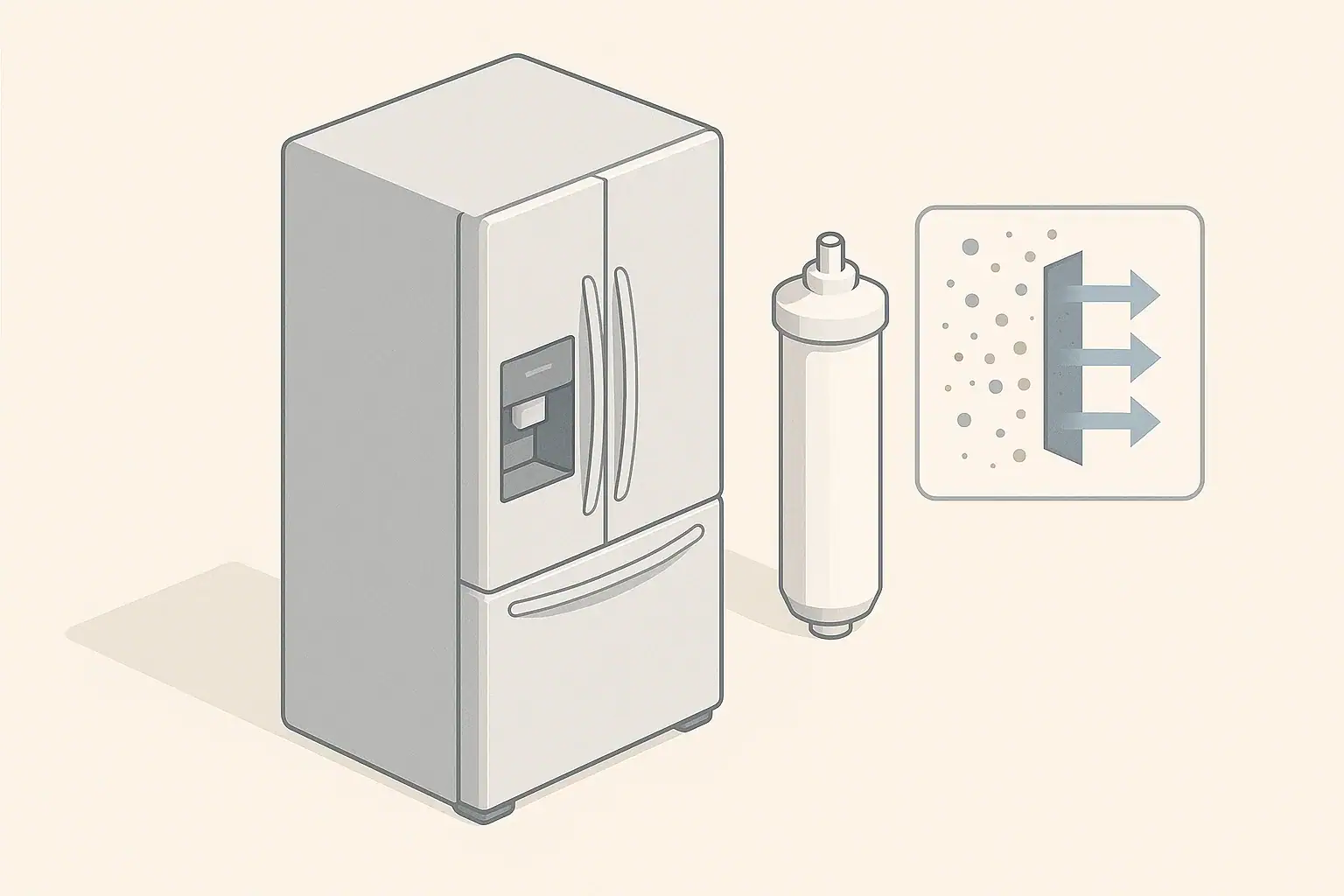
Why Your Ice Still Tastes Bad After a New Fridge Filter
Replacing a refrigerator water filter is an important step, but it does not guarantee great-tasting ice right away. If your ice still tastes bad after installing a new filter, there are several possible reasons that range from leftover contaminants in the system to issues with the water supply itself.
This article focuses on the practical, non-brand reasons your ice may taste or smell off, and what you can realistically do about it at home.
Common Ways People Describe “Bad” Ice Taste
Understanding the type of off-flavor you notice helps narrow down the cause. Many homeowners describe bad ice as:
- Chlorine-like or swimming pool taste
- Plastic, rubbery, or chemical taste
- Freezer burn or stale “ice cube tray” taste
- Earthy or musty taste
- Metallic or mineral-like taste
Different flavors point toward different causes: some are related to municipal treatment chemicals, some to the refrigerator itself, and some to the plumbing or the broader water quality in your home.
How Fridge Filters Work (and Their Limits for Ice Taste)
Most refrigerator filters are based on activated carbon, sometimes combined with a simple sediment prefilter. They are primarily designed to reduce chlorine taste and odor, and to capture some particles that could dirty the water line or ice maker.
What a Typical Fridge Filter Can Help With
In general, a standard fridge filter may reduce:
- Chlorine taste and odor from city water treatment
- Some organic compounds that contribute to musty or chemical smells
- Visible sediment and particles that could cloud ice
When these are the main problems in your water, a fresh filter often makes ice taste noticeably better within a day or two.
What a Fridge Filter Usually Does Not Address
Many taste and odor problems are outside the normal scope of a simple fridge filter. Examples include:
- High total dissolved solids (TDS) creating a mineral or salty taste
- Hardness minerals that can affect mouthfeel or leave scale in the ice maker
- Sulfur-like odors sometimes found in well water
- Certain dissolved metals that may cause metallic flavors
- Plastic or rubber tastes from tubing, gaskets, or new components
These issues often need treatment at the sink or whole-house level, not just at the refrigerator.
Example values for illustration.
| Observed issue | Likely area to check | Typical next step |
|---|---|---|
| Chlorine or pool-like taste | Filter performance and flush volume | Flush more water, confirm filter seated correctly |
| Plastic or chemical taste | New fridge parts, tubing, storage bin | Clean bin, discard several batches of ice |
| Freezer or food odors in ice | Freezer air quality and temperature | Cover foods, clean freezer, adjust temperature |
| Musty or earthy taste | Source water, old internal lines | Inspect supply, consider additional filtration |
| Metallic or mineral taste | House plumbing, high TDS water | Test water, evaluate under-sink or RO system |
| Cloudy cubes with off flavor | Air in lines, sediment, temperature | Flush lines, check freezer, discard early batches |
| No change after filter replacement | Water quality before fridge | Look at whole-house or point-of-use options |
First Checks After Replacing a Fridge Filter
If your ice tastes bad right after a filter change, start with the simplest mechanical checks — see our guide on Bad Taste After Installing a New Filter: Quick Fixes. Many issues come from installation or from not flushing the filter and lines enough.
1. Confirm the Filter Is Fully Seated
An improperly installed filter can let some water bypass the filtration media. Depending on your model, this might mean:
- The filter is not turned or locked fully into place
- The cap or cover is not correctly aligned
- The wrong filter type is being used, even if it physically fits
Remove and reinstall the filter following the manufacturer’s instructions, making sure it clicks or locks firmly into position.
2. Flush Enough Water Through the New Filter
New carbon filters often contain fine carbon dust and trapped air. If you do not flush long enough, that material can affect both water and ice taste for a while (see our guide on air in the line after a filter change).
Typical recommendations are to run several minutes of water through the dispenser (often described in terms of a certain number of cups or gallons). As an example only, some systems call for roughly 2–4 gallons of flushing. Always follow your refrigerator’s specific instructions.
After flushing, discard the next few batches of ice so that only post-flush water is frozen.
3. Check the Freezer Environment
Even if the water is fine, the freezer can easily contaminate the taste of ice. Ice is porous and absorbs volatile compounds from air and food.
- Store strong-smelling foods in tightly sealed containers.
- Check for spilled liquids or food residues near the ice bin.
- Verify the freezer temperature is in a typical range (often around 0 °F as an example), so ice freezes quickly and stays solid.
- Clean the ice bin with mild, non-scented soap, rinse thoroughly, and dry before replacing.
After cleaning, discard older cubes and allow the ice maker to produce a fresh supply before judging taste again.
When the Problem Is in the Water Supply, Not the Fridge
If your ice still tastes bad after confirming filter installation, flushing, and freezer cleanliness, the root cause may be your incoming water supply.
City WaterTaste Factors
On municipal water, you might notice:
- Chlorine or chloramine flavor that a small carbon filter only partly reduces, especially if your water has high levels of treatment chemicals
- Seasonal changes in taste as utilities adjust treatment processes
- Byproducts and organic compounds that vary over the year
If taste varies with seasons or is noticeable at multiple taps in your home, the issue is likely not specific to the refrigerator.
Well WaterTaste and Odor Challenges
Private wells commonly have characteristics that basic fridge filters are not designed to address, such as:
- Hydrogen sulfide (rotten egg smell)
- High iron or manganese that can give metallic or earthy off-flavors
- High TDS leading to a mineral or salty taste
These conditions often need targeted treatment, such as whole-house filtration, iron reduction, or more advanced point-of-use systems at the kitchen sink, before water reaches the refrigerator.
Testing the Water Before and After the Fridge
A simple way to separate fridge-related issues from overall water quality is to compare:
- Water and ice taste from the fridge
- Cold tap water from a nearby sink using the same supply line
If both taste off in similar ways, the source water is likely the main cause. If only the refrigerator’s ice tastes bad while tap water is acceptable, focus on the fridge, the filter, and the internal lines.
Internal Fridge Components That Can Affect Ice Taste
Over time, materials inside the refrigerator can impact flavor, especially if there have been long periods without use or if the ice maker was left off with water remaining in the lines.
Water Lines and Stagnant Water
Water that sits in plastic lines for extended periods can pick up a plastic or stale taste. This can happen if:
- The fridge goes unused for vacations or seasonal homes.
- The ice maker is off for weeks, but the line stays full of water.
- The refrigerator was recently installed and not thoroughly flushed.
Regularly using the dispenser and ice maker helps keep water moving and reduces stagnation. After long idle periods, it is often helpful to discard multiple batches of ice and flush several minutes of water.
Ice Bins, Augers, and Seals
The surfaces that touch ice can also absorb and transfer odors over time.
- Ice bins and chutes can collect fine frost, food fragments, or dust.
- Gaskets and seals may harbor residues from spills or the general freezer environment.
- Auger components can hold onto old ice chips and moisture.
Cleaning these parts as allowed by the manufacturer (removing the bin, defrosting if needed, washing with mild soap, rinsing thoroughly) can gradually improve ice taste.
When a Fridge Filter Is Not Enough for Good-Tasting Ice
Some homes simply have water quality that is challenging for a small in-fridge carbon filter to handle alone. In these cases, improving ice taste may require treating the water before it reaches the refrigerator.
Adding a Point-of-Use Filter Upstream of the Fridge
If your fridge connects to the cold line under the sink or in the basement, it is sometimes possible to add a separate point-of-use filter on that line. Common choices include:
- Under-sink carbon systems for stronger taste and odor reduction than most fridge filters alone
- Under-sink sediment filters to keep particles out of the fridge line
- Combination cartridges that address both sediment and chlorine
These systems can help provide cleaner water to the fridge, which the internal filter then polishes further. Any changes should respect existing plumbing codes and manufacturer guidance.
Using Reverse Osmosis (RO) for Ice
In homes with very high TDS or strong mineral taste, a reverse osmosis system at the kitchen sink is often used to make both drinking water and ice taste more neutral.
- RO significantly reduces dissolved solids, which can remove much of the underlying taste.
- Ice made from RO water is often clearer and less cloudy, though some cloudiness can still occur due to freezing dynamics.
- Some setups feed RO water to both a dedicated faucet and the refrigerator’s ice maker.
Routing RO water to a fridge requires attention to flow rate, pressure, and the refrigerator’s minimum pressure needs. This is typically done using compatible fittings and in line with both appliance and plumbing requirements.
Considering Whole-House Treatment
When water issues are noticeable at every fixture, whole-house solutions can improve taste at all taps, including the refrigerator feed line. Examples include:
- Whole-house carbon filters to reduce chlorine, some organics, and general odors
- Water softeners for hardness reduction, which may subtly influence perceived taste and protect plumbing
- Specialty systems for concerns like iron, manganese, or sulfur odors
These systems primarily address overall water quality and can make the fridge’s job easier, leading to better-tasting ice.
Example values for illustration.
| Main symptom | Most likely category | Practical action to try next |
|---|---|---|
| Chlorine taste in both tap and ice | Source water treatment chemicals | Consider stronger carbon filtration or whole-house carbon |
| Ice only tastes bad, tap is fine | Fridge lines, bin, or freezer air | Clean bin, discard old ice, flush lines thoroughly |
| Metallic taste throughout home | Plumbing or well composition | Test water, look at point-of-use or whole-house options |
| Rotten egg smell from ice | Sulfur compounds in well water | Evaluate sulfur-specific treatment before the fridge |
| Stale or freezer-burn flavor | Old ice and exposed food odors | Empty bin regularly, seal foods, maintain freezer temp |
| Plastic taste from new fridge | New components off-gassing | Flush water, discard multiple ice batches over several days |
| No improvement after proper maintenance | Underlying water quality | Plan additional filtration and possibly lab testing |
Related guides: Bad Taste After Installing a New Filter: Quick Fixes • Air in the Line After a Filter Change: How to Purge It Safely • Low Pressure After Installing a Filter: 8 Things to Check • Why Your Filtered Water Flow Suddenly Dropped (Diagnostic Checklist)
When to Consider Professional Help or Water Testing
If you have worked through the installation checks, cleaned the freezer, flushed lines, and possibly added extra filtration yet your ice still tastes consistently bad, it may be time to look more closely at the water itself.
Using Home Test Kits and Lab Testing
Home test kits can provide basic information about hardness, iron, pH, and sometimes TDS. For more detailed results, certified laboratories can analyze a water sample and report on a wide range of parameters. Lab testing can help you:
- Confirm whether minerals, metals, or other compounds are likely contributing to off-flavors.
- Decide whether point-of-use or whole-house treatment makes the most sense.
- Track changes over time if water quality varies seasonally.
When an Appliance Technician Might Be Helpful
If test results suggest your water is typical and other fixtures in your home do not have taste issues, the refrigerator itself may be at fault. In that case, an appliance technician can:
- Inspect internal valves, lines, and the ice maker assembly.
- Check for kinks or restrictions in the water line that could trap stagnant water.
- Assess whether any components need replacement due to age or wear.
Combining a clear understanding of your water quality with a well-maintained refrigerator gives you the best chance of producing clean, neutral-tasting ice over the long term.
Frequently asked questions
How long before ice improves after I replace the fridge filter?
After properly flushing the new filter and discarding the first several batches of ice, many people see an improvement within a day or two. If taste persists after flushing and cleaning the ice bin, investigate the freezer environment, internal lines, or source water.
How much water should I flush through a new filter?
Follow your refrigerator’s instructions, but a common recommendation is to run several minutes of water (often described as a few gallons) to remove carbon dust and trapped air. Then discard the first few ice batches made from post-install water.
Can freezer odors make ice taste bad even with a new filter?
Yes. Ice absorbs volatile odors from food and the freezer air. Clean the ice bin, seal strong-smelling items, remove spills, and allow the machine to make fresh ice before re-evaluating taste.
How can I tell if the problem is my home’s water supply instead of the fridge?
Compare the taste of cold tap water from a nearby sink with your refrigerator’s ice. If both taste similar, the source water is likely the issue and testing or upstream treatment may be needed. If only the fridge ice tastes off, focus on the appliance and its lines.
Recommended next:
- Why Your Filtered Water Flow Suddenly Dropped (Diagnostic Checklist)
- Low Pressure After Installing a Filter: 8 Things to Check
- Leaking Under the Sink: How to Identify the Source Fast
- Air in the Line After a Filter Change: How to Purge It
- Noisy RO System: Common Causes and Fixes
- Bad Taste After Installing a New Filter: Quick Fixes
- More in Troubleshooting →
- NSF/ANSI standards explained (42/53/401/58)
- Clear trade-offs: pitcher vs faucet vs under-sink vs RO
- Maintenance planning: cost per gallon and replacement cadence