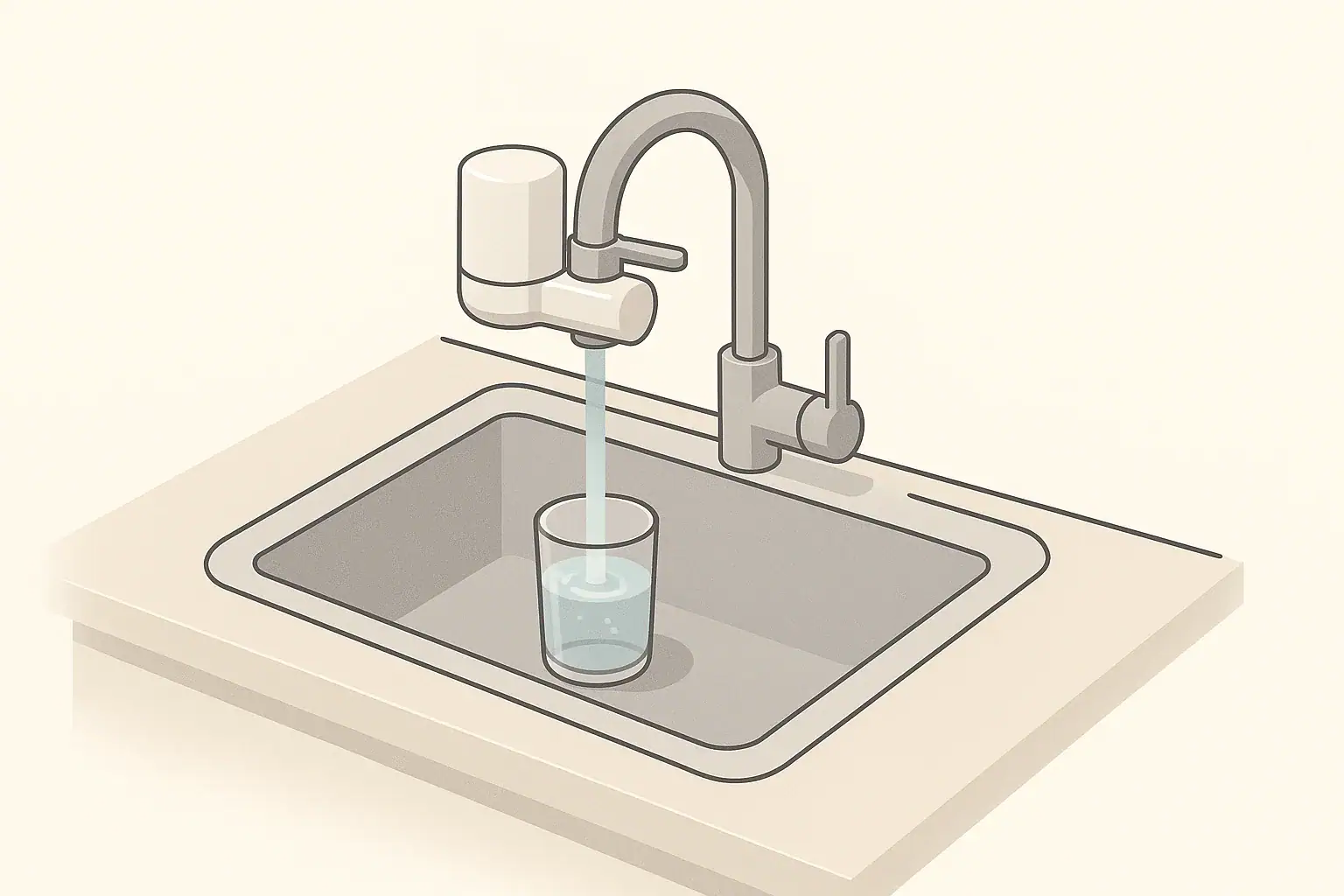
Why Faucet-Mount Filters Work Well for Renters
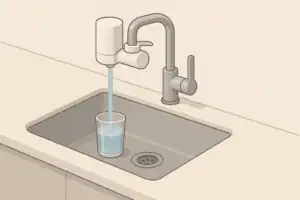
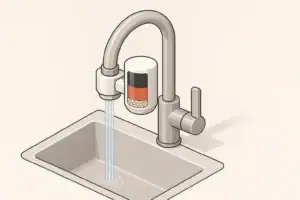
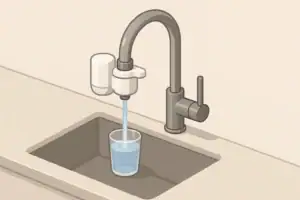
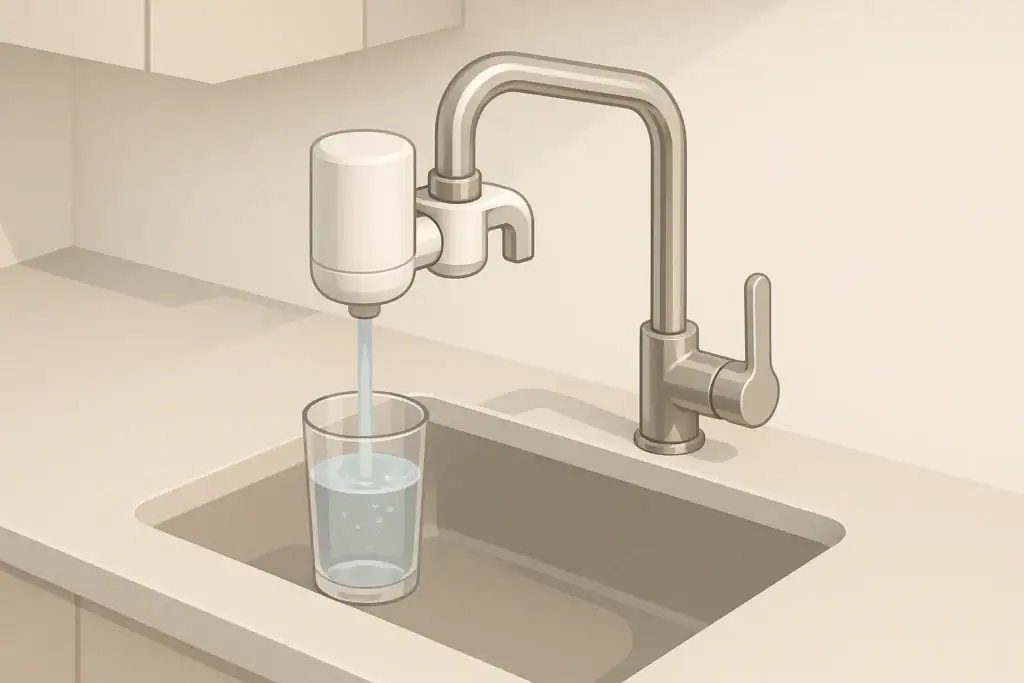
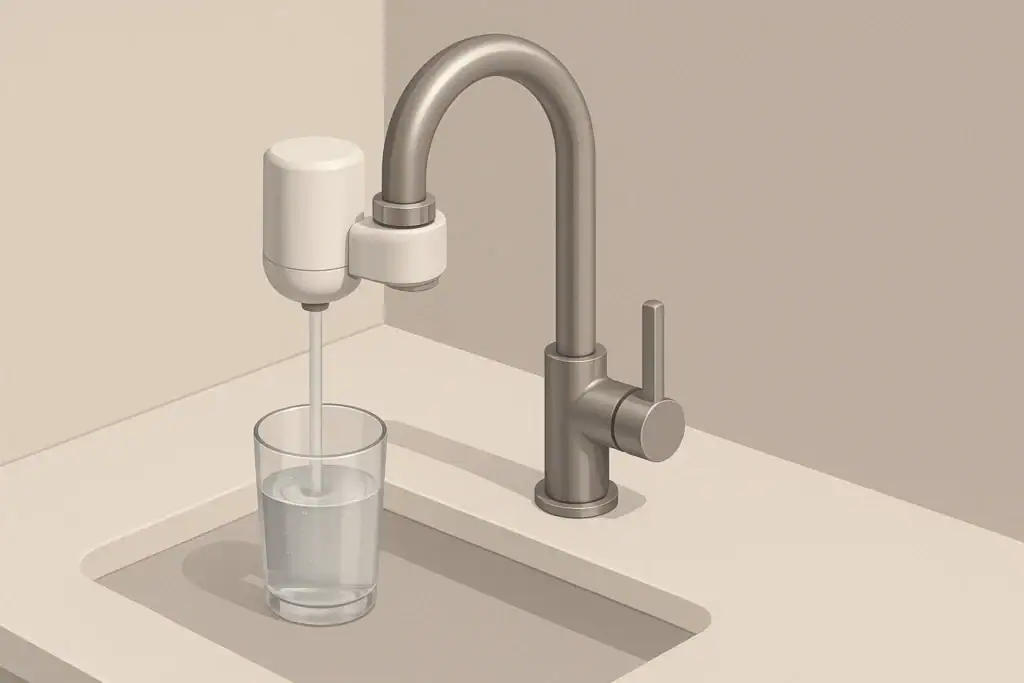
Faucet-mount filters are one of the most renter-friendly options for improving tap water taste and reducing common contaminants without permanent changes to plumbing. They attach directly to the end of the kitchen faucet and usually switch between filtered and unfiltered water with a small lever or knob.
For renters, the main advantages are:
- No drilling or permanent modifications: They typically screw onto existing faucet threads, so you can uninstall them when you move out.
- Compact size: They do not take up cabinet or counter space like many under-sink or countertop systems.
- On-demand filtration: You can choose when to run water through the filter, which helps manage filter life and flow rate.
- Simple maintenance: Most use small cartridges that are easy to replace without tools.
Faucet-mount filters are especially useful in apartments where under-sink access is limited, landlords restrict plumbing changes, or space for larger systems is not available. They are not the highest-capacity or most comprehensive systems available, but they can be an effective, low-commitment step up from drinking straight from the tap.
Understanding What Faucet-Mount Filters Can and Cannot Do
Before installing any faucet-mounted unit, it helps to understand how it fits into the broader world of home water filtration. These systems generally focus on improving taste, odor, and reducing a selection of common contaminants, but they are not a universal solution for every water concern.
Typical filtration media and performance focus
Most faucet-mount filters rely on a combination of media, often including:
- Activated carbon: Commonly used to reduce chlorine taste and odor and some organic compounds that affect flavor and smell.
- Mechanical screening: Fine screens or non-woven materials help reduce sediment, rust particles, and other visible particulates.
- Specialty media (varies by model): Some units include media aimed at reducing lead or other specific metals, or at targeting a wider range of organic chemicals.
In the context of U.S. tap water, the most common goals for faucet-mount filters are:
- Improving chlorine-related taste and odor
- Reducing sediment and visible particles such as rust
- Reducing certain metals, often including lead, if the filter is designed and certified for it
- Reducing a subset of organic chemicals such as some volatile organic compounds (VOCs)
Limitations compared with other filter types
Because faucet-mount filters are small and must keep water flowing quickly, they have physical and performance constraints:
- Lower capacity per cartridge: Cartridges may need replacement every few hundred gallons, depending on water quality and usage.
- Limited space for advanced stages: There is usually not enough room for multiple, large media stages such as those found in under-sink or reverse osmosis systems.
- Flow rate trade-offs: Tighter filtration can slow water flow, so faucet-mount systems often balance reduction performance against maintaining a usable stream.
- Not typically designed for microbial removal: Most faucet-mount filters are not rated as microbiological purifiers. They are usually intended for municipally treated water rather than untreated or potentially unsafe sources.
When deciding if a faucet-mount filter is right for you, compare it with other options like pitchers, under-sink filters, or whole-house systems. Faucet-mount filters are generally a good match for renters seeking a simple, reversible setup to improve taste and reduce a handful of key contaminants without complex plumbing.
Example values for illustration.
| Format | Best For | Installation Impact | Typical Capacity (example only) |
|---|---|---|---|
| Faucet-mount | Renters, small kitchens, on-demand drinking water | No-drill; attaches to faucet threads | Hundreds of gallons per cartridge |
| Pitcher | Very low commitment, occasional use | No installation; sits on counter or in fridge | Tens to low hundreds of gallons per cartridge |
| Under-sink | Higher capacity, more comprehensive filtration | Typically requires basic plumbing work | Hundreds to thousands of gallons per cartridge |
| Reverse osmosis | Broad contaminant reduction, dedicated drinking tap | Under-sink install; often not renter-friendly | Varies; tank-based systems with periodic cartridge changes |
| Whole-house | Filter water for all fixtures in the home | Plumbing modifications at main line | Thousands of gallons per cartridge |
| Shower filter | Reducing chlorine odor at the shower | Attaches to shower arm; usually no drilling | Hundreds to low thousands of gallons per cartridge |
Checking Your Faucet Type Before You Buy
Not every faucet is compatible with a faucet-mount filter. Before purchasing, examine your existing kitchen faucet carefully so you know whether a no-drill, screw-on installation is realistic.
Common faucet styles
Most faucet-mount filters are designed for standard threaded faucets. Look for:
- Removable aerator: At the tip of the spout, you should see a small ring you can unscrew. Behind it is usually a screen or aerator.
- External or internal threads: When the aerator is removed, the exposed threads may be on the outside edge (external) or just inside the spout (internal).
Faucets that often do not work well with faucet-mount filters include:
- Pull-down or pull-out spray faucets where the entire head detaches on a hose
- Designer or waterfall-style faucets without a standard threaded tip
- Very short or unusually angled spouts where a filter would not fit or would cause excessive splashing
Thread size and adapters
Many faucet-mount filters include a small set of metal or plastic adapters. These are used to match the filter’s connector to your faucet’s thread type. Typical considerations include:
- External vs internal threads: Adapters can convert internal faucet threads to external ones that the filter can grab.
- Diameter differences: Standard U.S. faucets often share common thread sizes, but some may need a specific adapter to fit snugly.
- Sealing washers: Rubber or silicone washers help prevent leaks where the adapter meets the faucet.
If your faucet is non-standard and the provided adapters do not fit, some people use separate generic adapters available from hardware stores. As a renter, it is best to use non-permanent fittings and keep the original aerator in a safe place so you can reinstall it when you move out.
Step-by-Step No-Drill Installation Guide
faucet-mount installations follow a similar pattern. Always read the manufacturer’s instructions, but this general process will help you understand what to expect and how to keep the installation renter-friendly and reversible.
1. Prepare the faucet
- Turn off the water at the faucet handle.
- Unscrew the existing aerator from the faucet spout. You may need a dry cloth or rubber jar opener for better grip.
- Inspect and clean the faucet threads. Remove any old debris, mineral buildup, or worn washers.
- Set the original aerator and its washers aside in a labeled bag so you can easily restore the faucet later.
2. Test-fit the adapter
- Hold the filter’s connector up to the faucet to see if it fits directly. If not, choose the adapter that matches your faucet threads.
- Install any necessary washer into the adapter, as indicated by the instructions.
- Screw the adapter onto the faucet by hand. Tighten firmly but avoid overtightening, which can strip threads or damage washers.
- Ensure the adapter seats evenly; cross-threading can cause leaks.
3. Attach the filter body
- With the adapter in place, align the filter connector and twist it onto the adapter until snug.
- Confirm that the filter housing is oriented so that it clears the sink basin and does not interfere with backsplash or cabinet doors.
- If the housing is adjustable, choose a position that allows easy access to the filtered/unfiltered selector.
4. Flush the cartridge
New cartridges frequently contain loose carbon fines or trapped air that need to be flushed out before regular use.
- Switch the filter to the filtered position.
- Turn on cold water slowly and let it run through the filter for the time specified in the instructions (for example, a few minutes).
- During this flush, water may appear gray or cloudy due to carbon dust. Continue until it runs clear.
- After flushing, switch back to the unfiltered setting when not filling drinking containers, to extend cartridge life.
5. Check for leaks and adjust
- Inspect the connection where the adapter meets the faucet and where the filter connects to the adapter.
- If you see drips or a fine spray from the joints, turn off the water, remove the filter, and check washers and threads.
- Re-seat or replace washers if needed and reattach, tightening by hand.
- If leaks persist, confirm that you have the correct adapter and that the faucet threads are not damaged.
How Faucet-Mount Filters Affect Flow, Pressure, and Everyday Use
Once installed, a faucet-mount filter changes how you use your kitchen sink day to day. Understanding the impact on water flow, pressure, and capacity helps you plan for normal use and avoid frustration.
Flow rate and water pressure
Faucet-mount filters add resistance to water flow. In practice, this often means:
- Filtered mode: A slower, steadier stream suitable for filling glasses, bottles, or cooking pots.
- Unfiltered mode: A higher-flow stream, often closer to your original faucet performance, better for rinsing dishes or cleaning.
If your building already has low water pressure, any added restriction may be noticeable. Some renters use filtered mode only when needed, switching back to unfiltered for tasks that benefit from a faster stream.
Capacity and cartridge life
Faucet-mount cartridges are designed for moderate household use. Capacity is often quoted in gallons, or in months of typical usage. Real-world life depends on:
- Local water quality: High turbidity, sediment, or rust can clog cartridges faster.
- Usage patterns: Using filtered water for every task (including dishwashing) shortens cartridge life significantly.
- Filter design: Some units prioritize longer life, while others focus on tighter filtration at the expense of more frequent replacements.
Many renters manage capacity by using filtered water only for drinking, cooking, and sometimes coffee or tea, while using unfiltered tap water for cleaning and rinsing. This helps keep the cost per gallon reasonable.
Understanding Certifications: What NSF/ANSI Labels Mean for Renters
When comparing faucet-mount filters, independent certifications are one of the most useful tools for understanding what a filter has been tested to do. In the U.S., many products reference NSF/ANSI standards. These standards define test methods and performance claims that must be met under controlled conditions.
Key NSF/ANSI standards for faucet-mount filters
- NSF/ANSI 42: Focuses on aesthetic effects such as chlorine taste and odor and particulates that affect clarity.
- NSF/ANSI 53: Covers many health-related contaminants such as certain heavy metals and some organic chemicals.
- NSF/ANSI 401: Addresses a range of emerging compounds, often including some pharmaceuticals and other trace organic chemicals.
- NSF/ANSI 58: Applies specifically to reverse osmosis systems, so it is less relevant for faucet-mount filters.
How to read and verify claims
On packaging or product literature, you may see statements such as “certified to NSF/ANSI 42 for chlorine taste and odor reduction” or “certified to NSF/ANSI 53 for lead reduction.” Key points to keep in mind:
- Standard number plus contaminant: The standard alone does not tell you every contaminant covered; look for which specific contaminants the filter is certified to reduce.
- Certified vs. tested to: Some language may say a filter is “tested to” a standard without stating independent certification. Look for clear references to third-party certification bodies where possible.
- Scope of testing: Certification typically applies to a defined set of contaminants at specific challenge levels, not to every possible substance.
As a renter, certifications give you a structured way to compare options without needing to interpret complex lab data. They do not guarantee performance under every condition, but they do indicate that the product has undergone standardized testing for stated claims.
Maintenance and Cartridge Replacement in a Rental
Consistent maintenance is essential for keeping any faucet-mount filter working as intended. Because these systems are small, they are more sensitive to clogging and capacity limits than larger multi-stage setups.
Typical replacement intervals
Manufacturers often suggest a replacement interval expressed in both time and usage, for example a certain number of gallons or a number of months under average household use. These are estimates meant as planning tools. In practice, you may need to adjust based on:
- How quickly flow rate drops when in filtered mode
- Changes in taste, odor, or clarity compared with new-cartridge performance
- Visible discoloration or sediment buildup in any pre-filter screens if they are accessible
Many faucet-mount filters include a visual or mechanical indicator to remind you when it may be time to replace the cartridge. Treat these as general guides rather than absolute rules and cross-check with your own observations.
How to change a cartridge without mess
- Turn off the faucet and switch to the unfiltered setting to relieve pressure.
- Place a small towel or bowl in the sink under the filter to catch any drips.
- Open the filter housing as directed—typically by twisting off a cap or releasing a latch.
- Remove the used cartridge and dispose of it according to local waste guidance.
- Wipe out any loose sediment from inside the housing.
- Insert the new cartridge in the correct orientation, ensuring all O-rings and seals are clean and seated.
- Reassemble the housing and run a flush cycle as recommended to clear fines and trapped air.
Keeping things landlord-friendly
To maintain a good relationship with your landlord or property manager:
- Keep all original faucet parts (aerator, washers, decorative rings) clearly labeled.
- Avoid tools that could scratch the faucet finish; use soft cloths for tightening where possible.
- If mineral buildup develops, use non-abrasive cleaners on the faucet and adapter.
- Before moving out, remove the filter, reinstall the original aerator, and clean the faucet tip.
Example values for illustration.
| What to Track | Typical Cue | Suggested Planning Method |
|---|---|---|
| Cartridge age | Months since last replacement | Mark replacement date on calendar or device |
| Estimated gallons used | Household size and daily filtered use | Use a simple log or rough weekly estimate |
| Flow rate in filtered mode | Noticeably slower stream than when new | Check monthly by timing how long it takes to fill a container |
| Taste and odor | Return of chlorine smell or off-tastes | Compare periodically with unfiltered tap water |
| Visible sediment | Cloudiness or particles in filtered water | Inspect during cartridge changes and rinse housing |
| Leak checks | Drips at adapter or housing joints | Quick visual inspection whenever you change cartridges |
When a Faucet-Mount Filter May Not Be Enough
While faucet-mount systems are convenient, there are situations where they may not be the best primary solution, even for renters. For example:
- If your building has known plumbing issues that introduce high levels of certain contaminants, you may want to explore more comprehensive solutions such as under-sink systems, if your landlord allows them.
- If you rely on well water or another non-municipal source, you may need a system specifically designed and tested for that type of supply.
- If you require very high capacity for a large household, frequent cartridge changes may be inconvenient and costly.
In many cases, a layered approach works well. Some renters combine a simple faucet-mount filter for basic tap improvement with additional measures, such as a dedicated filter for the shower or a separate solution for ice and refrigerator water. The right combination depends on your building’s plumbing, your local water quality, and what is feasible within your lease terms.
Frequently asked questions
Will a faucet-mount filter work with a pull-down or pull-out spray faucet?
Most faucet-mount filters are intended for fixed spouts with standard threaded aerators and often will not fit pull-down or pull-out spray heads because those heads detach and conceal threads. Some installations use the filter on the base spout if the spray head retracts, but compatibility depends on the faucet design. If the filter won’t fit, consider a pitcher or an under-sink option if allowed.
Can a faucet-mount filter remove lead from tap water?
Certain faucet-mount filters are certified to reduce lead when they meet relevant standards; check the product’s certification (for example, the standard that covers lead reduction) to confirm. Effectiveness depends on the specific filter media, certification scope, and timely cartridge replacement. Always verify third-party certification claims rather than relying solely on marketing language.
How often should I replace the cartridge in a rental apartment?
Replacement intervals vary by model and local water quality but are commonly every few months or after a specified number of gallons (often a few hundred gallons). Monitor cues such as reduced flow in filtered mode, return of off-tastes or odors, or visible sediment to decide if earlier replacement is needed. Keep a record of the install date so you can restore or replace cartridges on schedule.
Will using a faucet-mount filter noticeably reduce my water pressure?
Filtered mode adds resistance, so you should expect a lower flow rate compared with unfiltered water; many users switch to unfiltered mode for tasks that need higher flow. The effect is more noticeable in buildings that already have low incoming water pressure. If pressure becomes a problem, check for clogged cartridges or consider different filter formats with higher flow ratings.
Do I need landlord permission to install a faucet-mount filter?
Because faucet-mount filters are non-permanent and attach to the aerator threads without drilling, they usually do not require landlord approval, but you should review your lease or local rules. Keep and label all original parts and avoid modifying the faucet so you can return it to its original condition before moving out. When in doubt, notify your landlord and document the condition of the faucet before installation.
Recommended next:
- Best Faucet-Mount Filters for Chlorine Taste (High Flow Picks)
- Faucet-Mount Filter Compatibility: How to Check Your Faucet Type
- Faucet-Mount vs Under-Sink Filters: Convenience vs Performance
- How to Install a Faucet-Mount Filter Without Leaks
- Troubleshooting a Faucet-Mount Filter with Slow Flow
- Do Faucet-Mount Filters Remove Lead? Reading the Label
- More in Faucet-Mount Filters →
- NSF/ANSI standards explained (42/53/401/58)
- Clear trade-offs: pitcher vs faucet vs under-sink vs RO
- Maintenance planning: cost per gallon and replacement cadence