
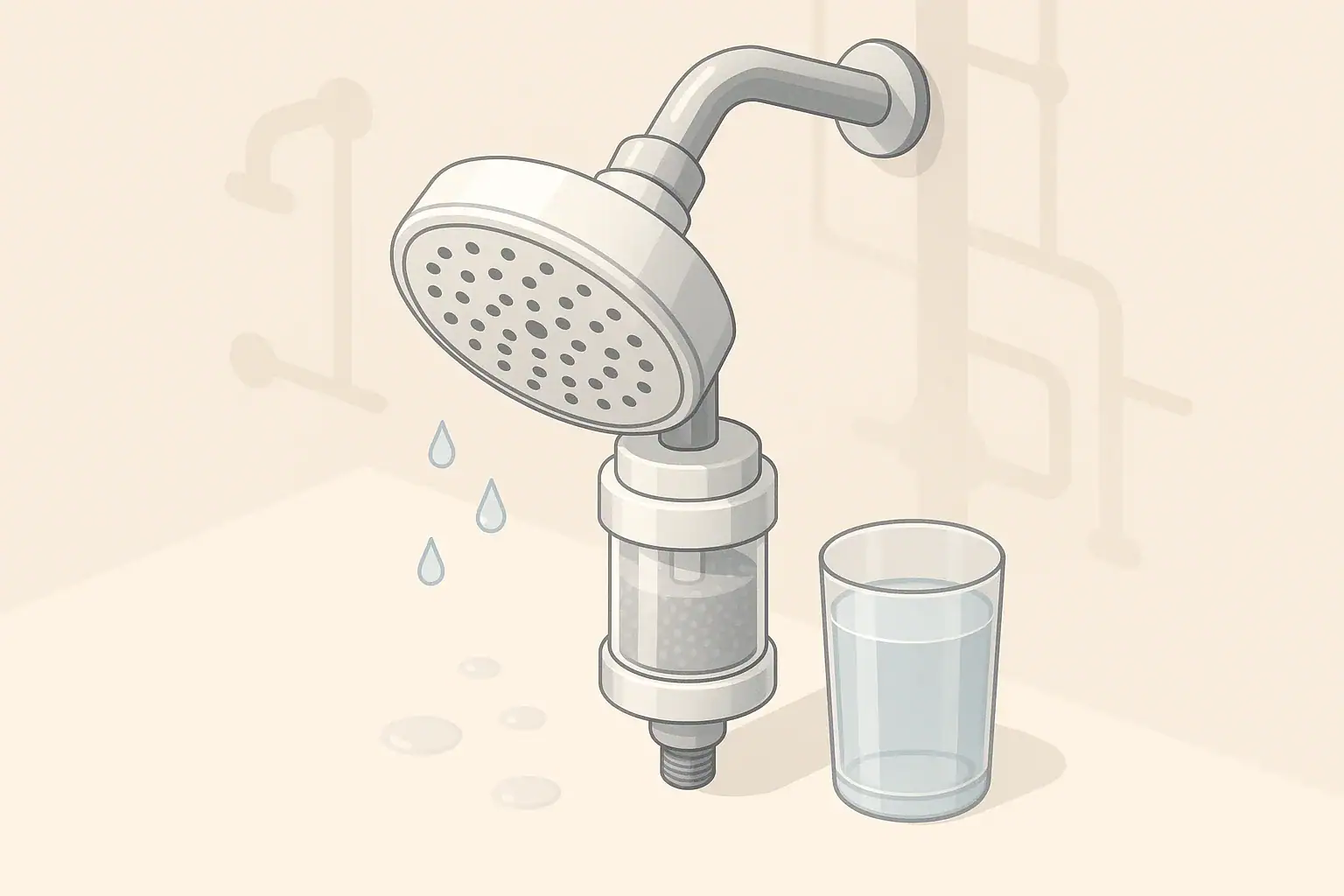
Shower pressure can feel different after installing a shower filter, replacing a cartridge, or changing a shower head. Sometimes the change is minor. Other times the shower may feel softer, narrower, pulsing, or slower to rinse soap from hair and skin.
The reason is usually not one single part. Shower filter flow restrictors, filter media, household water pressure, mineral scale, and fixture design all affect how water moves through the shower. Understanding the difference between pressure and flow helps you decide whether the system is working normally, needs maintenance, or is poorly matched to your plumbing.
This article explains why shower filters can change the feel of water pressure, what a flow restrictor does, and how to evaluate performance without unsafe plumbing modifications.
Why a Shower Filter Can Make Pressure Feel Different
A shower filter adds another path for water to travel through before it reaches the shower head. That path may include screens, granular media, carbon, KDF-style media, ceramic beads, sediment material, or a replaceable cartridge. Even when the filter is clean, water loses some energy as it passes through those materials.
That loss is commonly described as pressure drop. In everyday use, the person in the shower may describe it as lower pressure, even when the home’s supply pressure has not changed. The fixture may still be receiving water at the same plumbing pressure, but the delivered flow at the spray face may be reduced.
Pressure and flow are related but not identical
Pressure is the force available in the plumbing. Flow rate is the amount of water delivered over time, often expressed in gallons per minute. A shower can have adequate plumbing pressure but still feel weak if the fixture, cartridge, or filter limits flow.
Spray pattern also matters. A shower head with small, focused nozzles can feel forceful at a lower flow rate. A wide rain-style head can feel gentle even when it uses a similar amount of water. This is why two showers with the same measured flow may feel very different.
New filters may feel different at first
Some shower filters require a short initial flush to remove loose fines or trapped air. During that period, the spray may sputter, look cloudy from air bubbles, or feel uneven. This is usually temporary. Follow the product’s normal start-up directions and avoid using hot water beyond the filter’s rated temperature range.
Where Flow Restrictors Fit Into a Shower Setup
A flow restrictor is a component designed to limit the maximum amount of water moving through a fixture. It may be built into a shower head, a handheld shower, a filter housing, or a connector. In some products it is a small insert; in others it is integrated and not intended to be removed.
Flow restrictors are used for water conservation, fixture performance, and predictable operation. They can also help keep a shower within plumbing or efficiency requirements that apply to many fixtures sold in the United States.
A restrictor is not the same as a filter. A restrictor limits flow by design. A filter reduces certain unwanted substances or improves aesthetic water qualities such as chlorine taste and odor, depending on media type and conditions. When both are present, their effects can add together.
Why the shower may feel softer after a filter is added
If the original shower head already had a restrictor and the new shower filter also has internal resistance, the combined setup may reduce delivered flow more than expected. Elbows, adapters, handheld hoses, and small inlet screens can add additional resistance.
This does not automatically mean anything is defective. It means the system has more parts for the water to pass through. The practical question is whether the flow remains comfortable and whether the filter is being used within its rated range.
| Possible cause | Common sign | What it usually means | Practical check |
|---|---|---|---|
| Built-in flow restrictor | Lower maximum flow from the start | Fixture is limiting water by design | Review the fixture rating and installation notes |
| Clean filter media resistance | Slightly softer spray with a new filter | Normal pressure drop through media | Compare with the filter’s expected flow range |
| Clogged cartridge | Gradual loss of flow over weeks or months | Sediment or scale may be loading the media | Replace on schedule or sooner if needed |
| Debris in screen or washer | Sudden weak spray after plumbing work | Particles may be blocking a small inlet | Clean accessible screens according to instructions |
| Mineral scale | Uneven spray or blocked nozzles | Hard water deposits may restrict openings | Descale removable parts if allowed by the manufacturer |
| Low household pressure | Multiple fixtures feel weak | Issue may be upstream of the shower | Check other faucets and consult a qualified professional if needed |
| Long handheld hose | Gentler feel at the spray head | Extra length and fittings add resistance | Confirm the hose is not kinked or undersized |
Example values for illustration.
How Filter Media Affects Shower Flow
Shower filters use different media depending on the intended purpose. Many are aimed at reducing chlorine odor, improving water feel, or trapping visible sediment. They do not all work the same way, and they do not all create the same pressure drop.
Granular media
Granular media can allow water to pass through many small spaces between particles. As sediment collects or minerals build up, those spaces can become more restricted. A cartridge that worked well at first may slowly lose flow as it reaches the end of its useful life.
Carbon and catalytic media
Carbon-based media can be effective for many taste and odor concerns in drinking water applications, and some shower products use carbon or catalytic carbon blends. In hot shower water, performance depends on contact time, temperature, water chemistry, and design. A short contact time at high flow generally gives the media less time to interact with the water.
Because shower filters must handle several gallons per minute, the cartridge design often balances treatment goals with acceptable flow. A tightly packed cartridge may provide more contact but can also reduce flow more noticeably.
Sediment screens and prefilters
Some shower filters include fine screens or sediment barriers. These can be helpful where visible particles occur, but they are also easy places for debris to accumulate. If flow drops suddenly after municipal line work, water heater maintenance, or a plumbing repair, trapped debris is a reasonable thing to check if the part is meant to be user-serviceable.
Flow Restrictors, Water Conservation, and Fixture Ratings
Many shower heads are designed to limit peak flow. A common modern shower head rating is around 2.0 gallons per minute or less, although exact ratings vary by fixture and local requirements. Older fixtures may use more, and some specialty fixtures may be subject to different rules.
A flow restrictor helps the shower head meet its intended rating. It can also help the spray pattern work as designed. Removing or altering restrictors can create problems, including poor spray quality, excessive hot water use, code issues, or stress on parts not designed for higher flow.
For that reason, it is better to troubleshoot the whole system rather than bypassing built-in features. If a shower feels uncomfortably weak, safer options include confirming the cartridge is not clogged, choosing a filter with an appropriate rated flow, checking for scale, or consulting a plumber if household pressure is low.
Why higher flow is not always better
More flow can feel satisfying, but it can also use more hot water quickly. That can shorten shower time before a tank water heater cools, increase energy use, or reduce pressure elsewhere in the home. A balanced setup should provide enough rinsing comfort without exceeding fixture or plumbing limits.
How to Tell Whether the Filter or the Plumbing Is the Issue
A practical troubleshooting process starts with the simplest observations. The goal is not to modify safety features. It is to identify whether the change is isolated to the shower filter assembly or affects the home more broadly.
Check whether other fixtures changed
If bathroom sinks, kitchen faucets, and other showers also feel weak, the issue may be household pressure, a partially closed valve, a pressure reducing valve setting, a well system issue, or municipal supply conditions. Those are not shower filter problems.
If only one shower changed immediately after installing a filter, the filter, shower head, connector, or handheld hose is more likely involved.
Look for timing clues
Timing matters:
- Immediate change after installation: The setup may have more flow resistance than the previous fixture arrangement.
- Gradual decline: The cartridge may be loading with sediment, scale, or media fines.
- Sudden decline after plumbing work: Debris may have reached a screen, washer, or inlet.
- Only hot water is weak: The issue may be related to the water heater, mixing valve, or hot-side plumbing rather than the filter alone.
Use a simple flow observation
You do not need laboratory equipment to get a useful comparison. A rough bucket test can show whether the flow changed significantly. For example, filling a known-size container for a short, timed period can give an approximate gallons-per-minute estimate. Treat the result as a practical comparison, not a certified measurement.
When testing, keep conditions consistent. Use the same shower setting, similar water temperature, and the same fixture arrangement. Avoid disassembling components that are not meant to be serviced by the user.
Maintenance Issues That Reduce Shower Filter Flow
Filter cartridges are consumable parts. Over time, they collect particles, accumulate scale, or lose performance capacity. A shower filter that feels fine for the first month and weak later may simply be ready for replacement.
Replacement intervals are estimates
Shower filter life is usually stated by time, gallons, or number of showers. These estimates depend on water quality and use. A home with high sediment, hard water scale, or frequent showers may need replacement sooner than the stated maximum. A single-person apartment may get longer comfortable flow from the same type of cartridge.
Hot water and scale can speed up restriction
Hot water can encourage mineral scale formation in shower heads and small openings. If water is hard, scale may collect on spray nozzles, inside connectors, or around screens. This can mimic the feel of a clogged filter even when the cartridge is not the only cause.
Routine cleaning of removable nozzles or shower head faces, when allowed by the product instructions, can help maintain spray quality. Avoid harsh chemicals or methods that could damage seals, finishes, or filter media.
Installation orientation and fit matter
Some filters have a required flow direction. Installing a directional cartridge backward can reduce performance or create unusual flow. Cross-threading, overtightening, missing washers, or kinked handheld hoses can also cause leaks or restriction. If something does not fit easily, stop and review the instructions rather than forcing the connection.
Choosing a Shower Filter Without Over-Restricting Flow
Before choosing a shower filter, consider the existing shower head, household pressure, and the reason you want filtration. A compact inline filter may be convenient, but it still has to pass enough water for a comfortable shower.
Match rated flow to your shower expectations
Look for general flow information, such as the product’s rated gallons per minute or compatible shower head range. If your shower already feels marginal, adding a restrictive filter may make the problem more noticeable.
If your main concern is chlorine odor, a shower filter may improve the shower experience for some users, but performance depends on water chemistry and contact time. If your concern is a specific contaminant, review independent testing information and remember that shower filters are not the same as drinking water systems such as under-sink carbon filters or reverse osmosis units.
Consider household conditions
Homes with private wells, high sediment, or visible particles may need broader treatment before water reaches the shower. A small shower filter is not a substitute for a properly sized sediment filter, softening system, or other whole-house treatment when those are needed. For private wells, periodic water testing is the better starting point for treatment decisions.
Practical Ways to Improve Shower Feel Safely
If a filtered shower feels weaker than expected, focus on safe, reversible steps. The best fix is often maintenance or better matching, not modification.
- Replace an old cartridge if flow has gradually declined.
- Flush a new cartridge as directed to remove air and fines.
- Clean accessible inlet screens only if the instructions allow it.
- Check for kinks in a handheld hose.
- Remove mineral scale from shower nozzles using approved methods.
- Confirm valves serving the shower are fully open if they are intended for normal homeowner access.
- Compare flow at other fixtures to see whether the issue is house-wide.
- Ask a qualified plumber about pressure problems, mixing valve issues, or hidden restrictions.
Avoid drilling, cutting, or removing integrated parts that are not designed to be serviced. Also avoid increasing water heater temperature to compensate for weak flow, as that can raise scald risk. Comfort problems should be addressed through proper fixture selection, maintenance, and professional evaluation when needed.
Quick Flow Examples for Shower Filter Decisions
Flow numbers are most useful when treated as comparison points. The right shower feel depends on spray design, supply pressure, water temperature, and personal preference. Still, general examples can help you decide whether a change is minor or worth investigating.
| Observed pattern | Illustrative flow impression | Possible explanation | Next practical step |
|---|---|---|---|
| Strong before filter, softer after filter | Noticeable but usable reduction | Added media resistance and existing restrictor | Confirm filter rating and installation direction |
| Good flow when new, weak later | Gradual decline | Cartridge loading or scale buildup | Replace cartridge and clean approved parts |
| Weak only on one spray setting | Uneven spray feel | Deposits in selected nozzles | Descale shower face if allowed |
| Weak hot and cold at same shower | Consistently low output | Local fixture or connector restriction | Check hose, washers, and accessible screens |
| Weak throughout the home | Multiple fixtures affected | Supply pressure or plumbing issue | Consider professional pressure evaluation |
| Sputtering after cartridge change | Temporary air bursts | Trapped air or start-up flushing | Flush according to instructions |
| Water heater runs out faster | Higher hot water use | Higher-flow fixture or longer showers | Review fixture rating and shower habits |
Example values for illustration.
Related guides: Shower Filters for Chlorine: What They Can (and Can’t) Do • Hard Water Feel in the Shower: Filter vs Softener vs Nothing • KDF Media Explained: Why It’s Common in Shower Filters • How Often to Replace Shower Filter Cartridges
Key Takeaways
Shower filter flow restrictors affect how water feels, but they are only one part of the picture. The filter cartridge, shower head design, household pressure, mineral scale, and maintenance history all influence the final spray.
A small pressure drop through a clean shower filter is normal. A large or worsening drop usually points to a clogged cartridge, debris, scale, installation issue, or a broader plumbing concern. Troubleshoot with safe observations first, keep replacement intervals realistic, and choose shower filters that match both your water quality goals and your preferred shower flow.
Frequently asked questions
Why does my shower feel weaker after adding a filter?
A shower filter adds resistance as water passes through its media and screens. If the shower head already had a restrictor, the combined setup can reduce flow enough to feel weaker.
Is low pressure after installing a shower filter always a problem?
Not always. A small drop in flow can be normal. If the change is large, sudden, or gets worse over time, the cartridge, screen, scale buildup, or plumbing may need attention.
Can a clogged cartridge reduce shower flow?
Yes. As a cartridge collects sediment or scale, water has a harder time passing through it. That often causes a gradual loss of flow and a softer spray.
How can I tell if the issue is the filter or the plumbing?
Check whether other fixtures also feel weak. If only one shower changed after installation, the filter or shower assembly is more likely involved. If multiple fixtures are affected, the issue may be in the home’s supply or plumbing.
Should I remove the flow restrictor to get better pressure?
In general, no. Removing or altering built-in restrictors can cause spray issues, higher hot water use, or other problems. Safer fixes are maintenance, better matching, or professional evaluation.
How often should a shower filter cartridge be replaced?
Follow the manufacturer’s replacement guidance, but treat it as an estimate. Homes with hard water, sediment, or frequent use may need replacement sooner than the maximum interval.
Recommended next:
- Shower Filters for Chlorine: What They Can (and Can’t) Do
- Hard Water Feel in the Shower: Filter vs Softener vs Nothing
- KDF Media Explained: Why It’s Common in Shower Filters
- Installing a Shower Filter Tool-Free: Avoiding Leaks
- How Often to Replace Shower Filter Cartridges
- Shower Filter Bad Smell? Cleaning & Sanitizing Tips
- More in Shower Filters →
- NSF/ANSI standards explained (42/53/401/58)
- Clear trade-offs: pitcher vs faucet vs under-sink vs RO
- Maintenance planning: cost per gallon and replacement cadence