
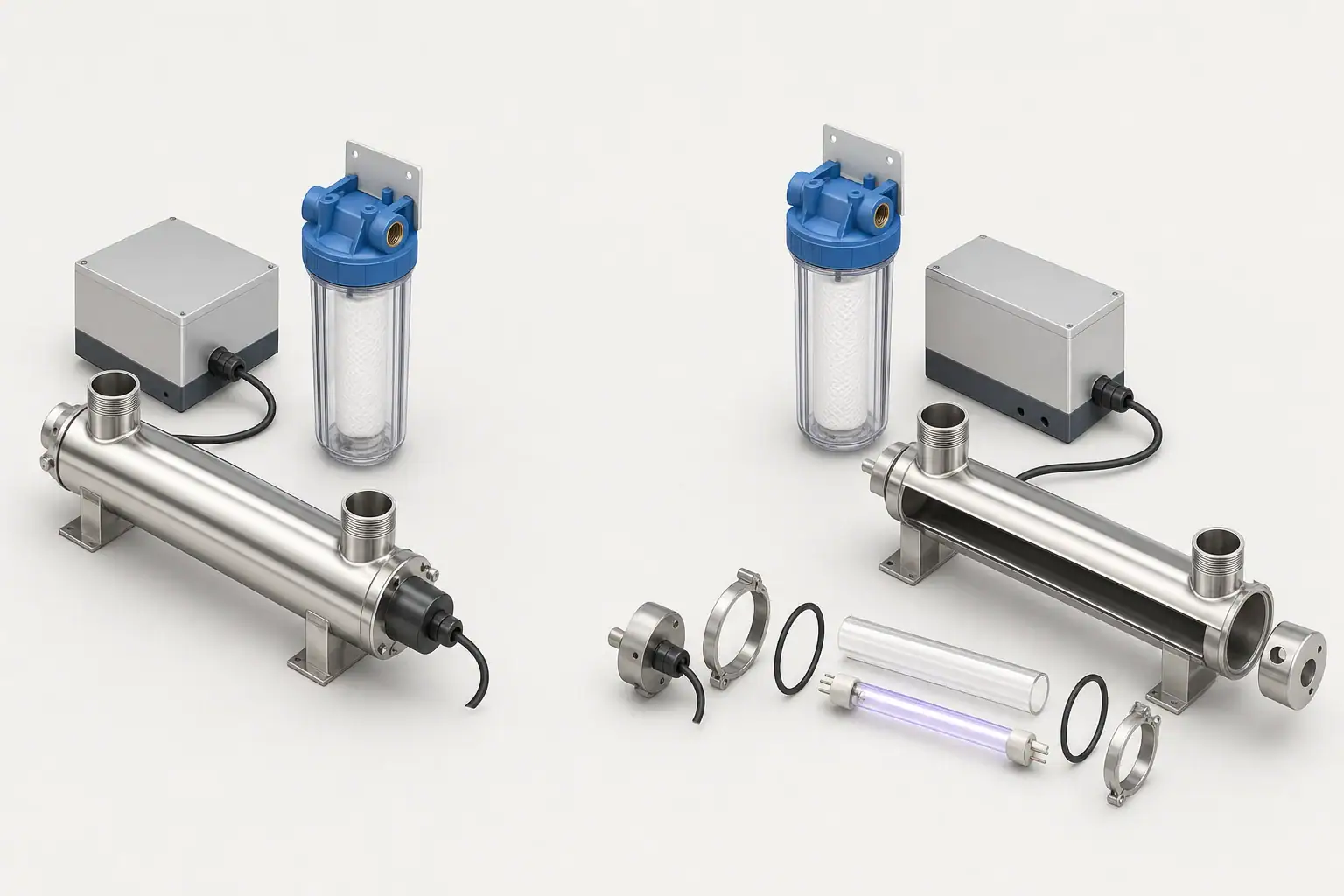
Routine UV water purifier maintenance centers on three tasks: replacing the lamp on schedule, keeping the quartz sleeve clean, and responding correctly to controller or intensity alarms. Most systems also depend on working prefilters, intact seals, and adequate electrical power.
Follow the schedule and procedures in the system manual because lamp life, alarm functions, replacement parts, and cleaning methods vary. Many conventional UV lamps are replaced about once a year, but visible light does not confirm that a lamp is still delivering enough germicidal UV output.
UV maintenance checklist at a glance
| Component | What to check | When to act |
|---|---|---|
| UV lamp | Age, operating status, connectors, and replacement timer | At the manufacturer’s interval or after a confirmed failure |
| Quartz sleeve | Scale, cloudiness, staining, cracks, and seal condition | During lamp service and whenever low intensity suggests fouling |
| Alarm or controller | Warning type, indicator status, power, and reset procedure | During routine checks and immediately after an alarm |
| Prefilters | Pressure loss, sediment loading, and replacement history | According to condition and the filter schedule |
| Chamber and fittings | Leaks, corrosion, damaged wiring, and abnormal heat | After service and during periodic visual checks |
Replace the UV lamp before output falls too far
A UV lamp can continue to glow after its useful germicidal output has declined. For that reason, visual inspection is not a substitute for scheduled replacement or an intensity monitor.
Many conventional residential systems use an annual lamp interval based on continuous operation. That is general guidance rather than a universal rule. Some lamps have different rated service lives, so use the interval specified for the exact system and lamp type.
Do not switch the lamp on and off routinely
UV purifiers are generally designed to remain energized. Frequent cycling may shorten lamp life and creates periods when untreated water could pass through the chamber. If a system includes an automatic flow control or another specialized operating mode, follow its manual instead of changing how it operates.
Use the correct replacement lamp
A lamp that fits physically is not necessarily a suitable substitute. Electrical requirements, UV output, length, connector design, and controller compatibility can differ. Use the replacement specification provided by the system manufacturer.
Before handling a lamp, disconnect electrical power and follow the shutdown sequence in the manual. Never look directly at an energized UV lamp or operate it outside its enclosed chamber. Allow a hot lamp to cool, handle it carefully, and avoid touching the glass with bare fingers. If accidental contact occurs, clean it as directed by the manufacturer.
Many traditional UV lamps contain a small amount of mercury. Keep used or broken lamps away from children, follow local disposal requirements, and do not place them in household trash unless the local waste authority permits it.
Inspect and clean the quartz sleeve
The quartz sleeve separates the lamp from the water while allowing UV energy to enter the treatment chamber. Iron staining, hardness scale, sediment, and other deposits can reduce UV transmission even when the lamp is operating normally.
Sleeve-cleaning frequency depends heavily on source water and pretreatment. A home with low-turbidity, softened water may need less frequent cleaning than one with hard water, iron, or sediment. Inspecting the sleeve whenever the lamp is replaced is a practical baseline, but a low-intensity alarm may require earlier attention.
Signs that the sleeve needs attention
- A UV intensity alarm occurs even though the lamp is operating.
- The sleeve looks cloudy, stained, or coated.
- Hardness scale or iron deposits return quickly after cleaning.
- Upstream sediment filtration is overdue or has failed.
- The system has been exposed to unusually turbid source water.
Safe cleaning and inspection
Disconnect power, isolate the water supply, and relieve pressure according to the system instructions before opening the chamber. UV systems combine electricity, pressurized water, fragile quartz, and seals that must be reinstalled correctly. If the shutdown or disassembly procedure is unclear, use a qualified water-treatment or plumbing professional.
Remove the sleeve only as directed. Clean it with a nonabrasive material and a cleaner approved for the sleeve, seals, and chamber. Avoid scouring pads or unapproved chemicals, which may scratch the quartz or damage elastomer seals.
Under bright ambient light, check the clean sleeve for chips, hairline cracks, deep scratches, or persistent cloudiness. Replace damaged quartz rather than reinstalling it. Inspect O-rings and other seals for flattening, cracking, swelling, or cuts, and use only the specified replacement parts and lubricant if lubrication is required.
Identify what the alarm is reporting
An alarm does not always mean the lamp has burned out. Depending on the system, a controller may report lamp age, lamp failure, low measured UV intensity, a sensor fault, a power problem, or another operating condition.
Lamp-life or replacement reminder
This is usually a time-based warning. Replace the lamp at the specified interval and reset the timer only after completing the replacement. Resetting a countdown without installing a new lamp removes a useful maintenance safeguard.
Lamp-failure alarm
Check that the unit has power and that approved electrical connections are fully seated, following the manual. A tripped outlet, damaged controller, loose connector, or failed lamp can produce similar symptoms. Do not bypass the alarm, alter the controller, or energize an exposed lamp while troubleshooting.
Low-UV-intensity alarm
A low-intensity warning can result from an aging lamp, a fouled quartz sleeve, a dirty sensor window, unsuitable water quality, or a sensor problem. Increased turbidity, color, iron, manganese, or scale can interfere with UV transmission. Replacing the lamp alone may not resolve the cause.
Check the lamp age, sleeve condition, prefilters, and any sensor-cleaning procedure specified by the manufacturer. Repeated low-intensity alarms may indicate that source-water conditions or pretreatment need professional evaluation.
Intermittent or unexplained alarms
Record the displayed indicator and when the alarm occurs. Note whether it coincides with power interruptions, high water demand, recent filter changes, or visible changes in the source water. This information can help distinguish a controller issue from a water-quality or maintenance problem.
Check pretreatment and flow conditions
UV treatment works best when water is clear enough for UV energy to reach microorganisms. A UV purifier does not remove sediment, hardness minerals, dissolved chemicals, or most other contaminants. It also does not correct every condition that can interfere with UV transmission.
Replace sediment or other upstream filters according to their condition and specified schedule. A heavily loaded filter can reduce pressure and flow, while a missing or ineffective filter can allow sleeve-fouling material into the UV chamber. If the system has a rated maximum flow, do not modify plumbing in a way that could exceed it.
Water hardness, iron, manganese, and turbidity may require appropriate pretreatment. Cleaning the sleeve more often can manage deposits, but it may not be the most practical long-term response when fouling returns rapidly.
Restart the system carefully after service
Before restoring operation, confirm that the sleeve is seated correctly, seals are in their proper locations, retaining components are secure, and the lamp connection matches the manual. Never force a quartz sleeve or overtighten fittings in an attempt to stop a leak.
Restore water pressure gradually using the prescribed procedure and inspect the chamber and connections for leaks. Energize the UV unit only when it is fully assembled and in the operating condition required by the manufacturer. Confirm that normal controller indicators return and that any lamp timer was reset only after lamp replacement.
Maintenance can introduce air or contamination into opened plumbing. Follow the manufacturer’s flushing or sanitizing instructions where required. If the UV unit was not operating and the system is relied on for microbial treatment, do not assume water produced during the interruption was treated. Use an appropriate alternate water source and follow guidance from the system manufacturer or local public health authority until normal operation is confirmed.
Common maintenance mistakes
- Waiting for the lamp to stop glowing before replacing it.
- Resetting a lamp timer without installing a new lamp.
- Replacing the lamp but ignoring a scaled quartz sleeve.
- Touching the lamp or cleaned sleeve with bare hands.
- Reusing damaged, flattened, or incorrectly sized seals.
- Using abrasive tools or incompatible cleaners on quartz.
- Ignoring prefilter condition when a low-intensity alarm appears.
- Silencing or bypassing an alarm without correcting its cause.
- Assuming UV treatment removes sediment or dissolved contaminants.
Keep a maintenance record
Record the lamp installation date, sleeve-cleaning date, seal replacements, prefilter changes, alarm codes, and any changes in water appearance or system pressure. Keep the replacement lamp specification and controller instructions with the record.
Related guides: When UV disinfection makes sense • Turbidity explained • Filter replacement calendar template
A simple log makes it easier to replace the lamp before its service interval expires and to recognize when sleeve fouling is becoming more frequent. Shorter cleaning intervals can be an early sign that pretreatment or source-water conditions have changed.
Frequently asked questions
How often should a UV water purifier lamp be replaced?
Replace the lamp at the interval specified by the manufacturer. Many continuously operated residential lamps are replaced about once a year, even if they still appear to glow.
How often should a quartz sleeve be cleaned?
Inspect the sleeve during lamp replacement and clean it sooner if it becomes cloudy, scaled, stained, or triggers a low-UV-intensity alarm.
Can I reset the UV lamp timer without replacing the lamp?
No. Reset the timer only after installing a new approved lamp so the reminder continues to reflect the lamp’s actual service life.
What should I do when a UV purifier has a low-intensity alarm?
Check the lamp age, quartz sleeve, prefilters, and any sensor-cleaning instructions in the manual. Repeated alarms may indicate a pretreatment or water-quality issue.
Should a UV water purifier be turned off when water is not being used?
Usually no. Many UV systems are designed for continuous operation, and frequent switching can shorten lamp life. Follow the operating instructions for the specific system.
- NSF/ANSI standards explained (42/53/401/58)
- Clear trade-offs: pitcher vs faucet vs under-sink vs RO
- Maintenance planning: cost per gallon and replacement cadence