Iron and rust in household water are common across many regions in the United States, especially in homes with private wells and older plumbing. Even at relatively low levels, iron can stain fixtures, discolor laundry, change water’s taste, and leave orange or brown deposits on tubs, sinks, and toilets.
In water discussions, people often use “iron” and “rust” interchangeably, but they are not identical:
- Dissolved iron (ferrous iron) is clear in water and becomes visible after it oxidizes to rust.
- Particulate iron (ferric iron) is already oxidized and appears as orange or brown particles.
- Rust usually refers to iron oxide particles that flake off from pipes, tanks, or fixtures.
Because iron and rust can affect every tap and appliance, many homeowners look to whole house filters as a way to protect plumbing, water heaters, washing machines, and fixtures all at once. However, not every whole house filter is designed to handle iron effectively, and some are quickly overwhelmed if misapplied.
Why Iron and Rust Are a Whole-House Problem
Iron and rust in household water are common across many regions in the United States, especially in homes with private wells and older plumbing. Even at relatively low levels, iron can stain fixtures, discolor laundry, change water’s taste, and leave orange or brown deposits on tubs, sinks, and toilets.
In water discussions, people often use “iron” and “rust” interchangeably, but they are not identical:
- Dissolved iron (ferrous iron) is clear in water and becomes visible after it oxidizes to rust.
- Particulate iron (ferric iron) is already oxidized and appears as orange or brown particles.
- Rust usually refers to iron oxide particles that flake off from pipes, tanks, or fixtures.
Because iron and rust can affect every tap and appliance, many homeowners look to whole house filters as a way to protect plumbing, water heaters, washing machines, and fixtures all at once. However, not every whole house filter is designed to handle iron effectively, and some are quickly overwhelmed if misapplied.
Know Your Iron: Testing Before Choosing a Filter
Choosing a whole house filter for iron and rust starts with understanding what type and how much iron you actually have. Guessing often leads to systems that clog, underperform, or create new issues such as pressure loss.
Key parameters to test
For a practical whole house solution, consider checking at least:
- Total iron (and sometimes separate dissolved vs. particulate iron)
- Manganese (often present with iron and may require similar but not identical treatment)
- pH (affects how iron behaves and how media perform)
- Hardness (influences scaling, media life, and whether a softener is also needed)
- Turbidity or sediment (suspended solids that can clog filters)
- Oxidizing disinfectants like chlorine (on municipal systems)
Why type and concentration matter
Whole house filters are usually optimized for specific conditions. For example:
- Dissolved iron often needs oxidation and then filtration, or special iron-removal media.
- Particulate iron or rust can often be captured with sediment filtration alone.
- Higher iron levels may require larger media tanks, backwashing systems, or multiple treatment stages.
Without these details, you may install a basic cartridge filter that plugs in weeks or a media tank that never regenerates effectively.
Example values for illustration.
| Water condition | Common symptoms | Typical whole house approach |
|---|---|---|
| Mostly particulate rust from old pipes | Orange flakes, gritty particles at taps | Sediment prefilter (e.g., 5–20 micron) on main line |
| Low dissolved iron with some staining | Mild orange stains, metallic taste | Oxidizing iron filter or iron-rated media tank |
| Moderate dissolved iron and manganese | Brown/black stains, laundry discoloration | Dedicated iron/manganese media with backwashing |
| High iron plus hardness | Stains, scale buildup, dull laundry | Iron filter plus separate water softener, properly sequenced |
| Well water with high sediment and iron | Cloudy water, rapid filter clogging | Staged sediment filters followed by iron treatment |
| Municipal water with occasional rust bursts | Short-term brown water events | Whole house sediment filter with higher capacity |
What Whole House Filters Do Well for Iron and Rust
Whole house systems can be highly effective for certain iron and rust problems when they are sized and configured correctly. They are especially helpful for protecting plumbing and appliances across the entire home.
Sediment filters for rust and iron particles
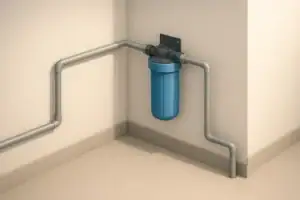
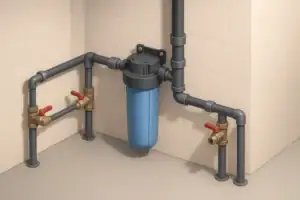
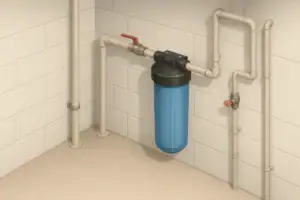
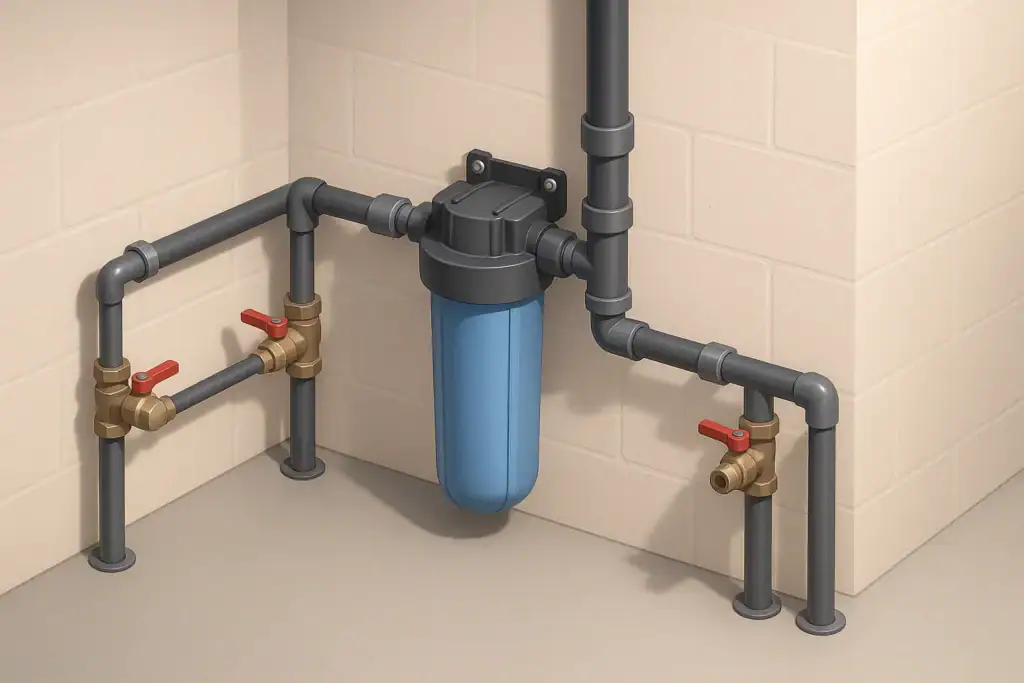
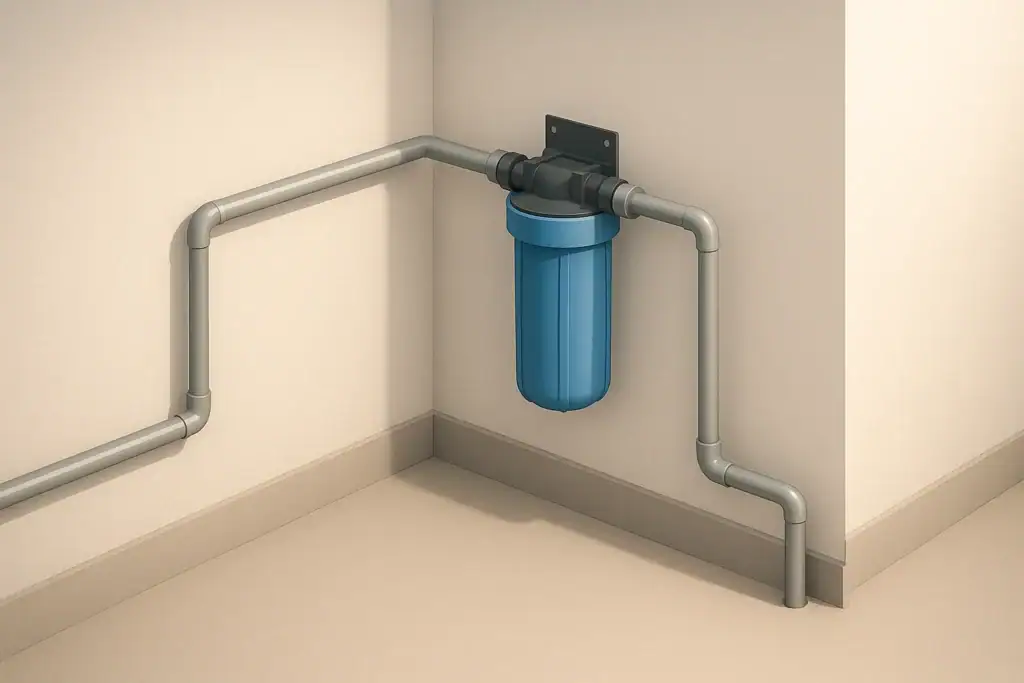
For visible particles and rust flakes, a whole house sediment filter is often the most straightforward solution. These systems typically sit on the main line where water enters the house.
Common characteristics include:
- Filter cartridges or pleated screens designed to capture particles above a certain micron rating (for example, 5–50 microns as an illustrative range).
- Clear housings or standard opaque housings that allow periodic cartridge replacement.
- Minimal impact on taste and odor unless combined with additional media like activated carbon.
Sediment filters work well for:
- Rust flakes from aging galvanized pipes or water mains
- Sand and grit from wells
- Suspended iron particles already visible in water
They are less effective for dissolved iron, which remains invisible until it oxidizes later in the plumbing or in fixtures.
Iron-specific media filters
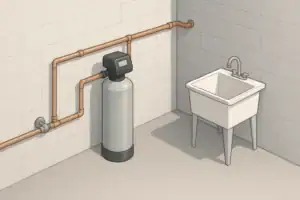
For dissolved iron, dedicated media filters that promote oxidation and filtration within a single tank are more appropriate. These systems are usually larger than simple cartridge filters and often include an automatic control valve that periodically backwashes the media.
Typical characteristics:
- Media beds designed to catalyze the conversion of dissolved iron to particulate form, then trap the particles.
- Backwashing cycles that flush captured iron to a drain, restoring flow and capacity.
- Compatibility constraints with water pH, dissolved oxygen, or disinfectant levels.
These systems can significantly reduce staining and discoloration when tuned to the actual iron concentration and flow demands of the home.
Oxidation plus filtration setups
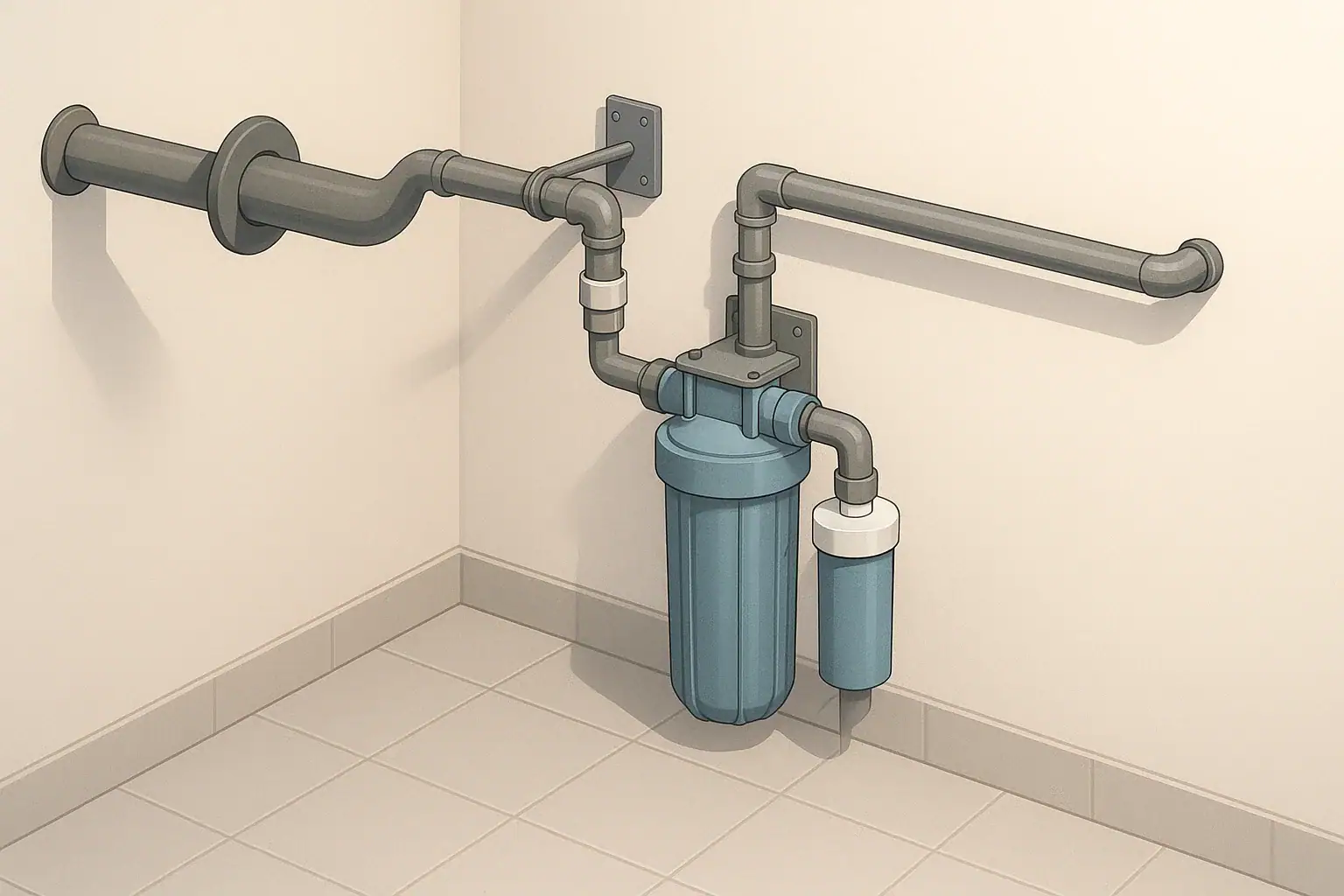
Some whole house solutions separate the oxidation step from filtration. For example, an upstream device may inject an oxidizing agent or air, followed by a filtration tank that removes the resulting particles. In some cases, this approach allows more flexible adjustment for higher iron levels, though it may involve more plumbing and controls.
What Whole House Filters Do Not Handle Well
Not every whole house filter marketed for “iron” can actually manage real-world conditions over time. Certain system types are often pushed beyond their realistic design limits.
Standard carbon-only whole house filters
Granular activated carbon (GAC) and carbon block whole house systems are useful for taste and odor improvements, as well as for reducing disinfectants like chlorine. However, they are not primarily designed for iron removal.
Limitations include:
- Clogging risk if exposed to significant iron or rust particles.
- Limited interaction with dissolved iron, which typically passes through carbon relatively unchanged.
- Media fouling that can shorten service life and increase pressure drop.
In many cases, carbon filters should be installed downstream of effective iron and sediment control, not used as the primary iron treatment stage.
Small cartridge filters used beyond their capacity
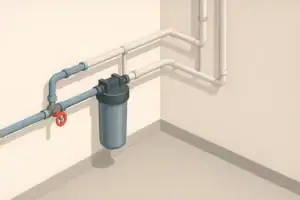
Compact whole house cartridge systems installed on the main line may be convenient, but they can be undersized for high iron levels or larger households. When heavily loaded with iron and rust, they tend to:
- Plug rapidly, causing noticeable pressure loss
- Require frequent cartridge changes
- Potentially bypass fine particles if not changed on time
They can still be useful as a final polishing step or for low-level issues, but they are often not the best stand-alone solution for challenging well water conditions.
Relying on a water softener alone
Some ion-exchange softeners can handle small amounts of dissolved iron incidentally, but they are not designed as primary iron filters. Depending on water chemistry and maintenance, iron can foul the resin bed and reduce softening performance.
Common issues when using softeners as iron filters include:
- Resin fouling and reduced capacity over time
- More frequent regeneration requirements
- Staining that persists despite “soft” water
Where iron is a significant issue, a dedicated iron treatment stage before the softener is often more sustainable.
System Sizing, Flow, and Whole-House Performance
Whole house filters must deal with the full flow of the home, not just drinking water at a single tap. Sizing errors are a common cause of disappointing performance, especially with iron and rust that accumulate in filter media.
Household flow and pressure considerations
When evaluating a system, pay attention to:
- Peak flow rate the home is likely to demand, such as multiple showers plus appliance use.
- Acceptable pressure drop across the filter at that flow; excessive drop leads to weak showers and slow fixtures.
- Pipe size and layout from the water source to the distribution manifold.
For illustration, a modest household may need several gallons per minute during peak use, while larger homes may require much more. If a filter is rated for a lower flow than the home demands, iron removal efficiency can also decrease as water simply moves too quickly through the media.
Media volume and backwashing
For tank-based iron filters, the amount of media and the backwash flow rate are important. Too little media can exhaust quickly, while an undersized backwash flow can fail to clean the bed, leading to channeling and reduced capacity.
Key points to discuss with an installer or manufacturer include:
- Recommended service flow range for your iron level
- Backwash flow requirements and whether the well pump can support them
- Typical backwash frequency under your conditions
Placement in the treatment train
Whole house filters for iron and rust are usually installed:
- After the pressure tank on well systems (to avoid pump cycling interference)
- Before downstream treatment such as softeners and carbon filters
- Upstream of water heaters to protect tanks and elements from iron deposits
This sequencing helps prevent iron from fouling other equipment and reduces visible staining in both hot and cold water lines.
Maintenance Realities: Keeping Iron Systems Working
Iron and rust are physically demanding on filtration systems. Even a well-designed setup can fail if maintenance is neglected. Planning for maintenance is as important as choosing the system type.
Cartridge replacement and cleaning
For cartridge-style sediment and polishing filters, expect regular attention. Iron and rust often fill depth filters from the outside in, while pleated filters load on the surface. Signs a cartridge needs attention include:
- Notable drop in water pressure or flow
- Visible darkening or orange staining on the cartridge
- Shorter intervals between changes as iron load increases seasonally
Some homeowners track approximate capacity by relating cartridges to water use (for instance, estimating how many gallons the household uses per month) and adjusting replacement intervals as experience accumulates.
Backwashing tank systems
Media-based iron filters depend on proper backwashing. The control valve is usually programmed to run cycles at set intervals or based on water use. If the system loses power, valves malfunction, or drain lines clog, iron can build up in the media bed.
Routine checks may include:
- Confirming backwash cycles are occurring at the programmed times
- Verifying drain discharge during backwash
- Watching for unusual noises or leaks around the control head
Seasonal and long-term monitoring
Iron levels in wells can change with seasons, pumping rates, or nearby development. It is often helpful to:
- Re-test water chemistry periodically, especially after noticeable changes in staining
- Keep a simple log of filter changes and backwash settings
- Inspect fixtures and appliances for new or persistent staining
Adjustments in media type, bed depth, or regeneration frequency may be needed over time as water conditions shift.
Example values for illustration.
| Item to track | Typical cue or interval | Simple planning method |
|---|---|---|
| Sediment cartridge change | Pressure drop or every few months, whichever comes first | Mark change dates on housing and use a calendar reminder |
| Backwash cycle verification | Quick check monthly | Observe one full cycle and note flow to drain |
| Visual stain inspection | Look at fixtures and laundry weekly | Note any new orange or brown deposits |
| Water chemistry re-test | Every 1–2 years or after changes in taste/appearance | Keep test results in a dedicated file or notebook |
| Media replacement planning | After several years, based on performance decline | Record installation date and typical lifespan range |
| System inspection | Annually or before heavy-use seasons | Check valves, connections, and drain lines |
Setting Realistic Expectations for Whole House Iron and Rust Filters
Whole house filters can significantly improve the appearance and usability of water affected by iron and rust, but they work best as part of a well-understood treatment plan rather than a single universal solution. Key practices include:
- Testing water to distinguish dissolved iron from rust particles and to understand supporting factors like pH and hardness.
- Choosing system types that match both iron levels and household flow demands.
- Sequencing equipment logically so iron control protects downstream filters and softeners.
- Planning maintenance around observed pressure, staining, and known media life rather than waiting for problems to become severe.
With these considerations in place, whole house systems can help maintain cleaner plumbing, reduce visible rust issues, and support more consistent water quality throughout the home.
Frequently asked questions
How can I tell if my water problem is dissolved iron (ferrous) or particulate iron/rust?
The most reliable method is a water test that reports total iron and separates dissolved (ferrous) from particulate (ferric) iron. Visually, particulate iron shows orange or brown flakes and turbidity, while dissolved iron is clear until it oxidizes and causes staining or a metallic taste. Home test kits give a rough idea, but a certified lab result is best for treatment planning.
Will a standard whole house carbon filter remove iron and rust effectively?
Standard granular activated carbon or carbon block filters are designed for taste, odor, and disinfectant removal and are not effective at removing dissolved iron. They can also foul or clog if exposed to significant particulate iron, so carbon should generally be placed downstream of sediment or dedicated iron treatment. Using carbon as the primary iron solution often leads to shortened service life and pressure drop.
Can a water softener be used as the sole treatment for iron in well water?
Ion-exchange softeners can remove small amounts of dissolved iron in some cases, but they are not intended as primary iron-removal systems. Iron commonly fouls resin beds, increases regeneration frequency, and reduces softener performance; for moderate to high iron levels a dedicated pretreatment (oxidation and filtration) is recommended before the softener.
What routine maintenance do whole house iron filters require?
Cartridge sediment filters need periodic replacement when pressure drops or visible staining appears, often every few months depending on load. Tank-based iron media systems require reliable backwashing, checks of control valves and drain lines, and periodic water retesting; documenting backwash cycles and observing drain discharge help prevent media fouling.
How should I size a whole house iron filter for my home’s needs?
Size systems based on your home’s peak flow (gallons per minute) and the iron concentration so the media and backwash flow can handle the iron load without excessive pressure drop. Common practice is to stage sediment prefilters followed by an iron media tank sized for the peak service flow and compatible with your well pump’s backwash capacity; consult with an installer using your measured water chemistry and flow requirements.
Recommended next:
- Whole House Filters vs Water Softeners: Different Jobs Explained
- Best Whole House Sediment Filters: Clear Up Cloudy Water
- Whole House Carbon Filters for Chlorine & Taste: What to Expect
- Whole House Filter Flow Rate: Sizing by GPM and Household Count
- Backwashing Filters Explained: Pros, Cons, and Maintenance
- Installing a Whole House Filter: Placement, Bypass, and Leak Prevention
- More in Whole House Filters →
- NSF/ANSI standards explained (42/53/401/58)
- Clear trade-offs: pitcher vs faucet vs under-sink vs RO
- Maintenance planning: cost per gallon and replacement cadence