
Brown, yellow, orange, or tea-colored tap water can appear after a city repairs a water main, restores service, or flushes nearby hydrants. Changes in pressure and flow can loosen accumulated iron-bearing sediment, manganese, or corrosion particles from distribution pipes.
The discoloration may be temporary, but appearance alone cannot establish whether water is suitable for drinking. Before reaching for a pitcher, faucet filter, or whole-house cartridge, check local instructions and clear the plumbing in a controlled way. Filtering too soon can clog cartridges and pull discolored water into appliances.
Why Water Can Turn Brown After Main Work
Municipal water normally moves through distribution mains in a relatively consistent direction. Repair work can stop the flow, reverse it, or create a sudden increase in velocity when service resumes. That disturbance may suspend deposits that had settled inside the main.
Common sources of discoloration
- Iron-bearing sediment: Often produces yellow, orange, red, or brown water.
- Manganese: May create dark brown, gray, or black particles.
- Pipe corrosion material: Older iron service lines or building pipes can release rust-colored particles after pressure changes.
- Building plumbing: If only one faucet is affected, the source may be a local pipe, aerator, fixture, or water heater rather than the city main.
Discoloration does not automatically mean sewage has entered the system. It also does not prove that the water is safe. A loss of pressure can sometimes lead a utility to issue a boil-water or do-not-use advisory while it evaluates the system.
What to Do First Before Filtering
Check for an official advisory
Review notices from your water utility or local public health authority. Follow any boil-water, conservation, flushing, or do-not-use instructions exactly. If local directions conflict with general household advice, the official directions take priority.
A boil-water advisory usually addresses possible microbial contamination. A typical household filter is not a substitute for boiling when boiling is directed. Conversely, boiling does not remove sediment, metals, salts, or many dissolved chemicals and can concentrate some dissolved material as water evaporates.
Avoid drawing discolored water through the home
Until you know the advisory status, avoid using hot water, doing laundry, making ice, or running dishwashers and water-using treatment equipment. This helps keep sediment out of the water heater, appliance screens, ice maker, and filter cartridges. Do not use visibly discolored water for drinking or food preparation.
Identify whether the problem is widespread
Compare cold water at more than one fixture. If possible, begin with a bathtub spout, utility sink, or another high-flow cold-water outlet near where the service line enters the building. A fixture without a fine aerator is less likely to trap debris during the initial check.
If neighbors served by the same main have similar discoloration, a distribution-system disturbance is more likely. If the problem occurs only at one faucet or only on the hot side, investigate the fixture or water heater instead.
Example values for illustration.
| Observation or condition | Practical first action |
|---|---|
| Utility advisory is active | Follow the advisory before flushing or filtering |
| Cold and hot water are both discolored | Stop hot-water use and begin checks on the cold side |
| Only hot water is discolored | Consider the water heater or hot-water piping as the source |
| Only one faucet is affected | Inspect and clean that fixture’s aerator after water clears |
| Several cold faucets are affected | Use a suitable cold-water outlet for controlled flushing |
| Neighbors report the same issue | Contact the utility for repair and flushing status |
| Water contains heavy particles or oily material | Stop use and ask the utility for specific guidance |
How to Flush Plumbing Safely
If the utility says normal flushing is appropriate, start with cold water. Choose a bathtub spout, utility faucet, or outdoor faucet that is close to the service entry and can discharge safely. Make sure the drain can handle the flow, and supervise the outlet to prevent overflow.
Use a controlled sequence
- Keep hot-water faucets closed so sediment is not drawn into the water heater.
- Remove a faucet aerator only if it can be removed normally and reinstalled without altering plumbing safety features.
- Run cold water steadily and observe the color in a clear container at intervals.
- Stop when the water remains clear, unless the utility gives a different flushing procedure.
- Flush other cold-water fixtures briefly, working through the home.
- Clean faucet aerators and fixture screens after the water has cleared.
Flushing time varies with the size of the building, service-line length, and severity of the disturbance. If the water does not improve after a reasonable flushing attempt, stop wasting water and contact the utility. Repeatedly cycling faucets may not help if discolored water is still present in the main.
Do not drain or service a water heater merely because the cold water was temporarily brown. Water heaters can present scalding, pressure, gas, and electrical hazards. If sediment entered the heater, follow the manufacturer’s maintenance procedure or use a qualified professional.
When the Water Is Ready for Normal Use
Water should be visually clear and free of unusual particles before it is sent through filters or appliances. Any applicable utility advisory should also have been lifted or specifically addressed.
Check more than color
Fill a clean, clear glass with cold water and view it against a light background. Allow it to stand briefly. Look for settling particles, a surface film, or color that remains throughout the glass.
Cloudiness that clears from the bottom upward is often caused by harmless air released after pressure changes. Brown particles that settle are more consistent with sediment or rust particles. Persistent unusual odor, oily appearance, blue-green color, or chemical-like smell warrants a call to the utility rather than additional household flushing.
After cold water is clear, follow local guidance for resuming hot-water use, making ice, and operating appliances. Discard ice produced during the event. A washing machine that filled with rusty water may stain light-colored fabric, so verify clarity at a cold faucet before doing laundry.
What Household Filters Can and Cannot Do
Household filters may help manage residual particles after the distribution system and home plumbing have been flushed. They should not be used to hide an unresolved main problem or replace an official advisory.
Sediment filters
A sediment cartridge is the most directly relevant filter for suspended rust and grit. It captures particles according to its design and pore rating. Finer cartridges may improve clarity but usually clog faster and can cause a noticeable pressure drop.
If a home already has a whole-house sediment filter, inspect it after the event. A cartridge that received a large sediment load may need early replacement even if it has not reached its normal service interval. Do not open a pressurized housing without shutting off and relieving pressure according to the equipment instructions.
Activated carbon filters
Carbon filters are commonly used for chlorine-related taste and odor and certain organic compounds. They are not primarily intended to handle a heavy surge of rust or mineral sediment. A sediment load can block the cartridge surface and shorten its useful life.
Pitcher and faucet-mounted filters generally have limited surface area. Running visibly brown water through them can quickly reduce flow. Wait until the tap runs clear, then replace the filter if it was exposed to substantial discoloration or if flow and taste do not return to normal.
Reverse osmosis and other treatment stages
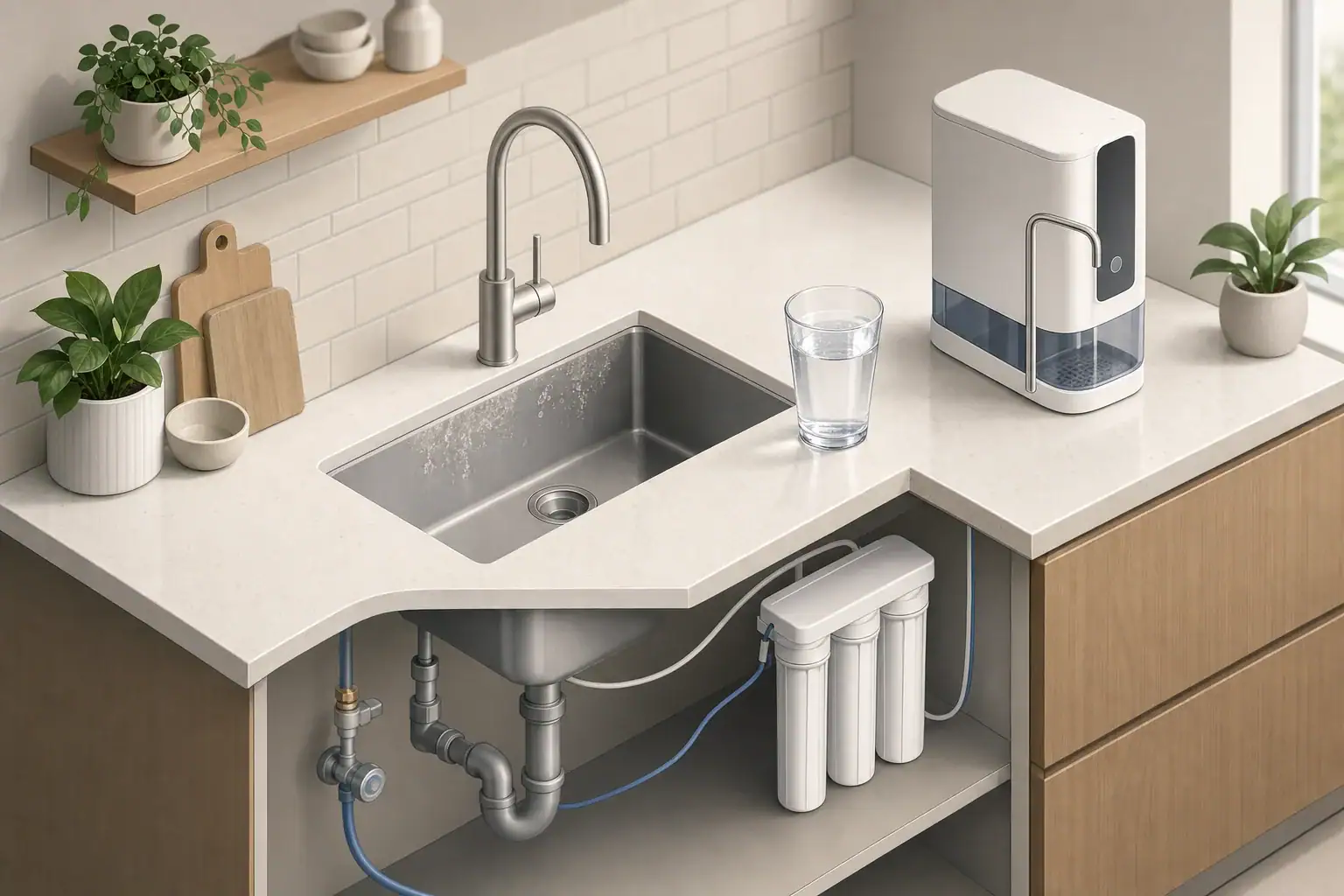
Reverse osmosis systems normally rely on sediment and carbon prefilters to protect the membrane. Heavy particles can foul the prefilter, reduce pressure, and decrease treated-water production. Keep the system isolated during a sediment event if its normal controls and installation allow that; do not create an improvised bypass.
Ultraviolet equipment inactivates certain microorganisms under appropriate operating conditions, but it does not remove brown sediment. High turbidity can also interfere with light transmission, which is why pretreatment and clear source water matter. Reverse osmosis removal limits are one reason no single household filter addresses every possible cause of post-repair discoloration.
Post-Repair Filter and Fixture Checks
Once the cold water is clear and official restrictions have ended, check equipment for evidence of sediment loading. The appropriate response depends on which components were exposed.
- Inspect transparent filter housings without opening them under pressure.
- Note reduced flow at faucets or appliances.
- Clean removable aerators and rinse their screens.
- Replace disposable cartridges if they remain discolored, clogged, or beyond their service interval.
- Follow sanitation instructions if a filter housing is opened.
- Discard old ice and allow the ice maker to refill with clear water.
- Check appliance inlet screens only through the appliance’s approved maintenance procedure.
Record the date of the event and any cartridge replacement. This makes it easier to distinguish unusual sediment loading from normal filter exhaustion. A cartridge changed early after a main repair should not automatically set the expected interval for future replacements.
Example values for illustration.
| Remaining symptom | Likely next step |
|---|---|
| Clear water with normal odor | Resume use according to utility guidance |
| Brown particles continue to settle | Stop extended flushing and contact the utility |
| Reduced flow at one faucet | Clean the aerator or fixture screen |
| Reduced flow throughout the home | Inspect the main sediment cartridge or seek plumbing help |
| Chlorine-like odor after repair | Ask whether temporary utility disinfection is occurring |
| Oily, fuel-like, or unusual chemical odor | Stop using the water and report it promptly |
Related guides:
Sediment vs Rust Particles: Diagnosing Brown Water •
Best Whole House Sediment Filters: Clear Up Cloudy Water •
Micron Ratings for Sediment Filters: 1 vs 5 vs 20 Micron Explained •
Clogged Filter Too Soon: Common Causes
When to Contact the Water Utility or a Professional
Contact the utility if brown water persists, returns repeatedly, affects nearby homes, or comes with low pressure. Report when the discoloration began, whether it affects hot and cold water, which fixtures are involved, and whether particles settle in a clear container.
Promptly request specific guidance if the water has an oily film, sewage-like odor, fuel-like smell, unusual blue-green color, or visible foreign material. Avoid relying on taste as a safety test.
If the utility confirms that water at the main is clear but discoloration continues only inside the property, the source may be a corroding service line, aging galvanized plumbing, a water heater, or a fixture component. A qualified plumber can evaluate these possibilities without bypassing backflow protection, pressure controls, or other safety devices.
For recurring issues, ask the utility for its water quality information and whether recent flushing or pressure work occurred. Targeted laboratory testing may be useful when a persistent problem cannot be identified by the utility or a plumbing inspection. Testing should be selected for the suspected issue rather than assuming that a general-purpose filter will address it.
Frequently asked questions
Can I drink brown water after a city water main repair?
Do not use visibly discolored water for drinking or food preparation. Check for a utility advisory and wait until the water runs clear and any applicable restrictions have been lifted.
Should I run brown water through my pitcher or faucet filter?
No. Flush the cold-water plumbing first if the utility says flushing is appropriate. Brown sediment can quickly clog small filter cartridges and reduce flow.
How long should I flush my faucets after a main repair?
There is no fixed time because it depends on the service line and the disturbance. Use a suitable cold-water outlet and stop when the water remains clear, or follow the utility’s specific instructions.
Why is only my hot water brown?
If discoloration is limited to hot water, the water heater or hot-water piping may be the source. Avoid unnecessary heater servicing and follow the manufacturer’s instructions or consult a qualified professional.
Do I need to replace my whole-house filter after brown water?
Inspect the cartridge after the event. Replace it early if it is visibly loaded, clogged, causing reduced pressure, or otherwise due for replacement under the equipment instructions.
When should I call the water utility about brown water?
Contact the utility if discoloration persists or returns, affects nearby homes, occurs with low pressure, or includes an oily film, unusual odor, blue-green color, or visible foreign material.
- NSF/ANSI standards explained (42/53/401/58)
- Clear trade-offs: pitcher vs faucet vs under-sink vs RO
- Maintenance planning: cost per gallon and replacement cadence