
Why Some Water Filters Clog So Quickly
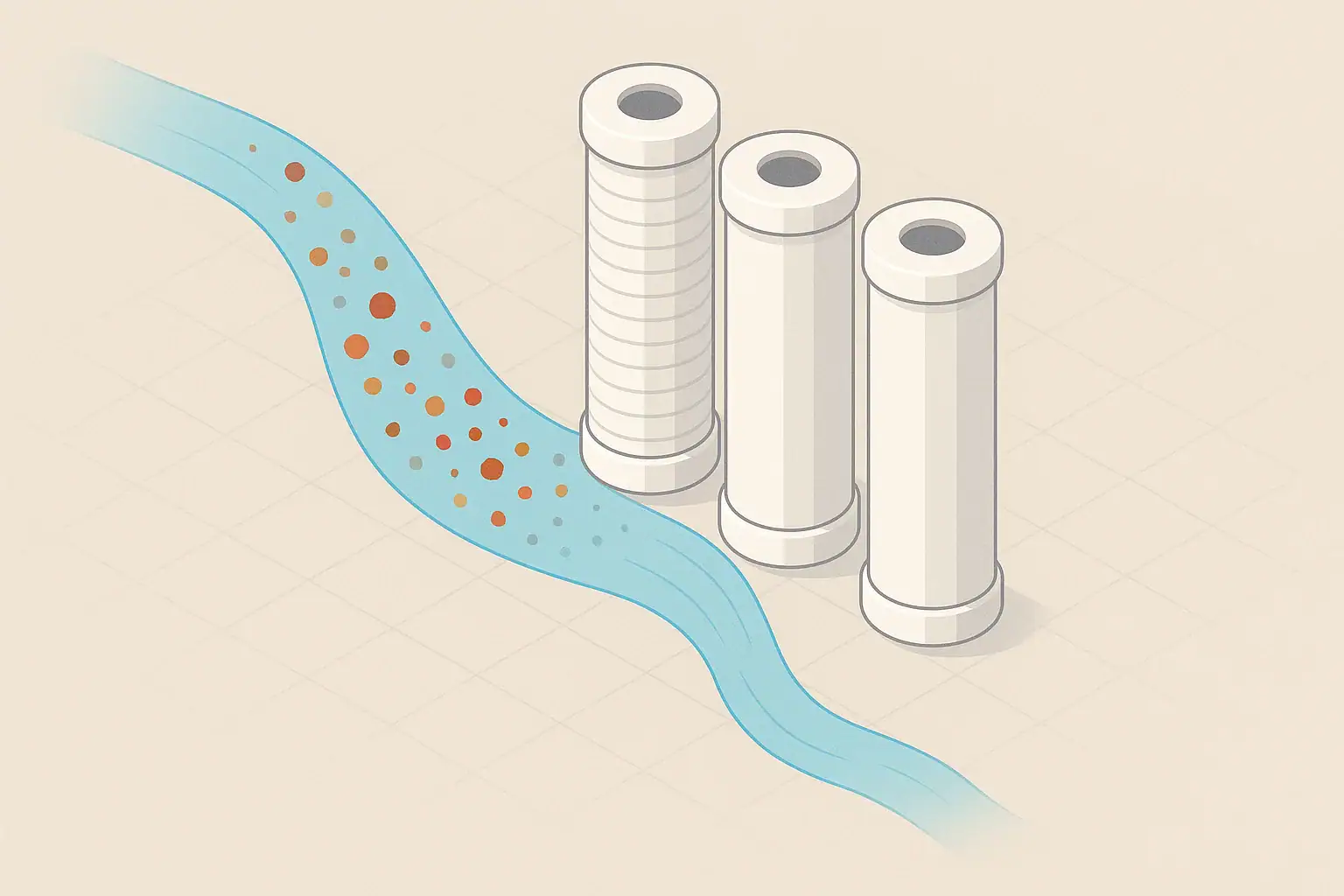
Many homeowners are surprised when a new water filter clogs in weeks instead of months. In most cases, the filter itself is not defective. The real issue is that the water has more particles than the filter and replacement schedule were designed to handle.
Three of the most common reasons for rapid clogging are:
- Sediment – sand, silt, rust flakes, and other visible particles
- Turbidity – fine suspended matter that makes water cloudy
- Iron – especially when it oxidizes into rust-like particles
Understanding how each of these behaves in your plumbing and filters helps you choose better pre-filtration, realistic replacement intervals, and a setup that does not constantly choke your flow rate.
How Sediment Clogs Filters Too Soon
Sediment is the catch-all term for solid particles in water. It can come from the source itself or from the plumbing system. Sediment levels can vary by season, recent construction work, hydrant flushing, or changes in a well. If you notice reduced flow, our diagnostic checklist can help pinpoint likely causes.
Common Sources of Sediment
Typical sources include:
- Municipal mains: Rust and scale scoured from aging pipes during line work or hydrant flushing.
- Private wells: Sand and silt drawn in from the aquifer, especially if the well is shallow or the pump is set too low.
- Household plumbing: Corrosion inside steel or iron pipes, flaking into the water.
Why Sediment Overwhelms Cartridges
Sediment filters are rated by micron size. A smaller micron rating captures finer particles but clogs more quickly. When a fine filter is used as the first stage in dirty water, it can plug in days.
Some common situations that cause premature clogging:
- Using a 1–5 micron cartridge as the only sediment stage on very sandy or rusty water.
- Running entire-house demand through a small-diameter under-sink style housing.
- No pre-filter ahead of a carbon block or reverse osmosis (RO) system, so those finer filters become the sediment trap.
Signs Sediment Is the Main Problem
Your filter is probably clogging due to sediment if you notice:
- Filter cartridges are visibly brown, orange, or gray and coated with particles.
- Water pressure drops steadily over days or weeks, not suddenly.
- Removing the filter restores normal flow immediately.
- Clear water from the tap still leaves a gritty residue in kettles or aerators over time.
Practical Sediment Management Ideas
To reduce premature clogging from sediment, homeowners often:
- Add a larger, coarser sediment pre-filter (for example, 20–50 micron) before finer cartridges.
- Use larger housings with higher surface area for whole-house sediment loads.
- Routinely flush plumbing and aerators after city line work or well work.
- Discuss well yield, pump depth, and any visible sand with a licensed well professional.
Example values for illustration.
| Observed symptom | Likely contributor | Example next step |
|---|---|---|
| Filter dark brown with gritty feel | Coarse sediment (sand, rust flakes) | Consider adding a 20–50 micron pre-filter |
| Filter slimy or gelatinous coating | Fine organic matter or biofilm | Review sanitizing schedule and pretreatment options |
| Orange film and rust-colored streaks | Oxidized iron particles | Evaluate iron levels and need for iron treatment |
| Cloudy water even after filter | Very high turbidity overloading cartridge | Explore multi-stage sediment filtration |
| Rapid pressure drop after plumbing work | Debris flushed from pipes | Replace filter and flush system thoroughly |
| Only one small under-sink filter on whole house | Undersized filtration for flow demand | Assess need for a larger whole-house sediment stage |
Turbidity and Fine Particles That Blind Filters
Turbidity refers to the cloudiness of water caused by very fine suspended particles. These particles may be too small to feel between your fingers but large enough to scatter light and clog filter pores. For a deeper explanation of causes and measurements, see turbidity explained.
What Turbidity Looks and Feels Like
Water with elevated turbidity can appear:
- Cloudy or hazy in a glass when viewed against light.
- Muddy after rain events for some surface-influenced wells.
- Milky if mixed with trapped micro-bubbles, although air usually clears quickly.
Unlike coarse sediment, these fine particles may:
- Make filters slimy or pasty rather than gritty.
- Penetrate deeper into a cartridge and blind internal pores.
- Bypass screens that only stop larger grains of sand.
How Turbidity Overloads Filter Stages
Fine particles interfere with several common filter types:
- Carbon block filters: Their dense structure is good for chemical reduction but sensitive to fine particulate loading.
- RO membranes: Pre-filters handle much of the particulate load, but high turbidity shortens both pre-filter and membrane life.
- Cartridge sediment filters: Fine particles block the outer layer of the filter, forming a cake that quickly reduces flow.
On water with high turbidity, cartridge life may be much shorter than generic estimates. For example, a filter suggested for several months of use on relatively clear water might need replacement in a few weeks when used on persistently cloudy water. These are illustrative time frames only and actual life varies widely.
Managing Turbidity Before It Hits Fine Filters
Practical options for handling turbidity typically include:
- Step-down filtration: Starting with a coarse sediment stage and moving gradually to finer stages so each filter does a manageable part of the work.
- Higher-surface-area cartridges: Pleated filters, for example, provide more area for particles to collect before clogging.
- Periodic flushing: Some whole-house systems use backwashing or purge valves to clear collected fines from the first stages.
- Water testing: A basic lab test that includes turbidity can help you match filter selection to your actual water conditions.
Iron and Rust: Staining and Clogging Together
Iron in water can appear in several forms. Some forms stay dissolved and clear; others become visible rust-like particles that easily clog filters. Both private wells and some municipal systems can have iron-related issues; see our iron in water guide for more on testing and treatment options.
Forms of Iron That Affect Filters
From a filtration standpoint, iron commonly shows up as:
- Clear-water (dissolved) iron: Water looks clear at the tap but later leaves orange or brown stains as iron oxidizes when exposed to air.
- Red-water (oxidized) iron: Rust-colored particles are already present, giving water an orange, yellow, or reddish tint.
- Iron combined with other materials: Iron can bind to organic matter or other particles, adding to turbidity and making filters foul more quickly.
How Iron Clogs and Stains Filters
Oxidized iron behaves like very fine, sticky sediment:
- It collects in sediment cartridges, turning them orange-brown.
- It embeds in carbon filters, taking up pore space meant for chemical adsorption.
- It can foul RO membranes and other fine barriers, shortening their effective life.
Even relatively modest iron levels can cause noticeable staining and contribute to filter clogging, especially when flow is high or water use is heavy.
Clues That Iron Is Part of the Problem
Possible indicators of iron contributing to early clogging include:
- Orange or brown stains in sinks, toilets, and tubs.
- A metallic taste in water, especially from certain fixtures.
- Filter housings and cartridges showing orange streaks or slime.
- Fine, rust-colored particles settling in the bottom of a glass after standing.
Typical Iron Management Approaches
Potential steps for dealing with iron before it reaches sensitive filters often include:
- Water testing for iron as part of a broader well or household water analysis.
- Using dedicated iron-reduction media or systems ahead of carbon or RO stages when levels are substantial.
- Ensuring adequate pre-filtration for oxidized iron particles so that fine cartridges are not acting as the first line of defense.
- Planning for more frequent filter checks when iron is known to fluctuate seasonally.
Filter Sizing, Micron Ratings, and Realistic Life Expectancy
Even when sediment, turbidity, and iron are well understood, filters can still clog early if the system is undersized or misconfigured for the actual water quality and flow demand.
Micron Rating vs. Flow and Lifespan
Narrowing down micron size is a balance between protection and practicality:
- Coarser filters (20–50 micron) capture larger particles, protect plumbing, and usually last longer before clogging.
- Medium filters (5–10 micron) handle many typical household sediment issues while being more resistant to rapid clogging than very fine filters.
- Fine filters (1 micron and below) help with very fine particles but are much more sensitive to load and often require strong pre-filtration.
If sediment or turbidity is high, jumping straight to a very fine filter often trades clearer water for constant replacement and pressure issues.
Cartridge Size and Housing Capacity
Filter housings and cartridge dimensions also matter:
- Small under-sink cartridges are suited to point-of-use flow rates, not entire-house demands.
- Larger-diameter whole-house cartridges have more surface area and hold more debris before flow drops.
- Using multiple parallel housings for high-demand applications can reduce the load on each cartridge.
When a single small cartridge is responsible for all water entering a home, it will naturally reach its capacity much faster.
Why Generic “X Months” Estimates Can Be Misleading
Many filters are advertised with a suggested time frame such as a certain number of months or an approximate gallon capacity. These are broad estimates based on assumed water quality and typical usage. Real-world conditions can be very different.
Filters may need more frequent attention when:
- Household water use is higher than average.
- Sediment and turbidity are significantly above typical municipal levels.
- Iron or other particulate-forming contaminants vary with season or pumping rate.
- The filter is protecting fine equipment, and a conservative change schedule is preferred.
Diagnosing Your Specific Clogging Pattern
Every home’s water behaves a little differently. Tracking a few basic observations can help you understand whether sediment, turbidity, iron, or system sizing is the primary cause of early clogging.
Simple Observations You Can Record
Without any special tools, you can note:
- How long each filter lasts before flow becomes noticeably reduced.
- What the spent filter looks and feels like (color, texture, slime vs. grit).
- Whether problems worsen after heavy rain, seasonal changes, or plumbing work.
- Which fixtures are most affected (whole house or just one sink).
When Basic Testing Is Helpful
If you are seeing frequent clogs, a basic water test can be useful. Many homeowners look for a test panel that includes, at minimum:
- General indicators such as turbidity or clarity-related measures.
- Iron and related metals often present in older plumbing or certain aquifers.
- Parameters that affect scaling or film formation, such as hardness.
With test information, you can better match filter types and stages to what is actually in your water instead of relying solely on generic recommendations.
Adjusting One Variable at a Time
When making changes to address rapid clogging, it generally helps to change one element at a time so you can see what works:
- First, try adding or adjusting a sediment pre-filter before swapping every other component.
- If iron is suspected, consider dedicated iron reduction ahead of existing filters.
- Only then, refine micron rating and filter type for later stages.
This stepwise approach reduces guesswork and helps you identify which change actually solved the clogging issue.
Example values for illustration.
| Water condition (generalized) | Example filter type | Example check interval |
|---|---|---|
| Clear municipal water, low sediment | 5–10 micron sediment followed by carbon block | Inspect every 3 months |
| Moderate sediment, light staining | 20 micron sediment, then 5 micron sediment, then carbon | Inspect every 1–2 months |
| High turbidity, visible cloudiness | Pleated sediment (20 micron) then 5 micron cartridge | Inspect monthly at first |
| Noticeable iron staining | Iron-reduction stage before fine cartridges | Inspect iron stage monthly initially |
| Well water with seasonal swings | Step-down sediment train before treatment stack | Inspect more often in high-use seasons |
| RO system on moderately cloudy water | Sediment pre-filter, carbon pre-filter, RO membrane | Check pre-filters every 1–2 months; membrane as specified |
Related guides: Why Your Filtered Water Flow Suddenly Dropped (Diagnostic Checklist) • Low Pressure After Installing a Filter: 8 Things to Check • Air in the Line After a Filter Change: How to Purge It Safely • Leaking Under the Sink: How to Identify the Source Fast
Frequently asked questions
How can I tell whether sediment, turbidity, or iron is causing my filters to clog?
Check the spent cartridge and symptoms: gritty, brown/gray deposits point to coarse sediment; cloudy or slimy filter coatings and hazy water suggest turbidity; orange-brown stains, metallic taste, or rust-colored particles indicate iron. Note whether flow drops gradually or after plumbing work.
What should I do right away if a new filter clogs within weeks?
Inspect the used cartridge for color and texture, flush faucets and aerators, and consider adding a coarser pre-filter (for example 20–50 micron) or a larger housing. Also check for recent line or well work that may have introduced debris and run a basic turbidity/iron test if the cause is unclear.
What filtration setup typically reduces frequent cartridge replacements?
Use a step-down train (coarse → medium → fine), larger-diameter or pleated cartridges for more surface area, and a dedicated iron-reduction stage if iron is present. Backwashing first stages or using parallel housings can help in high sediment or turbidity situations.
When should I test my water or call a professional?
Get testing or professional help if clogs persist after basic fixes, if you see staining or a metallic taste, or if conditions change seasonally or after well servicing. A test that includes turbidity and iron helps select the right pretreatment and filter stages.
By paying attention to sediment, turbidity, and iron, and by matching filter sizing and stages to your specific water, you can usually move from constantly clogged cartridges to a predictable, manageable maintenance routine.
Recommended next:
- Why Your Filtered Water Flow Suddenly Dropped (Diagnostic Checklist)
- Low Pressure After Installing a Filter: 8 Things to Check
- Leaking Under the Sink: How to Identify the Source Fast
- Air in the Line After a Filter Change: How to Purge It
- Noisy RO System: Common Causes and Fixes
- Bad Taste After Installing a New Filter: Quick Fixes
- More in Troubleshooting →
- NSF/ANSI standards explained (42/53/401/58)
- Clear trade-offs: pitcher vs faucet vs under-sink vs RO
- Maintenance planning: cost per gallon and replacement cadence