Why Filtered Water Can Smell Musty
A musty smell in filtered water is usually a practical troubleshooting problem, not a reason to panic. The odor may come from the incoming water, an aging filter, a storage tank, a refrigerator line, a faucet aerator, or even the glass used for drinking. The fastest way to solve it is to narrow down where the smell begins.
Musty, earthy, or damp odors are often described as similar to wet cardboard, soil, basement air, algae, or an old sponge. In municipal water, these odors can be related to seasonal source water conditions, changes in treatment, or compounds that are noticeable at very low levels. In well water, musty odors may point to stagnant plumbing sections, well components, sediment, organic material, or biofilm.
Filters can improve many taste and odor issues, but they can also become part of the odor path if they are overdue for replacement or if water sits in them for a long time. Carbon filters are especially good at reducing many common taste and odor compounds, but spent carbon can lose effectiveness. Any filter housing, cartridge, faucet, tubing, or storage tank can also develop stagnant areas if maintenance is neglected.
Musty odor is different from rotten egg or chemical odor
It helps to describe the odor accurately. A musty smell is not the same as a rotten egg smell, which is commonly associated with sulfur-type odors, or a swimming pool smell, which may relate to chlorine or chloramine. A solvent-like, fuel-like, or sharp chemical odor deserves more caution and may require testing or professional review. When the odor is mild and musty, the first step is usually comparison testing at different taps and filter points.
Start by Finding Whether the Odor Is Before or After the Filter
Before replacing parts, compare the water at several points. Use clean glass cups, not plastic bottles, because plastic can retain odors. Let each sample sit for a minute, then smell it at room temperature. Very cold water can hide odors, while warm water can make them more noticeable.
Check both unfiltered and filtered water if your setup allows it. For example, compare the cold water at the kitchen sink before filtration, the dedicated filtered-water faucet, and any refrigerator dispenser. If the home uses a whole-house prefilter or carbon system, compare a tap near the entry point with a distant tap after water has traveled through more plumbing.
Also consider timing. Does the smell appear only first thing in the morning? Only after vacation? Only from the refrigerator dispenser? Odor that improves after flushing for a minute often points to stagnant water in a line, filter, tank, or faucet rather than a constant incoming-water issue. If you are still choosing the right format for a new setup, a quick look at the filter selector quiz can help match the system style to your needs.
Example values for illustration.
| What you notice | Most likely area to check first | Practical next step |
|---|---|---|
| Both unfiltered and filtered water smell musty | Incoming water or building plumbing | Compare other cold taps and ask the utility about recent source water changes |
| Only filtered water smells musty | Filter cartridge, housing, tubing, or storage tank | Review replacement date and flush according to the system instructions |
| Odor is strongest after water sits overnight | Stagnant water in lines or tank | Flush briefly and note whether the smell fades |
| Odor comes only from refrigerator water | Refrigerator filter, reservoir, or dispenser line | Replace overdue cartridge and discard several glasses after replacement |
| Odor appears after a new filter is installed | Insufficient flushing or cartridge handling | Flush as directed and check that parts are seated correctly |
| Odor is present only in one glass or bottle | Drinkware or storage container | Wash or switch containers before changing the filter |
Common Filter-Related Causes to Check
Once you know the odor is more noticeable after filtration, work through the parts that commonly affect taste and smell. Do not disassemble pressure-bearing housings or modify plumbing unless you are following the manufacturer instructions and basic shutoff procedures. If the installation is unfamiliar, a qualified plumber or water treatment professional can inspect it safely.
Expired or overloaded carbon media
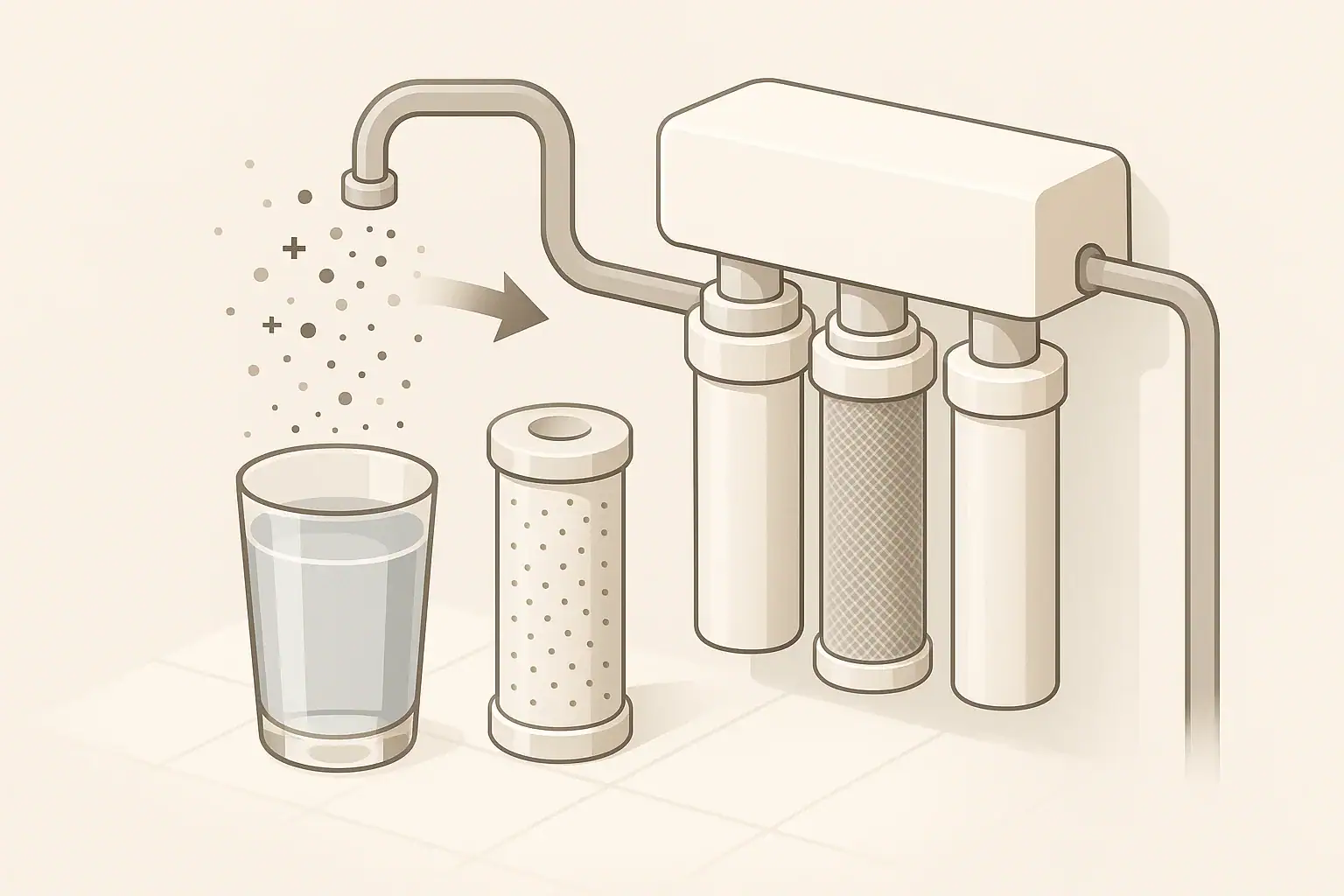
Activated carbon is widely used for taste and odor improvement. Over time, its adsorption capacity is used up. A cartridge that has exceeded its rated service interval, treated more water than expected, or handled a high odor load may stop reducing musty compounds effectively.
Replacement timing is not based only on calendar age. A household with high water use may exhaust a cartridge sooner than a lightly used system. Sediment, chlorine residual, organic matter, and flow rate can also affect performance. If the musty smell gradually returned after months of acceptable taste, an overdue carbon stage is a leading suspect. A replacement schedule by gallons used can make timing easier to track.
Filter housing or cartridge not flushed after replacement
New cartridges often need flushing. Carbon fines, trapped air, and manufacturing residues can affect taste temporarily. A musty smell is not the most typical new-filter complaint, but improper flushing can make water taste stale or dusty. Follow the flushing directions for the specific system and discard the initial water as directed.
Biofilm in low-flow areas
Biofilm is a thin layer of microorganisms and organic material that can develop on wet surfaces. It is more likely where water sits, temperatures are warm, or maintenance is delayed. In home filtration, potential low-flow areas include faucet spouts, aerators, filter sumps, refrigerator reservoirs, small tubing loops, and storage tanks.
Routine cleaning and cartridge replacement reduce the chance that these areas become odor sources. Avoid harsh or improvised chemicals inside drinking water systems unless the system manual specifically allows them. When sanitation is needed, use only procedures and materials intended for potable water equipment.
Reverse osmosis storage tank stagnation
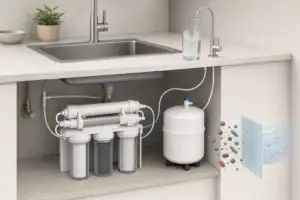
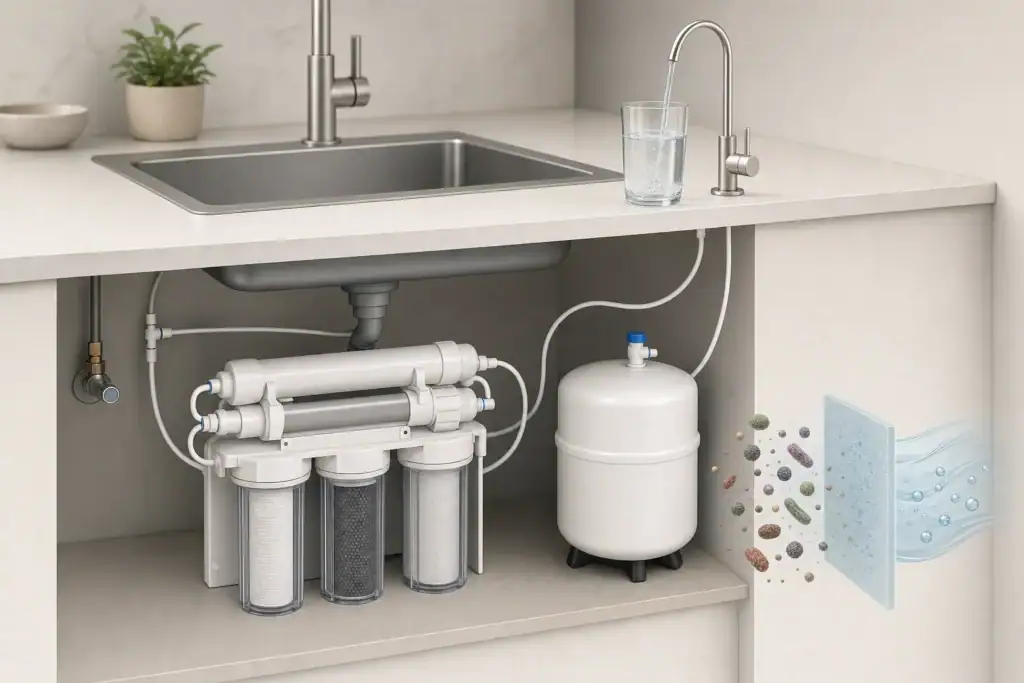
Under-sink reverse osmosis systems often store filtered water in a tank. If the household uses little water, the tank may turn over slowly. Water that sits for a long time can taste flat or stale, and a musty note may become more noticeable.
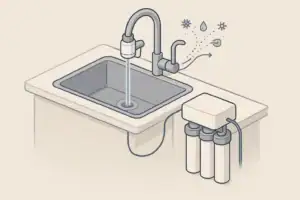
RO systems also have multiple stages. A prefilter, carbon stage, RO membrane, post-carbon filter, tubing, and tank can each influence taste. If the water smells musty only at the RO faucet, check the age of every stage rather than replacing only the most visible cartridge. For a broader overview of what RO does and does not remove, see Reverse Osmosis 101.
Faucet aerator or dedicated faucet spout
A sink faucet aerator can collect sediment and organic material. On a dedicated filtered-water faucet, the small spout may also hold a little water between uses. If the odor is strongest in the first few ounces and then improves, cleanable outlet parts and stagnant spout water should be considered.
Troubleshooting by Filter Type
Different filter formats have different odor patterns. The right first step depends on whether the system is a pitcher, faucet-mounted unit, refrigerator filter, under-sink cartridge, RO system, or whole-house filter.
Pitcher and countertop filters
For pitcher filters, check the pitcher itself before blaming the cartridge. Lids, reservoirs, and spouts can retain odors if they are not washed. Water stored for several days may also taste stale. Wash the pitcher as recommended, replace the cartridge on schedule, and keep filtered water covered and refrigerated if the product instructions recommend it. If you are comparing formats for a kitchen, this pitcher vs faucet-mount comparison can help.
Faucet-mounted filters
Faucet-mounted filters are exposed to kitchen splashes, warm room air, and frequent handling. Confirm that the filter is fully engaged and not overdue. If the unit has a bypass setting, compare filtered and unfiltered cold water. Do not run hot water through a filter unless the instructions clearly allow it, because heat can damage media and affect taste.
Refrigerator filters
Refrigerator systems can involve a filter, internal reservoir, dispenser tubing, and ice maker. If water smells musty from the dispenser but not from the kitchen sink, focus on the refrigerator path. Replace overdue filters, discard old ice, and flush the dispenser after a cartridge change. Ice can absorb freezer odors, so musty ice may not mean the water supply itself is musty. If your ice still tastes off after a cartridge change, ice tasting bad after replacing the fridge filter is worth checking next.
Under-sink carbon systems
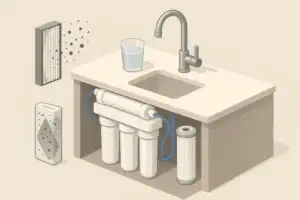
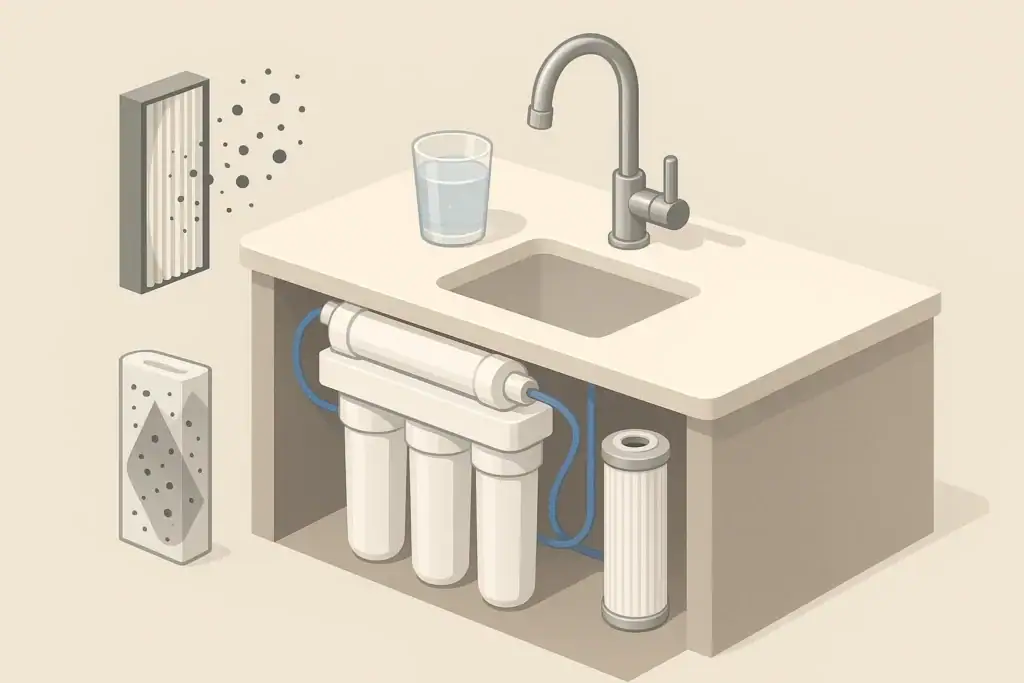
Under-sink carbon filters may feed a dedicated faucet or the cold side of the main faucet. Check the cartridge date, rated capacity, and whether flow has slowed. A pressure drop can indicate sediment loading, while odor breakthrough can indicate exhausted media. If the system has multiple stages, replace them according to the recommended sequence rather than guessing.
Reverse osmosis systems
For RO, note whether the odor is in the first glass only or continues after several glasses. First-glass odor may suggest stagnant water in the faucet, post-filter, or tank. Persistent odor may involve source water, overdue filters, or sanitation needs. RO water can also taste different because it has lower dissolved minerals, but low mineral taste should not be confused with mustiness.
Whole-house filters
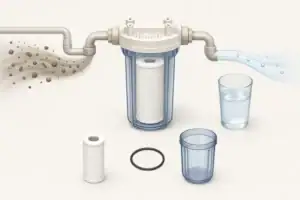
A whole-house sediment or carbon filter treats water before it reaches many fixtures. If musty odor appears throughout the home, check whether the filter is overdue, undersized for household flow, or installed in an area with heat exposure. For well water, consider whether the well, pressure tank, or plumbing has changed recently. Testing is often more useful than repeated cartridge changes when the odor affects every tap. If that sounds like your setup, a whole-house maintenance calendar can help keep service on track.
Maintenance Steps That Often Solve Musty Filtered Water
Start with low-risk steps that do not require plumbing changes. Replace cartridges that are past their interval. Flush the system as directed. Wash removable, non-electrical containers such as pitchers and lids. Discard stale stored water and old ice. Clean faucet outlet parts if they are designed to be removed and cleaned.
Keep a simple maintenance log. Include the installation date, expected replacement month, any unusual taste or odor notes, and changes in flow. Many odor complaints become easier to solve when you can see that a filter is several months past its usual service life or that the smell started after the home sat unused.
Storage habits matter too. Filtered water held in open containers can pick up refrigerator or room odors. Bottles with silicone seals, straws, or caps can develop their own smell. If mustiness follows one bottle but not a freshly washed glass, the filter may not be the problem.
After periods of nonuse
If the system was unused during travel, flush cold water before collecting drinking water. The amount of flushing depends on the system type and manufacturer guidance. A small faucet filter may need less flushing than an RO tank or refrigerator dispenser. If odor remains after reasonable flushing and normal maintenance, further inspection may be needed. For a deeper reset after travel, sanitizing an RO system after vacation can be especially useful.
When not to keep troubleshooting by smell alone
Odor is useful, but it is limited. Water can smell acceptable and still contain substances of concern, or smell unpleasant for reasons that are mainly aesthetic. If you use a private well, have repeated odor changes, or notice discoloration, sediment, slimy buildup, or sudden taste changes, consider water testing through a qualified laboratory or local health guidance. For municipal water, the annual water quality report and utility notices can provide context for seasonal taste and odor events.
Example values for illustration.
| Symptom pattern | Likely check | Typical action |
|---|---|---|
| Musty odor returns near the normal replacement date | Carbon capacity or cartridge age | Replace cartridge and reset the maintenance log |
| Musty odor after vacation or low use | Stagnant water in filter, tank, or tubing | Flush according to system instructions |
| Odor only in stored filtered water | Container, pitcher, or refrigerator storage | Wash container and use fresh water |
| Odor plus reduced flow | Sediment loading or clogged cartridge | Replace the affected stage on schedule |
| Odor only from ice | Freezer odors or old ice | Discard old ice and clean storage bin |
| Odor at every cold tap | Source water or whole-house plumbing | Compare fixtures and consider water testing |
| Odor remains after maintenance | Installation, tank, or water quality issue | Ask a qualified professional to inspect the system |
Related guides: Pitcher Filter Maintenance: Cleaning & Sanitizing Without Off-Flavors • Fixed Under-Sink Filter Popular • How Often to Replace Refrigerator Water Filters
A Practical Troubleshooting Order
When filtered water smells musty, begin with comparison testing rather than replacing parts at random. Smell unfiltered and filtered cold water in clean glassware. Check whether the odor is limited to one fixture, one appliance, the first draw of the day, or the entire home.
Next, review filter age and usage. Replace overdue cartridges, flush new or newly replaced filters, and clean removable containers or faucet outlet parts as appropriate. For RO and refrigerator systems, remember that tanks, reservoirs, ice bins, and dispenser lines can be part of the odor path.
If the smell affects all taps, keeps returning, or appears with other changes such as discoloration, sediment, slimy buildup, or unusual chemical odors, move beyond basic filter maintenance. Water testing, utility information, or a professional inspection can help separate a simple maintenance issue from a broader water quality or plumbing concern.
Frequently asked questions
Why does filtered water smell musty even after I change the filter?
The smell may be coming from the tank, tubing, faucet spout, aerator, or the container you drink from. Flush the system, clean removable parts, and compare filtered water with unfiltered water to narrow down the source.
How can I tell whether the smell is from the filter or the incoming water?
Compare unfiltered and filtered cold water at more than one tap. If both smell musty, the issue may be upstream. If only filtered water smells, focus on the cartridge, housing, tank, or dispenser line.
Can a new filter make water smell musty?
Yes, if it was not flushed properly or if it is not seated correctly. New filters can also release trapped air or fines that affect taste, so follow the manufacturer flushing instructions before judging performance.
Does musty water always mean the filter is bad?
No. The smell can also come from stagnant water, biofilm in low-flow areas, refrigerator reservoirs, or the drinkware itself. If the smell returns quickly after cleaning and flushing, the filter may not be the only issue.
When should I consider water testing?
Consider testing if the odor affects every tap, keeps coming back, or appears with discoloration, sediment, slimy buildup, or a sudden change in taste. Testing is especially helpful for private wells.
What is the first maintenance step to try?
Start by flushing the system and checking whether the cartridge is past its replacement interval. Then clean removable parts such as pitchers, aerators, and dispenser components if they are designed to be cleaned.
Recommended next:
- Why Your Filtered Water Flow Suddenly Dropped (Diagnostic Checklist)
- Low Pressure After Installing a Filter: 8 Things to Check
- Leaking Under the Sink: How to Identify the Source Fast
- Air in the Line After a Filter Change: How to Purge It
- Noisy RO System: Common Causes and Fixes
- Bad Taste After Installing a New Filter: Quick Fixes
- More in Troubleshooting →
- NSF/ANSI standards explained (42/53/401/58)
- Clear trade-offs: pitcher vs faucet vs under-sink vs RO
- Maintenance planning: cost per gallon and replacement cadence