
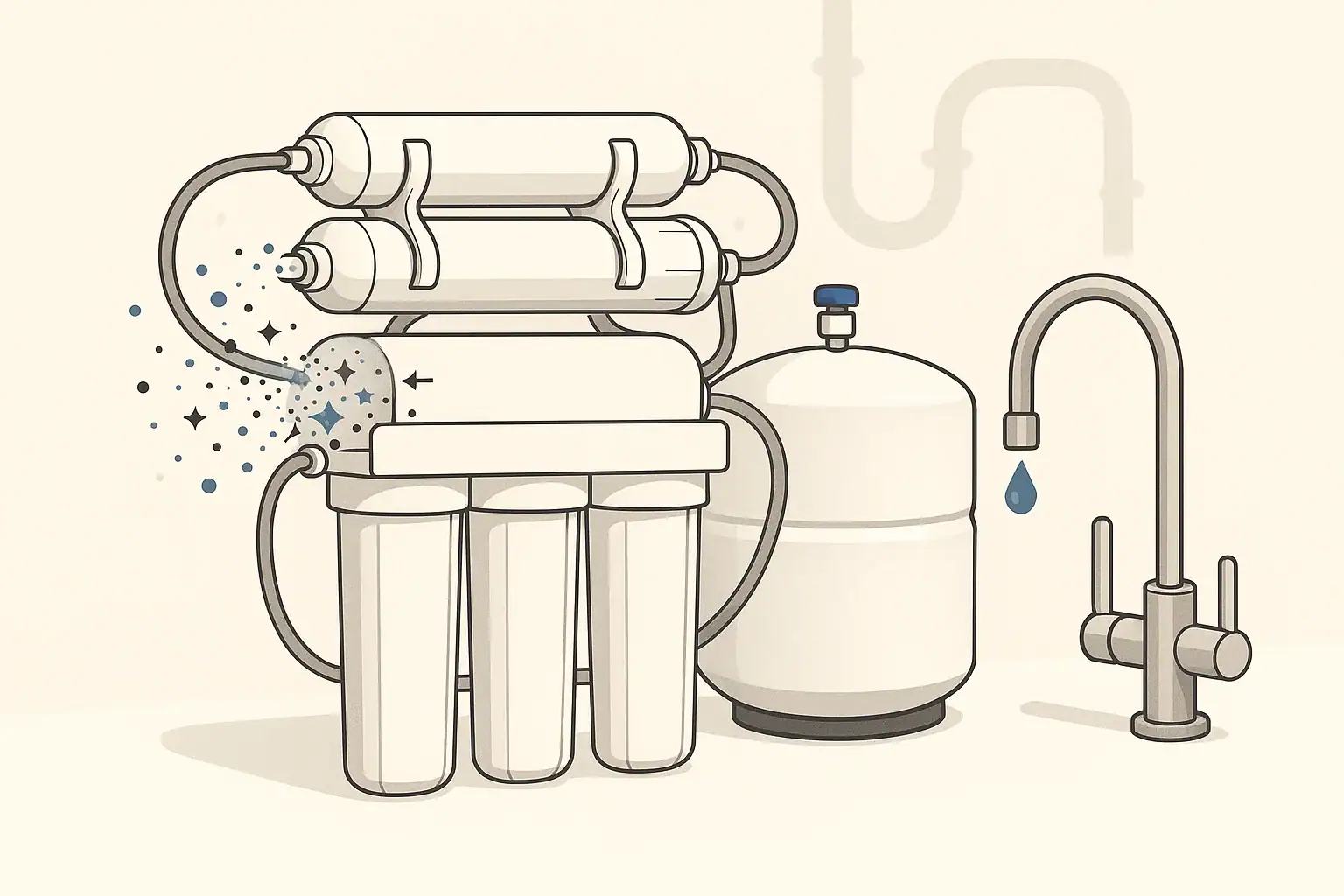
Why Reverse Osmosis Systems Make Noise
A reverse osmosis (RO) drinking water system is usually fairly quiet, especially once the storage tank is full. When something changes in the system, however, noise is often one of the first signs you notice.
Most RO noises are related to normal water movement, pressure changes, or loose components. Many sounds are harmless and temporary, but some can signal that parts are wearing out, filters are clogged, or a connection needs attention.
Common descriptions of RO noise include:
- Humming or buzzing from an RO booster pump
- Whistling or hissing from flow restrictors or small leaks
- Gurgling as wastewater flows to the drain
- Rapid clicking from automatic shutoff valves or check valves
- Vibration or rattling against the cabinet or plumbing
Understanding which sound you hear and when it happens (for example, only when dispensing water, or all the time) helps narrow down the cause and suggests safe, practical fixes.
Normal RO Sounds vs. Problem Noises
Not every noise means something is wrong. RO systems create and move water under pressure, and some sounds are part of normal operation. The key is to recognize when noise becomes excessive, changes suddenly, or appears along with other symptoms like slow flow or leaks.
Common normal sounds
You can usually expect:
- Soft gurgling when the unit is producing water and sending concentrate to the drain
- Brief whooshing in the tubing as the tank refills after filling a glass
- Faint click as the automatic shutoff valve opens or closes
- Low pump hum from systems that include a booster pump, especially during production
Sounds that may indicate an issue
Investigate further if you notice:
- Sudden increase in noise compared with how the system sounded before
- Loud whistling or shrieking from the drain saddle or flow restrictor
- Constant loud gurgling, even long after the tank should be full
- Persistent pump vibration that shakes nearby tubing or the cabinet
- Bang or thud (water hammer) when the faucet is turned off
If you are unsure whether a sound is normal, look for other performance changes: decreased flow at the RO faucet, water constantly running to the drain, visible drips, or very frequent cycling.
Example values for illustration.
| Noise description | When it happens | Possible cause | Action level |
|---|---|---|---|
| Soft gurgling | While tank is refilling | Normal drain flow | Monitor only |
| Loud gurgling | Most of the time | High drain flow or misaligned drain saddle | Inspect soon |
| Whistling or hissing | When water is running | Flow restrictor, small leak, or air in line | Inspect soon |
| Rapid clicking | As system starts or stops | Automatic shutoff or check valve cycling | Monitor or service |
| Strong vibration | Anytime pump runs | Loose mounting or contact with cabinet | Secure components |
| Sharp bang | When faucet closes | Water hammer in supply line | Consider mitigation |
Use this as a general guide and confirm with visual checks and system performance.
Cause 1: Trapped Air After Filter Changes or Installation
Air trapped in new cartridges, housings, or tubing is one of the most common sources of short-term RO noise. Air pockets can cause sputtering, rattling, or whistling until they are flushed out.
Typical signs of trapped air
- New or recently serviced system suddenly becomes noisy
- Faucet spits or produces cloudy water that clears in seconds
- Short bursts of noise that lessen over a few days of normal use
Practical steps to reduce air-related noise
- Follow the manufacturer’s flushing instructions after installing new filters or membrane
- Open the RO faucet and let it run as directed during initial flushing
- Ensure housings are properly tightened to avoid sucking in air at the O-rings
- Check that tubing connections are fully inserted into push-fit fittings
In many cases, air noises diminish as the system is used. If sputtering and noise continue well beyond the recommended flushing period, review connections and consult the instructions for your specific model or see Air in the Line After a Filter Change: How to Purge It.
Cause 2: Low Feed Pressure and Straining Components
RO membranes work within a certain pressure range. If your household water pressure is low, the system may run longer, produce less water, and some parts can make more noise while trying to maintain flow.
How low pressure can lead to noise
- Extended run times: System runs more often and for longer periods, so normal operating sounds become more noticeable.
- Booster pump noise: If a pump is installed to raise pressure, it may run frequently, hum more loudly under strain, or vibrate.
- Valve chatter: Automatic shutoff valves may cycle more frequently near their operating threshold.
Checking and addressing pressure issues
Without modifying plumbing, you can:
- Review the recommended inlet pressure range in your RO system documentation
- Use a simple screw-on pressure gauge at an accessible threaded faucet or hose bib to get a general idea of home pressure
- Note if your RO flow is consistently weak compared with earlier performance
If pressure is consistently low, see Low Pressure After Installing a Filter: 8 Things to Check. Some systems are designed to work with booster pumps or different flow restrictors. Any changes should follow the manufacturer’s guidance and avoid overriding built-in safety features.
Cause 3: Clogged Filters or Flow Restrictor
As sediment and carbon filters collect particles and chlorine byproducts, they gradually create more resistance. Flow restrictors that control concentrate flow can also become partially blocked. This can lead to whistling, hissing, or louder flushing sounds.
What you may notice with clogged components
- Increased noise from the unit while the tank is filling
- Reduced flow at the RO faucet
- Tank taking much longer than usual to refill
- More pronounced pitch changes as water moves through restricted areas
Maintenance steps to reduce noise and protect performance
- Replace sediment and carbon prefilters on the schedule recommended for your usage and water quality
- Inspect the flow restrictor during regular maintenance if your system allows it and follow cleaning or replacement instructions
- Do not attempt to enlarge or drill out a flow restrictor; that can damage performance and waste water unnecessarily
Keeping filters within their service life not only quiets the system but also supports consistent water production and membrane protection; see Why Your Filtered Water Flow Suddenly Dropped (Diagnostic Checklist) for troubleshooting tips on low flow.
Cause 4: Drain Line and Air Gap Noise
The RO drain line carries the concentrate (reject water) to your sink drain. The way this line is routed and attached can have a major impact on noise. Many RO faucets also include an air gap, which can create audible splashing and gurgling.
Common drain-related noises
- Loud gurgling in the sink drain as RO water discharges
- Whistling or rushing at the drain saddle connection
- Splashing sounds in the air gap faucet, sometimes accompanied by slow drainage
Practical, safe checks
- Confirm the drain saddle is aligned over the drilled hole in the drainpipe so water flows directly into the opening
- Avoid kinks or sharp bends in the drain tubing that can increase turbulence
- Ensure the drain line slopes gently toward the drain connection where possible
- Periodically check that the sink drain and trap are not heavily restricted by buildup, which can amplify gurgling
If your faucet uses an air gap, some additional noise is normal as water passes through the gap and down to the drain. Excessive splashing or backup in the air gap outlet may indicate a partial blockage in the drain tubing that requires cleaning according to the faucet’s instructions.
Cause 5: Loose Mounting, Tubing, and Vibration
Even relatively quiet components can seem noisy if they vibrate against the cabinet wall, floor, or other plumbing. This is especially noticeable with systems that use booster pumps or that are installed in tight under-sink spaces.
How vibration becomes noise
- Pumps or housings resting directly on thin cabinet walls can transmit humming into the surrounding wood or metal
- Loose tubing can rattle against pipes or the underside of the sink
- Mounting screws that have loosened over time allow components to move
Ways to reduce vibration transmission
- Secure the RO manifold and housings per the manufacturer’s mounting guidelines
- Use existing holes and brackets instead of drilling unsupervised holes in plumbing or structural elements
- Gently reposition tubing so it does not rest tightly against resonant surfaces
- Where appropriate, place simple cushioning material (such as a thin rubber pad) under the storage tank or pump bracket to absorb vibration, without blocking any vents
Do not restrict air circulation around pumps or electrical components, and avoid compressing tubing or fittings when adding any cushioning.
Cause 6: Water Hammer and Sudden Shutoff Noises
Water hammer is a pressure shock that can cause a sharp banging sound when water flow stops suddenly. Although it is more often associated with washing machines or fast-closing valves, it can also appear around RO systems, especially if the supply line is sensitive.
When water hammer is likely
- A noticeable bang in the pipes right when you close the RO faucet
- Noise when the automatic shutoff valve engages after the tank is full
- Homes with long runs of rigid pipe and high water pressure
Mitigating water hammer safely
- Open and close the RO faucet more gradually to avoid abrupt stops
- Discuss persistent water hammer with a qualified plumber, who can evaluate if water hammer arrestors or other measures are appropriate for the whole plumbing system
- Avoid altering built-in RO shutoff valves or pressure controls on your own
Addressing water hammer at the plumbing level can protect not just the RO system but also other fixtures and appliances.
Cause 7: Aging Parts and End-of-Life Components
As an RO system ages, moving parts and elastomer components can stiffen, wear, or deform. This can create new paths for noise or change how valves open and close.
Typical age-related noise symptoms
- Automatic shutoff valve cycles more frequently and audibly
- Check valve starts to click or buzz as it closes
- Older pumps hum more loudly or develop a rougher sound
Planning for part replacement
- Keep track of the installation date and any major component changes
- Review the manufacturer’s guidance for expected service life of valves and pumps
- Replace aging parts with compatible components designed for your system model
If noise coincides with observable performance decline, such as poor tank refill or irregular flow, it may be a sign that an internal valve or pump is ready for replacement.
Quieting Your RO System: Practical Adjustments
Once you have identified the likely source of noise, most fixes are incremental adjustments and maintenance tasks rather than major changes.
Steps that often reduce RO noise
- Complete overdue maintenance: Replace sediment and carbon filters, inspect the flow restrictor, and flush air from the system.
- Check routing: Make sure tubing is not kinked, tightly bent, or pressed against resonant surfaces.
- Secure components: Tighten brackets and mounting hardware without over-tightening plastic parts.
- Observe operation: Listen to where the sound is strongest and note when it occurs (tank filling, faucet on, or system idle).
Any changes should respect the system’s design: do not bypass safety features, modify drain connections in unsafe ways, or operate the system without recommended prefilters or flow control devices.
Example values for illustration.
| Time interval | Check or task | Noise-related focus | Example outcome |
|---|---|---|---|
| Monthly | Quick listen and visual inspection | New or changed sounds | Note any gurgling increases |
| Every 6 months (example) | Prefilter replacement | Clogging or whistling | Noise drops after change |
| Every 12 months (example) | Tubing routing review | Rubbing or vibration | Secure loose lines |
| Every 2–3 years (example) | Valve and flow control check | Clicking or chatter | Replace worn valve if needed |
| At filter changes | System flush per instructions | Air in lines | Temporary sputter resolves |
| When moving or remodeling | Confirm secure mounting | Cabinet vibration | Add padding if appropriate |
Align these checks with the specific guidance for your RO system model and water usage.
Related guides: Why Your Filtered Water Flow Suddenly Dropped (Diagnostic Checklist) • Low Pressure After Installing a Filter: 8 Things to Check • Air in the Line After a Filter Change: How to Purge It
A noisy RO system can usually be traced to a combination of air, pressure, flow restriction, drainage, vibration, or aging components. By paying attention to when the noise happens and what type of sound it is, you can often resolve the issue with routine maintenance and simple adjustments, while keeping the system operating safely and effectively.
Frequently asked questions
Why did my RO system get noisy right after I changed the filters?
Air trapped in new cartridges or housings is the most common cause. Follow the manufacturer’s flushing instructions and run the RO faucet for the recommended time; noises usually decrease as air is expelled.
How long should air-related sputtering or gurgling last?
Typically a few minutes to several hours of normal use while the system refills and stabilizes; if noises persist beyond the flushing period in the instructions, check connections and O-rings for leaks or loose tubing.
Can I safely fix whistling or hissing myself?
Yes—start with simple checks: ensure tubing is properly seated, inspect for kinks, confirm the drain saddle is aligned, and replace clogged prefilters. Don’t modify flow restrictors or internal valves; consult a technician if the issue continues.
When should I call a plumber or service technician?
Contact a professional if you hear water hammer, persistent loud banging, signs of leaking, or if pump or valve noises are accompanied by significant performance loss (very slow refill, continuous drain flow), or if you’re uncomfortable performing the checks yourself.
Recommended next:
- NSF/ANSI standards explained (42/53/401/58)
- Clear trade-offs: pitcher vs faucet vs under-sink vs RO
- Maintenance planning: cost per gallon and replacement cadence