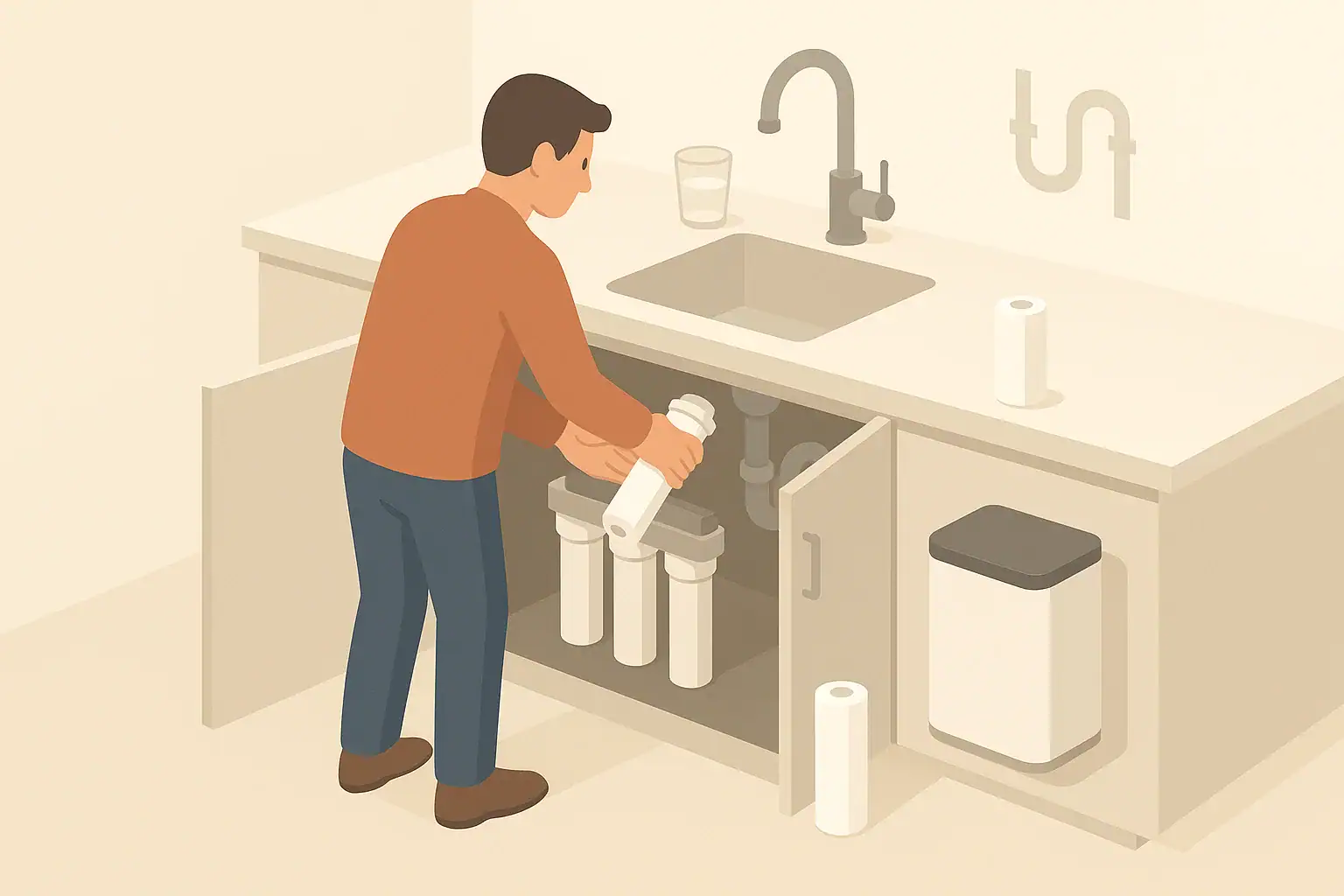
Why radium and uranium can appear in well water
Radium and uranium are naturally occurring elements found in some rocks, soils, and underground formations. When groundwater moves through those formations, small amounts can dissolve into the water. This is why radium and uranium in well water are usually a geology issue, not necessarily a sign of nearby industrial activity.
Private wells draw water from local aquifers, so conditions can vary from one property to the next. Two homes on the same road can have different results if their wells are different depths, draw from different fractures, or intersect different rock layers.
Why you cannot rely on taste, odor, or clarity
Radium and uranium do not create a reliable taste, smell, color, or visible residue in household water. Water may look completely clear and still contain measurable amounts. A basic sediment filter, taste-and-odor carbon filter, or refrigerator filter cannot confirm whether they are present. For a broader look at related system choices, see under-sink vs pitcher.
General water readings can also be misleading. Total dissolved solids, hardness, pH, and iron tests may help describe overall water chemistry, but they do not identify radium or uranium by themselves. A specific laboratory test is needed.
How they differ from common well water problems
Radium and uranium are not the same as bacteria, nitrate, hardness, iron, manganese, or sulfur odor. They are also different from radon, another naturally occurring radioactive substance that may be tested and treated differently. Because each issue behaves differently in water, treatment should be based on the actual laboratory results rather than a general well water assumption.
Why testing matters before choosing treatment
Testing is the practical starting point because treatment choices depend on what is actually in the water. A system designed for iron staining may do little for dissolved uranium. A carbon filter that improves chlorine taste on city water is not a reliable solution for naturally occurring radionuclides in a well. If you are comparing treatment types, what reverse osmosis removes is a useful reference.
Private wells are typically the homeowner’s responsibility. Public water systems are routinely monitored under regulatory programs, but private well owners generally need to arrange their own testing, keep records, and decide when treatment is appropriate.
Testing helps avoid overbuilding or under-treating
Without test data, it is easy to buy equipment that does not match the problem. Testing helps determine whether treatment should focus on drinking water at one tap, water used throughout the home, or other well issues that may interfere with the treatment system. If you want a whole-home approach, whole house vs point-of-use filters can help frame the decision.
It also helps establish a baseline. If you install treatment, you can compare treated-water results with the original sample to see whether the system is performing as expected.
When to consider testing
Testing may be especially useful when:
- You use a private well for drinking or cooking water.
- Nearby wells have reported uranium, radium, or gross alpha findings.
- Your area has known granitic, shale, phosphate, or other mineral-bearing formations.
- You are buying a home with a private well.
- A well has been newly drilled, deepened, repaired, or unused for a long period.
- You have never completed a radiological water test before.
Example values for illustration.
| Situation | Practical next step | Why it matters |
|---|---|---|
| No prior radiological test | Order a laboratory test for relevant radionuclides | Clear water does not rule them out |
| Gross alpha detected | Ask the lab or local health office about follow-up tests | Screening tests may not identify the source |
| Uranium detected | Evaluate point-of-use treatment and confirm with a treated-water test | Drinking and cooking water are often the first priority |
| Radium detected | Review treatment options with a qualified water professional | Media choice and waste handling need attention |
| Multiple contaminants present | Plan the treatment order before buying equipment | Iron, hardness, or sediment can affect performance |
| Real estate transaction | Test early enough to allow lab turnaround and review | Radiological tests can take longer than basic panels |
| Treated system already installed | Retest treated water on a schedule | Performance can change as media ages |
How to test a private well for radium and uranium
Use a certified or qualified drinking water laboratory that offers radiological testing. These tests are more specialized than routine bacteria, nitrate, or hardness tests. Your state health department, county extension office, or local environmental agency may be able to point you toward appropriate labs and local guidance.
Choose the right test panel
A general well water panel may not include radium or uranium. Ask specifically about uranium, radium isotopes, and any recommended screening tests for your area. Some laboratories may suggest a gross alpha screen first, while others may recommend direct analysis based on local geology or regulatory guidance.
If a screening result is elevated, follow-up testing may be needed to identify whether uranium, radium, or another radionuclide is contributing to the result. This distinction matters because the best treatment approach can differ.
Follow the sampling instructions exactly
Radiological water samples may require specific bottles, preservatives, sample volumes, or holding times. Follow the laboratory’s instructions rather than using a generic container. If the lab asks for a first-draw sample, a flushed sample, or a specific collection point, use that method. For installation and maintenance planning, under-sink filter installation can be a helpful companion guide.
Do not sample from a hose, unclean faucet, or untreated outdoor spigot unless the lab specifically instructs you to do so. For treatment planning, you usually want a sample that represents the water people actually drink or the untreated water entering the home, depending on the question being asked.
Keep copies of results
Store the original lab report, the sampling date, the well location, and any notes about treatment equipment in place at the time. These records help you compare future results and make better maintenance decisions.
Treatment options commonly used at home
The right treatment depends on the contaminant, its concentration, competing water chemistry, household water use, and whether you want treatment at one faucet or throughout the home. No single filter should be assumed to handle every well water issue.
Reverse osmosis for drinking water
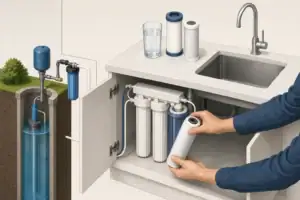
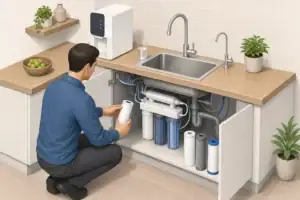
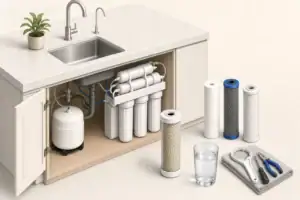
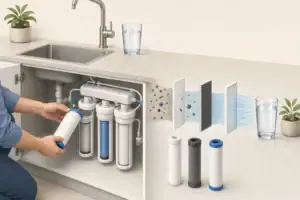
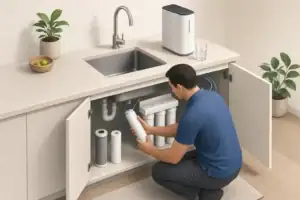
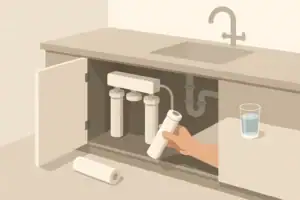
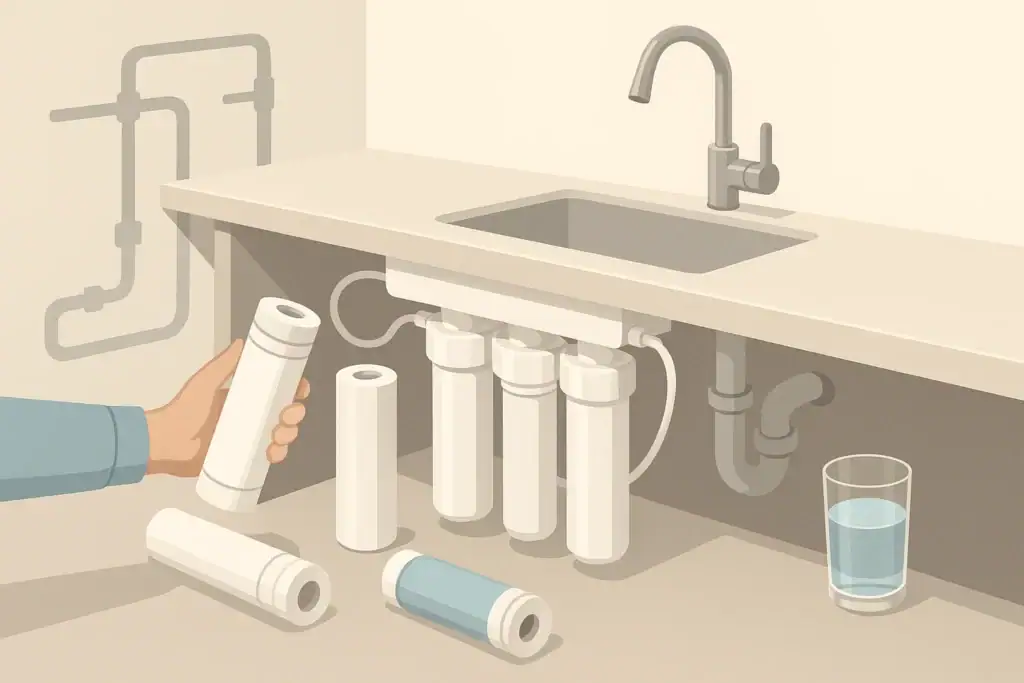
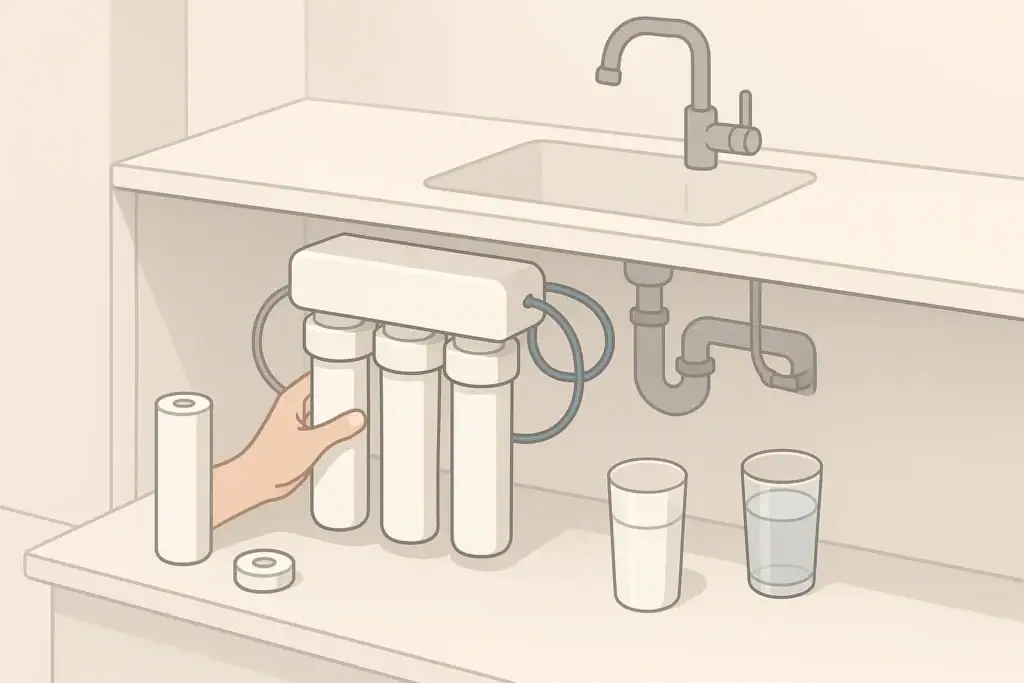
Reverse osmosis, often called RO, is commonly used as a point-of-use treatment at a kitchen sink for many dissolved contaminants, including uranium and some radionuclide concerns when the system is properly selected and maintained. RO systems push water through a semi-permeable membrane and usually include prefilters and postfilters.
RO is usually installed for drinking and cooking water rather than every tap. It can reduce many dissolved substances, but it also produces reject water and requires periodic filter and membrane replacement. Treated-water testing is still important because performance depends on water pressure, membrane condition, installation quality, and incoming water chemistry. For certification context, see NSF/ANSI 58.
Ion exchange systems
Ion exchange uses resin beads to swap certain ions in water for other ions held on the resin. Depending on the resin type and water chemistry, ion exchange may be used for uranium or radium. Cation exchange softening is often discussed for radium, while anion exchange may be used for uranium in some applications.
Ion exchange systems require careful selection. Other ions in the water can compete for the resin and affect capacity. Regeneration waste and spent media may need special attention, especially when removed contaminants concentrate in brine, resin, or cartridges. Homeowners should follow local requirements and professional guidance for handling and disposal.
Adsorptive media
Some treatment systems use specialty media that adsorb uranium or other dissolved contaminants. Media selection is chemistry-specific. pH, alkalinity, competing minerals, and flow rate can affect how well the media works and how long it lasts.
These systems are not set-and-forget devices. They need a service plan, periodic testing, and replacement before breakthrough occurs. Breakthrough means the media is no longer reducing the contaminant effectively enough for the intended use.
What not to assume
Several common water filters may improve other issues but should not be assumed to solve radium or uranium problems:
- Sediment filters remove particles, not most dissolved contaminants.
- Activated carbon helps with many taste, odor, chlorine, and some organic chemical concerns, but it is not a universal radionuclide treatment.
- UV systems disinfect water by inactivating many microorganisms, but they do not remove dissolved metals or radionuclides.
- Refrigerator and pitcher filters vary widely and are usually not designed as primary well water radionuclide treatment.
Practical design questions before installation
Once testing shows a need for treatment, the next step is planning. The best system is not only the one that can reduce the target contaminant in a lab setting. It also has to fit the home’s plumbing, water pressure, flow demand, maintenance habits, and testing schedule.
Point-of-use or whole-house treatment
Many homeowners first consider point-of-use treatment for drinking and cooking water. This can be practical when the main exposure concern is ingestion and the goal is treated water at the kitchen sink. Point-of-use systems are often smaller and easier to monitor than whole-house systems.
Whole-house treatment may be considered when there are multiple water quality goals, when several taps are used for drinking, or when the chosen treatment method is better suited at the point where water enters the home. Whole-house systems need to support the home’s peak flow rate without causing unwanted pressure drop.
Water chemistry affects performance
Radium and uranium treatment should be evaluated alongside the rest of the well water report. Important supporting measurements may include pH, hardness, alkalinity, iron, manganese, sulfate, nitrate, total dissolved solids, and turbidity. If hardness is part of the picture, TDS vs hardness can help clarify what those numbers mean.
For example, sediment or iron may foul equipment. Hardness may influence whether pretreatment is needed. High total dissolved solids may affect RO production rate and membrane life. These are design issues, not reasons to skip treatment.
Look for relevant performance information
When comparing equipment, look for independent testing, certification, or performance data that specifically names the contaminant of concern. General claims such as improves water quality or reduces contaminants are not enough for a radiological issue.
Also check the rated capacity, required pressure range, service flow rate, replacement interval, and whether the system requires professional installation. Avoid plumbing shortcuts, disabled safety features, or improvised drain connections. A properly installed system should protect the home from leaks, backflow concerns, and pressure problems.
Maintenance, retesting, and ownership planning
Treatment for radium or uranium is an ongoing responsibility. Filters and media do not last forever, and some systems can look normal even when performance has declined. A maintenance plan should be part of the purchase decision, not an afterthought.
Retest treated water
After installation or major service, test the treated water to confirm the system is doing what it was selected to do. Then retest on a schedule recommended by the lab, local health officials, or the treatment professional. Retesting is especially important after well work, flooding, long periods of nonuse, or changes in taste, flow, pressure, or appearance.
Track filter changes and service dates
Keep a simple log of cartridge changes, membrane replacements, media service, salt use if applicable, pressure readings, and test results. This helps identify patterns and makes it easier to troubleshoot lower flow, pressure drop, or unexpected laboratory results. A simple replacement planner can make this easier.
Do not extend filter life only because water still tastes fine. Radium and uranium concerns cannot be managed by taste. Replacement timing should be based on system specifications, water usage, water chemistry, and confirmed test data.
Example values for illustration.
| Service item | Typical planning note | Why it matters |
|---|---|---|
| Sediment prefilter | Check on a regular interval and replace when loaded | Protects downstream equipment from particles |
| Carbon prefilter | Replace based on rated life and water use | Protects some membranes and improves taste where used |
| RO membrane | Monitor production rate and treated-water test results | The membrane is central to dissolved contaminant reduction |
| Specialty adsorptive media | Replace before expected breakthrough | Capacity depends on water chemistry and flow |
| Ion exchange resin or media | Service according to design and regeneration plan | Exhausted media may stop reducing the target contaminant |
| Storage tank and faucet | Sanitize during recommended service events | Helps maintain good treated-water hygiene |
| Post-installation lab test | Collect after startup and flushing steps are complete | Confirms real-world performance at the tap |
Related guides: Reverse Osmosis 101: What RO Removes (and What It Doesn’t) • NSF/ANSI 58 Explained: What It Means for RO Systems • Whole House vs Point-of-Use Filters: Which Upgrade Should You Buy First? • Under-Sink Filter Installation: Tools, Parts, and Common Mistakes • Replacement Planner Basics: Estimate Your Next Filter Change Date
Key takeaways for well owners
Radium and uranium in well water are best handled with testing, documentation, and treatment matched to the laboratory result. They cannot be confirmed by taste, odor, clarity, or basic filter performance claims.
For many homes, the practical path is to test the untreated well water, review the findings with qualified local resources, choose treatment designed for the specific contaminant, and verify performance with treated-water testing. Maintenance and retesting are what keep the decision reliable over time.
If results are near or above a federal, state, or local drinking water standard, use the result as a prompt for timely follow-up rather than guesswork. A calm, evidence-based approach helps avoid both unnecessary equipment and inadequate treatment.
Frequently asked questions
Can radium or uranium be detected by smell or taste?
No. They usually do not change the smell, taste, or clarity of water, so only a laboratory test can confirm whether they are present.
What kind of test should I order for a private well?
Ask a certified drinking water laboratory about uranium, radium isotopes, and any recommended screening tests for your area. Some wells may also need a gross alpha screen with follow-up testing.
Is a standard carbon filter enough to remove radium or uranium?
Not usually. Carbon filters may improve taste or odor, but they are not a reliable standalone treatment for radium or uranium unless specifically rated for that purpose.
What treatment is commonly used for uranium in drinking water?
Reverse osmosis at the kitchen sink is a common option for drinking and cooking water. Some ion exchange or specialty media systems may also be used, depending on water chemistry and test results.
How often should treated well water be retested?
Retest after installation and then on a schedule based on the system, water use, and local guidance. Retesting is also wise after repairs, flooding, or any change in water quality.
Recommended next:
- Lead in Tap Water: Practical Steps Before Buying a Filter
- PFAS Removal Options: RO vs Carbon vs Whole House
- VOCs in Water: How Carbon Filters Work
- Pesticides & Herbicides: What Filters Can Reduce Them?
- Nitrates in Well Water: What Filtration Works Best?
- Arsenic Filtration Basics: What to Look For
- More in Contaminants & Removal →
- NSF/ANSI standards explained (42/53/401/58)
- Clear trade-offs: pitcher vs faucet vs under-sink vs RO
- Maintenance planning: cost per gallon and replacement cadence