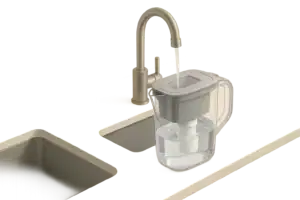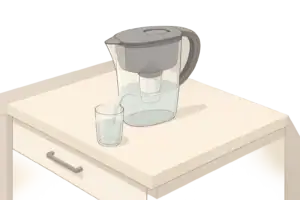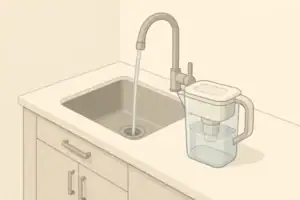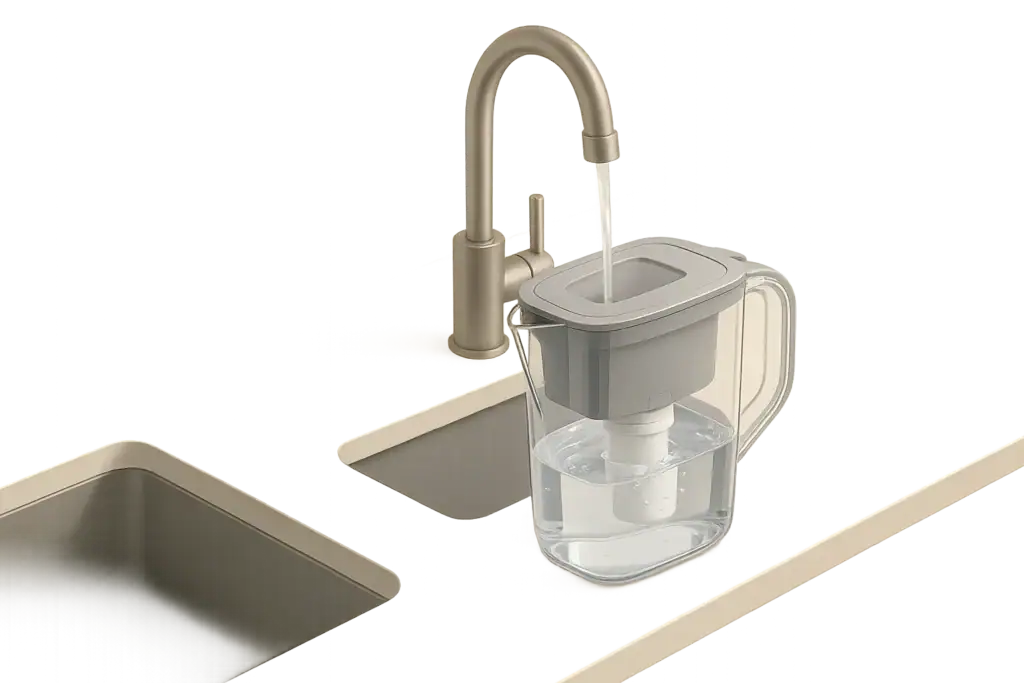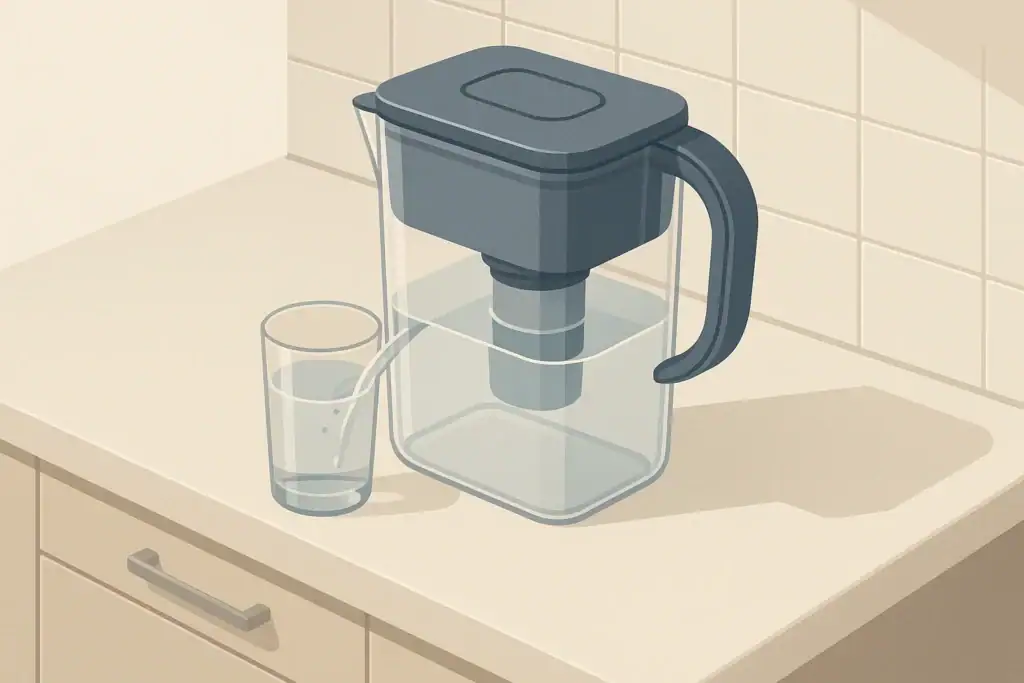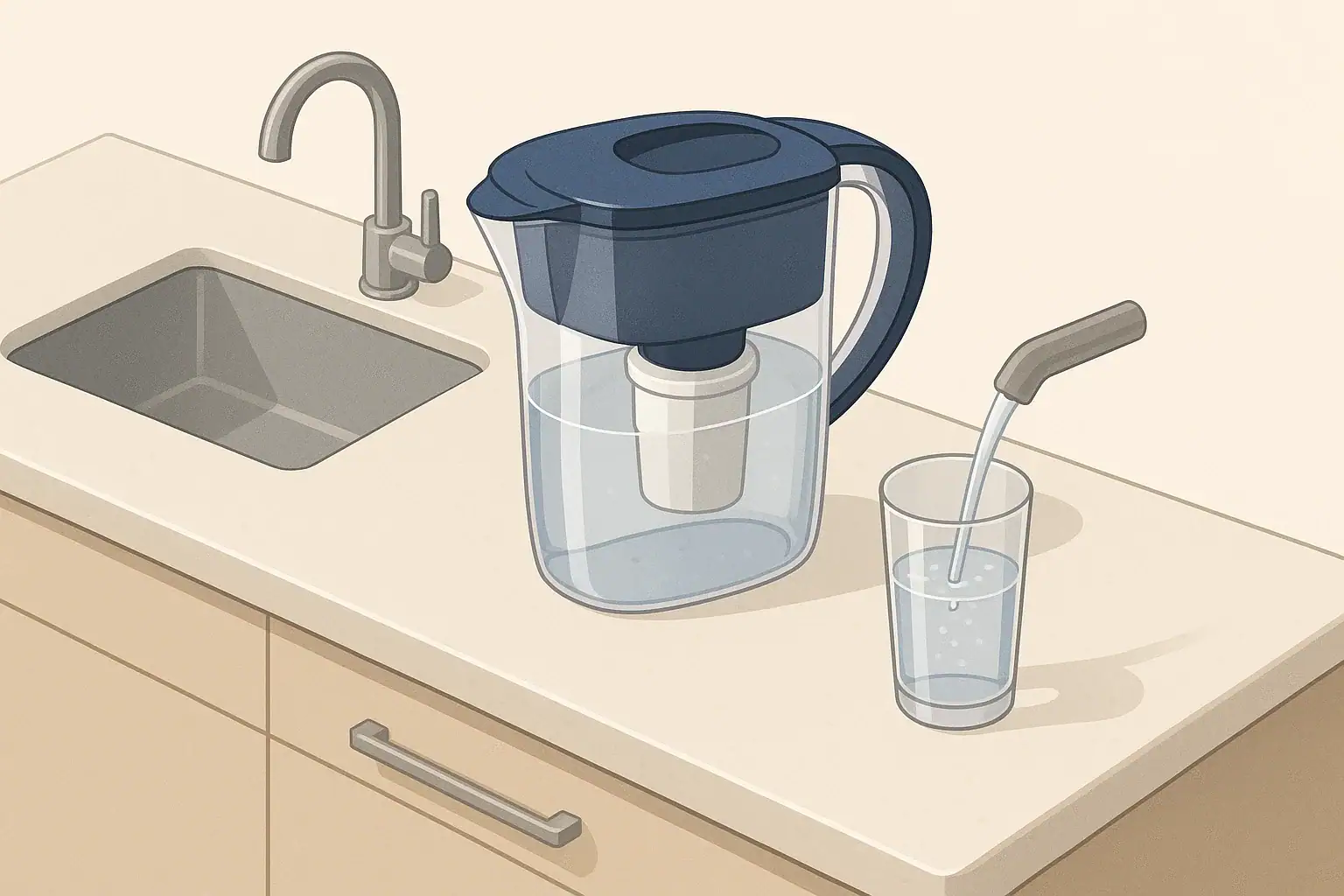
Pitcher filters are popular because they are simple, portable, and do not require tools or plumbing changes. For high-consumption families, though, many standard pitchers feel too small and too slow. When several people share one filtered water source for drinking, cooking, coffee, tea, pet bowls, and sometimes plants, capacity and speed become essential features.
A high-consumption household might include:
- Four or more people using the same kitchen
- Frequent guests or shared homes
- Households that cook at home most days
- Anyone who fills large bottles, kettles, or stock pots regularly
For this type of use, the best pitcher filters balance three things:
- High capacity – enough filtered water ready to use between refills
- Fast pour and refill – minimal waiting time for gravity filtration
- Consistent performance – predictable taste, odor reduction, and flow over the filter’s life
Understanding how capacity, flow, and filter design work together helps you choose a pitcher that can keep up with daily demand.
Why High-Consumption Families Need a Different Kind of Pitcher Filter
Pitcher filters are popular because they are simple, portable, and do not require tools or plumbing changes. For high-consumption families, though, many standard pitchers feel too small and too slow. When several people share one filtered water source for drinking, cooking, coffee, tea, pet bowls, and sometimes plants, capacity and speed become essential features.
A high-consumption household might include:
- Four or more people using the same kitchen
- Frequent guests or shared homes
- Households that cook at home most days
- Anyone who fills large bottles, kettles, or stock pots regularly
For this type of use, the best pitcher filters balance three things:
- High capacity – enough filtered water ready to use between refills
- Fast pour and refill – minimal waiting time for gravity filtration
- Consistent performance – predictable taste, odor reduction, and flow over the filter’s life
Understanding how capacity, flow, and filter design work together helps you choose a pitcher that can keep up with daily demand.
Key Features to Prioritize for Heavy Daily Use
Pitcher filters share the same basic concept: water passes through a replaceable cartridge that contains filtration media before collecting in a reservoir. For high-consumption families, some design details matter much more than others.
Overall Volume vs. Usable Filtered Capacity
Pitcher sizes are often described in cups or liters. For large families, the critical number is the usable filtered capacity, not the total volume when both upper (unfiltered) and lower (filtered) chambers are full.
When comparing options, look at:
- Filtered reservoir size – how much water is ready at any time
- Refill frequency – how many full containers you expect to filter each day
- Fridge fit vs. counter space – tall, slim designs fit doors; wide designs hold more but may live on the counter
Flow Rate and “Fast Pour” Considerations
Gravity pitchers do not have pumps, so flow is governed by filter resistance and water level. A pitcher that feels fast enough in a one-person household can feel painfully slow when refilled several times every day.
For fast-pour performance, pay attention to:
- Filter media density – denser media can reduce flow; more media can also reduce taste and odor more effectively, but at a speed cost
- Number of filter elements – some designs use multiple cartridges or wider filters to maintain flow
- Filter age – most filters slow down as they load with particles over time
Manufacturers may provide an estimated refill time (for example, how long to filter a full upper reservoir). Treat these numbers as general guidance rather than exact performance, since local water conditions and temperature affect flow.
Filter Life and Capacity Ratings
Filter life is often given as a volume (for example, a few dozen to several hundred gallons) or a time period (for example, 2–6 months). In a high-consumption household, volume matters more than months because you may reach the gallon limit long before the time-based estimate.
To estimate how often you will replace filters:
- Add up approximate daily filtered water use (drinking, cooking, coffee, pets).
- Multiply by 30 for monthly use.
- Compare that total to the filter’s stated capacity.
For example, if a household uses about 3 gallons per day, that is roughly 90 gallons a month. A cartridge rated for a couple hundred gallons might last a few months, while a smaller one may need replacement significantly sooner. These numbers are only planning tools, not performance guarantees.
Contaminant Focus and Certifications
Pitcher filters do not all target the same types of substances. Many are designed primarily for improving taste and odor by reducing chlorine. Others are tested for additional contaminants commonly found in older plumbing or certain water sources.
Common certification references include:
- NSF/ANSI 42 – aesthetic effects (chlorine, taste, odor, some particulates)
- NSF/ANSI 53 – certain health-related contaminants (such as lead, some VOCs, and others)
- NSF/ANSI 401 – selected emerging compounds (like some pharmaceuticals and industrial chemicals)
When you review product documentation, verify which specific standards and claims apply to that exact model and cartridge, and confirm whether the testing was done by a recognized third party.
Example values for illustration.
| Household pattern | Pitcher filter suitability | Notes for comparison |
|---|---|---|
| 4–6 people, mainly drinking water only | Often suitable | Choose largest practical pitcher volume and higher-capacity cartridges. |
| Heavy cooking plus drinking (3+ gallons/day) | Borderline | Consider pairing a large pitcher with an additional format (e.g., under-sink). |
| Frequent large-batch cooking, stock pots, pasta water | Less convenient | Repeated refilling may be slow; point-of-use faucet filters may be easier. |
| Apartment with no plumbing access | Well suited | Pitchers and dispensers avoid tools and landlord permissions. |
| Home with very limited fridge space | Depends | Countertop dispensers or smaller pitchers may be preferable. |
| Need for filtered water in multiple rooms | Moderately suited | Two pitchers in different locations may solve this more easily than plumbing work. |
| Concerned about a wide range of contaminants | Varies | Check model-specific certifications; some needs may be better served by other formats. |
Pitcher Design Choices That Matter for High Capacity
Within the world of pitcher filters, designs vary more than it might appear at first glance. Several design choices influence how well a pitcher serves a high-consumption family.
Pitcher vs. Dispenser Style
Two common form factors are:
- Traditional pitcher – handled container that pours from a spout
- Dispenser – rectangular container with a spigot, typically stored on a fridge shelf or counter
For high-volume users, dispensers often provide more stored filtered water at once. However, pitchers are easier to carry to the sink and pour quickly into bottles or pots. Some households use both: a large dispenser for everyday drinking water and a separate pitcher that lives by a coffee station or office desk.
Refill Convenience and Lid Design
When refilling multiple times per day, the lid design has a noticeable impact on convenience. Features that can help include:
- Flip-top or sliding refill doors that open without removing the entire lid
- Stable handles and balanced weight to reduce spills when the pitcher is full
- Clear markings on the reservoirs, so you can see water levels at a glance
Some lids also include simple mechanical or electronic reminders for filter replacement. These are planning tools rather than precise meters, but they can be useful when many people share responsibility for maintenance.
Filter Media Types and Multi-Stage Cartridges
Most pitcher cartridges combine different media to address various water quality concerns. Common elements include:
- Activated carbon – widely used to reduce chlorine taste and odor and some organic compounds
- Ion exchange resins – used to reduce selected dissolved metals and adjust hardness
- Mechanical filtration layers – to capture fine particles like rust or sediment
Multi-stage cartridges can provide broader filtration targets but sometimes slow down flow, especially as they accumulate particles. For high-consumption families, choosing a cartridge that balances flow with filtration goals is important. If your primary concern is taste and odor, a simpler, high-flow cartridge might feel more practical than a very dense, slower one.
Ergonomics and Everyday Handling
Large-capacity pitchers can be heavy when full. In a busy kitchen, ease of handling can be as important as filtration performance:
- Handle placement and grip size affect how easy it is for different family members to pour.
- Pour spout control influences whether you can fill narrow bottle openings without spilling.
- Height and footprint determine whether the pitcher fits in the refrigerator door, on a shelf, or stays on the counter.
For some households, it can make sense to use two medium-sized pitchers instead of a single very large one, to keep filled weight manageable.
Sizing a Pitcher Filter for Your Household’s Daily Demand
Because manufacturer capacity ratings are generalized, it helps to think through your own usage. Matching pitcher size and filter capacity to your actual habits reduces frustration and keeps maintenance predictable.
Estimate Daily Filtered Water Use
Work through a rough daily estimate by category:
- Drinking – count how many people drink water from the pitcher and how many glasses or bottles each typically uses daily.
- Cooking – consider how often you use filtered water for rice, grains, soups, and other dishes.
- Beverages – include coffee machines, kettles, and tea brewers that are filled from the pitcher.
- Other uses – such as pet water bowls or aquarium top-off water, if applicable.
Add these together to estimate total daily gallons. Even if this number is approximate, it will help you compare filter capacity ratings more realistically.
Translate Daily Use into Filter Replacement Frequency
Once you have a daily estimate, you can approximate how often a cartridge might need replacement. For example, if your household uses around 2 gallons per day, that is about 60 gallons per month. If a cartridge is rated for a few hundred gallons, you can divide that capacity by 60 to estimate how many months that might represent under your conditions.
Remember that water quality (such as sediment levels) also affects filter lifespan. A household with very cloudy water may see slower flow and earlier cartridge changes than estimated, while a home with relatively clear water might get closer to the higher end of the capacity range.
Consider Multiple Pitchers or a Hybrid Setup
For very high use, one large pitcher may still not be enough. Options include:
- Two identical pitchers rotated so one is always filling while the other is in use
- One large dispenser in the fridge plus a smaller pitcher for cooking and coffee near the sink or stove
- Combining a pitcher with another filtration format such as a faucet-mount or under-sink filter to reduce the load on the pitcher
This type of hybrid approach can be especially helpful if your household uses filtered water for large cooking tasks, like filling big pots for pasta or stocks.
Understanding Water Quality Metrics That Affect Pitcher Performance
Pitcher filter performance depends partly on your incoming water quality. Some characteristics influence both filtration effectiveness and how often you will need to change cartridges.
Turbidity and Sediment
Turbidity describes how cloudy water is due to suspended particles. Sediment, rust, and fine debris can clog the mechanical parts of a pitcher filter more quickly, reducing flow and shortening cartridge life.
Signs that turbidity or sediment may be an issue include:
- Visible particles in a clear glass
- A ring or film left behind in containers after the water dries
- Frequent clogging or very slow flow in existing filters
If your water has higher sediment levels, you may want to budget for more frequent filter changes or consider a pre-filtration step, such as a whole-house sediment filter or a faucet-mounted device with a sediment stage.
Hardness and Scaling
Water hardness relates to dissolved minerals such as calcium and magnesium. While hardness is often discussed in terms of scaling on fixtures and appliances, it can also interact with filter media.
Some pitcher cartridges use ion exchange resins that can partially reduce hardness, which may help with taste and reduce scale in kettles and coffee makers. However, very hard water can also influence filter life. If you live in an area known for hard water, consider this when estimating replacement frequency and monitor your pitcher for changes in flow and taste over time.
Chlorine, Chloramine, and Taste/Odor
Many municipal water systems use chlorine or chloramine as disinfectants. These substances can affect taste and smell, leading many families to use pitchers primarily for aesthetic reasons.
Activated carbon is commonly used to reduce chlorine taste and odor. Some cartridges are also designed to reduce chloramine, though this can be more challenging and may require specific media configurations. If taste and odor are your main concerns, look for documentation that your chosen pitcher is tested for the disinfectants used by your water provider.
Evaluating Certifications and Claims for Pitcher Filters
Because pitcher filters are consumable products, it is useful to understand how to read and verify claims on packaging and manuals. Certifications help you compare products more objectively, particularly when several options appear similar.
Common NSF/ANSI Certifications for Pitcher Filters
Pitcher filters may list one or more of the following standards, which relate to different categories of performance:
- NSF/ANSI 42 – for aesthetic effects, such as chlorine taste and odor reduction and particulate reduction
- NSF/ANSI 53 – for certain specified contaminants, such as some heavy metals and volatile organic compounds
- NSF/ANSI 401 – for a defined set of “emerging compounds,” including some pharmaceuticals and industrial chemicals
Some pitchers may also state that they are tested according to specific protocols without full certification. When comparing options, note whether a filter is certified by a recognized third-party organization to a standard, or simply tested internally.
Verifying Model-Specific Information
Because different cartridges from the same manufacturer can have different performance claims, always confirm that:
- The standard listed (such as 42, 53, or 401) applies to the exact model and cartridge you plan to buy.
- The documentation lists which contaminants or parameters were tested under that standard.
- Any flow rate or capacity figures are clearly identified as estimates based on specific test conditions.
If certification matters for your decision, look for ways to verify claims in official databases or documentation, rather than relying solely on package summaries or marketing language.
Example values for illustration.
| Standard | General focus | What to verify for a pitcher |
|---|---|---|
| NSF/ANSI 42 | Aesthetic improvements | Check if chlorine, taste, odor, and particulate reduction are certified for the specific cartridge. |
| NSF/ANSI 53 | Selected contaminants | Confirm which contaminants (for example, certain metals or VOCs) are covered for that model. |
| NSF/ANSI 401 | Emerging compounds | Review the list of tested compounds and make sure they match your concerns. |
| NSF/ANSI 58 | Reverse osmosis systems | Note that this usually applies to RO systems, not typical gravity pitchers. |
| Material safety | Contact with drinking water | Look for claims that materials in contact with water are evaluated for safety. |
| Structural integrity | Housing durability | For large dispensers, confirm that the housing is tested to withstand normal use. |
Maintenance Tips to Keep High-Capacity Pitchers Flowing Smoothly
For high-consumption families, consistent maintenance is what keeps a pitcher usable and predictable. A neglected cartridge can slow to a trickle, and a rarely cleaned reservoir can accumulate residue over time.
Replace Filters Based on Use, Not Just Months
Replace cartridges based on use rather than calendar months. When several people share a pitcher, you may reach the volume limit earlier than the time-based indicator suggests.
To stay ahead of performance drops:
- Track how often you refill the pitcher each day during a typical week.
- Estimate monthly gallons filtered and compare with stated capacity.
- Watch for noticeable changes in flow speed or taste, which can signal that a cartridge is nearing the end of its useful life.
Clean the Pitcher Regularly
The plastic or glass parts of a pitcher benefit from regular cleaning, especially in high-use kitchens. Follow the manufacturer’s cleaning instructions, which may specify hand washing only for some components.
Good practices include:
- Rinsing the reservoir and lid during each filter change
- Using mild dish soap and a non-abrasive sponge to avoid scratching clear surfaces
- Allowing components to dry fully before reassembly when possible
Cleaning helps maintain clarity and reduces buildup that could affect taste or odor.
Monitor Flow Rate and Adjust Expectations
Flow naturally slows as filters capture more particles. High-consumption families will notice this sooner simply because more water passes through the cartridge each day.
If you observe a sudden, significant slowdown rather than a gradual one, consider:
- Checking that the cartridge is seated correctly
- Ensuring no air pockets are trapped (some designs require soaking or flushing before use)
- Reviewing instructions for any specific priming steps
Gradual slowing over the cartridge’s expected life is typical. Sudden severe changes may signal that the cartridge is clogged or incorrectly installed, or that there has been a change in your water supply.
Plan Ahead for Filter Replacements
Because high-consumption use can shorten replacement intervals, it is practical to plan ahead:
- Keep at least one spare cartridge on hand so you can change it as soon as needed.
- Note approximate replacement dates on a calendar or in a shared household reminder app.
- Re-evaluate your usage if you consistently find that filters are reaching capacity well before their estimated timeframe.
With a realistic view of daily demand, a well-chosen, high-capacity pitcher filter can provide consistent, convenient filtered water for large households without constant frustration or guesswork.
Frequently asked questions
How do I size a high capacity pitcher filter for a family of four or more?
Estimate total daily filtered water by adding drinking, cooking, beverage machines, and other uses, then multiply by 30 to get a monthly figure. Compare that monthly volume to cartridge capacity ratings and choose a pitcher (or pitcher+dispenser combo) whose usable filtered reservoir and cartridge life match your needs. For very high daily use, consider two pitchers or a hybrid setup to avoid constant refilling.
How often should cartridges be replaced in a high capacity pitcher filter?
Replace cartridges based on the volume you’ve filtered rather than calendar months; track refills to estimate monthly gallons and divide the cartridge’s rated capacity by that number. Also watch for reduced flow or taste changes as practical signs that replacement is needed sooner than the nominal timeframe. Keeping at least one spare cartridge on hand can prevent downtime.
Will a pitcher filter handle water with high sediment or hardness?
High sediment or turbidity can clog mechanical filtration layers and shorten cartridge life, so pitchers in such conditions often require more frequent changes or a pre-filter. Some cartridges use ion-exchange resins that modestly reduce hardness, but pitchers are not designed as a primary hard-water treatment; consider a dedicated water-softening or sediment-prefilter for persistent issues.
What design features help ensure fast pour and refill in a high capacity pitcher filter?
Look for wider or multiple filter elements, lower-media-density cartridges targeted at taste/odor, and lid designs with flip-top refill openings to reduce downtime while refilling. Dispenser-style units with a spigot provide ready access to a larger stored volume, while pitchers with wide filters or dual-cartridge designs can maintain higher flow rates as cartridges age. Manufacturer refill-time estimates are useful but will vary with local water conditions.
Can pitcher filters reduce contaminants like lead or chloramine, and how can I verify that?
Some pitcher cartridges are tested and certified to standards such as NSF/ANSI 42, 53, or 401 for specific contaminants, but not all models cover the same contaminants. Verify the exact cartridge model’s certification documentation to see which substances were tested and reduced; chloramine reduction often requires specific media and is not guaranteed by all pitchers. Prefer third-party certification listings or official databases over marketing summaries when evaluating claims.
Recommended next:
- Best Pitcher Water Filters for Better-Tasting Tap Water (Chlorine Focus)
- Pitcher Filter vs Bottled Water: Cost per Gallon Breakdown
- How Often Should You Replace Pitcher Filters? (By Household Size)
- TDS in Pitcher-Filtered Water: What Changes and What Doesn’t
- Pitcher Filters for Renters: What to Look For (Capacity + Fridge Fit)
- Pitcher Filter Maintenance: Cleaning & Sanitizing Without Off-Flavors
- More in Pitcher Filters →
- NSF/ANSI standards explained (42/53/401/58)
- Clear trade-offs: pitcher vs faucet vs under-sink vs RO
- Maintenance planning: cost per gallon and replacement cadence