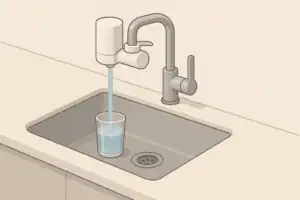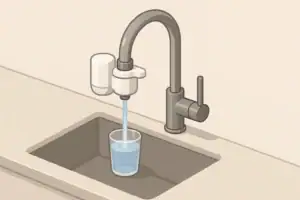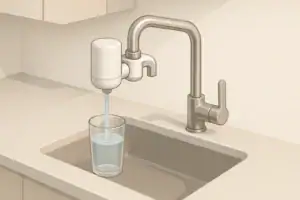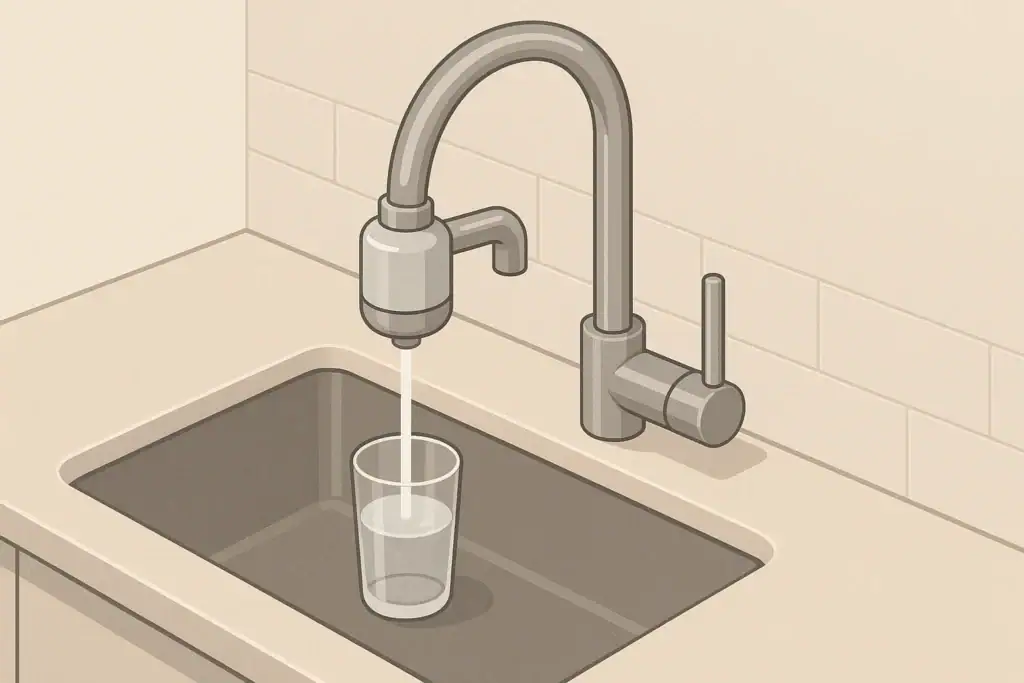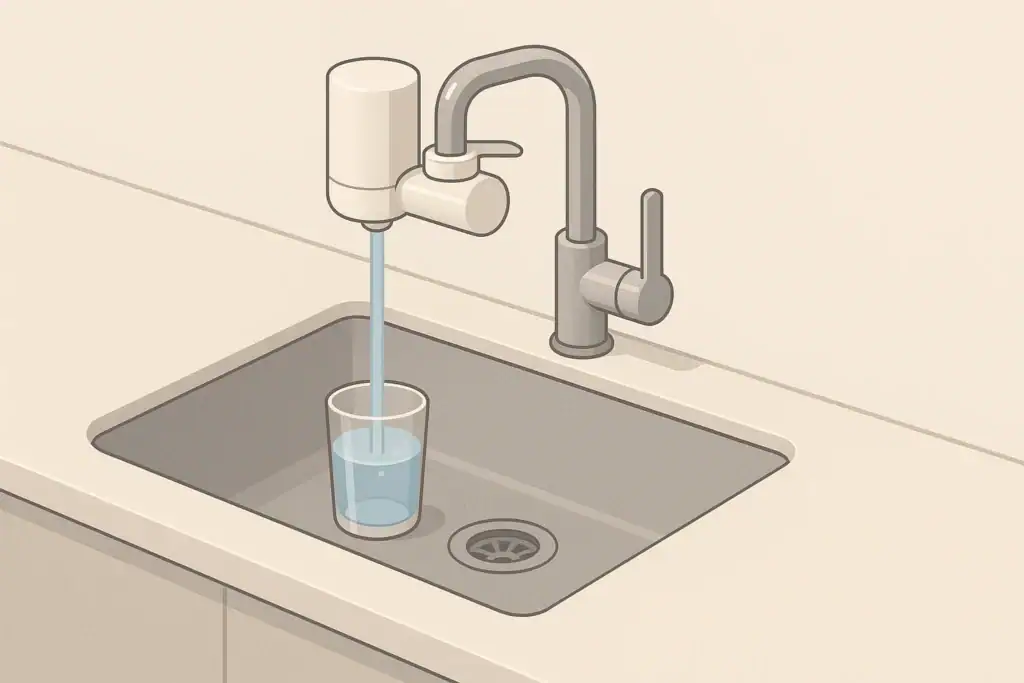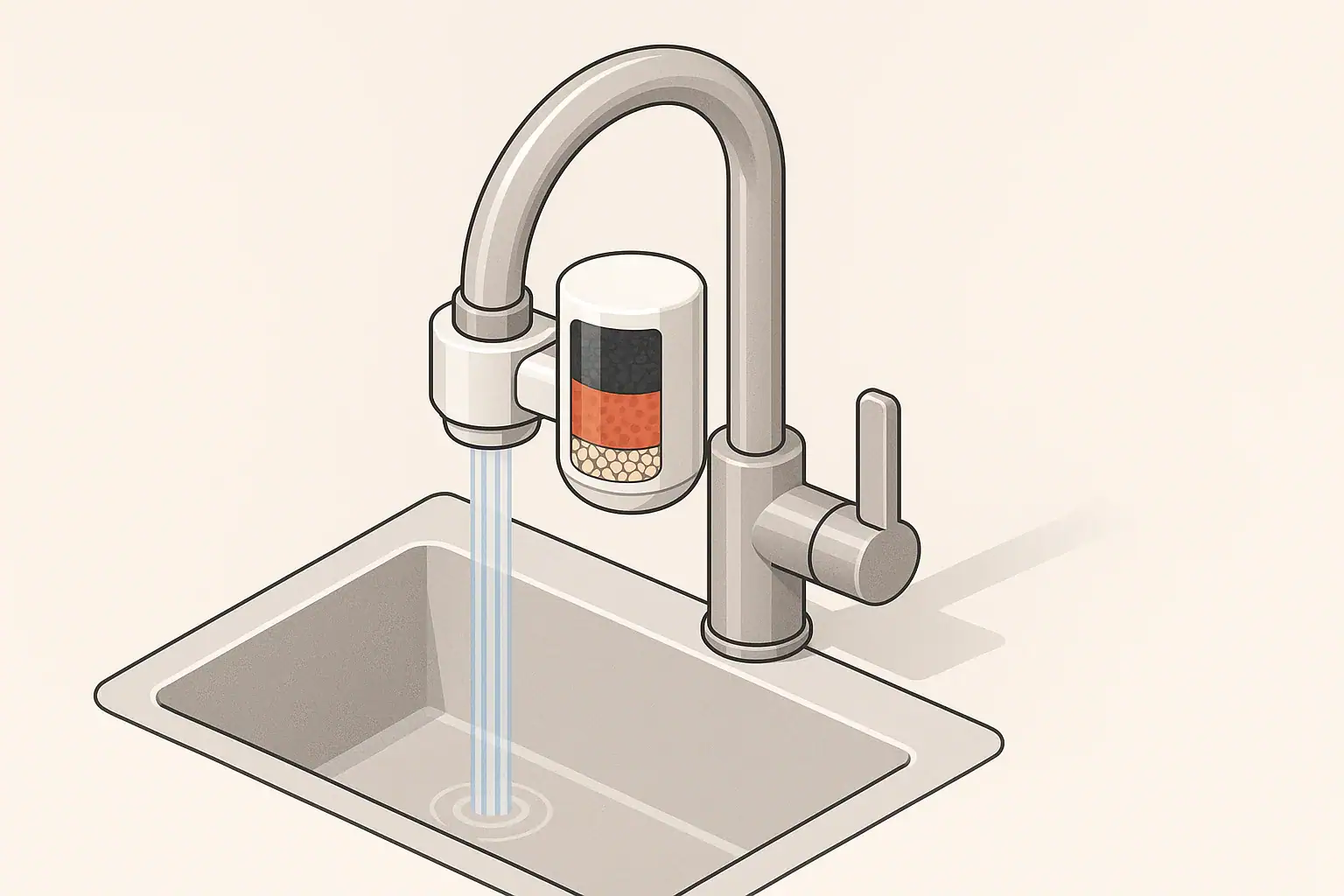
Faucet-mount filters are popular because they are compact, easy to install, and improve taste and odor right at the tap. Behind the small housing, however, there is an important design choice: whether the filter uses carbon block or granular activated carbon (GAC).
Both media are forms of activated carbon, processed to have a very high internal surface area that can adsorb many unwanted substances from water. In faucet filters, they are mainly used to improve taste and smell and to reduce certain contaminants, depending on the filter design and certifications.
The difference between carbon block and GAC affects:
- How well the filter captures fine particles
- Which contaminants it is likely to reduce
- Flow rate and water pressure at the faucet
- How quickly the filter clogs
- How long the cartridge lasts
Understanding these trade-offs can help you choose a faucet filter that matches your water quality concerns, sink setup, and maintenance habits.
Why Carbon Type Matters in Faucet-Mount Filters
Faucet-mount filters are popular because they are compact, easy to install, and improve taste and odor right at the tap. Behind the small housing, however, there is an important design choice: whether the filter uses carbon block or granular activated carbon (GAC).
Both media are forms of activated carbon, processed to have a very high internal surface area that can adsorb many unwanted substances from water. In faucet filters, they are mainly used to improve taste and smell and to reduce certain contaminants, depending on the filter design and certifications.
The difference between carbon block and GAC affects:
- How well the filter captures fine particles
- Which contaminants it is likely to reduce
- Flow rate and water pressure at the faucet
- How quickly the filter clogs
- How long the cartridge lasts
Understanding these trade-offs can help you choose a faucet filter that matches your water quality concerns, sink setup, and maintenance habits.
What Are Carbon Block and GAC, and How Do They Work?
Activated carbon works mainly by adsorption: certain dissolved substances in water stick to the carbon’s surface as water passes through. The more surface area and contact time, the more opportunity there is for removal.
Granular Activated Carbon (GAC)
GAC is made of small loose granules of activated carbon, similar in size to coarse sand. The granules are typically poured into a cartridge or housing, and water flows around and between them.
Common characteristics of GAC in faucet filters include:
- Higher flow potential: Water can move relatively freely through the spaces between granules, often resulting in less pressure drop.
- Shorter contact paths: Because water can channel through easier paths, some portions of the media may see more flow than others.
- Good chlorine and odor reduction: GAC is often effective for improving taste and smell from chlorine when properly designed.
- Less precise particle control: GAC alone is not a tight physical barrier, so very fine particles may pass through unless another sediment layer or screen is included.
Carbon Block
Carbon block starts as activated carbon powder mixed with binders and then formed into a solid, porous block. Water is forced to pass through the tiny channels in the block.
Typical characteristics of carbon block in faucet filters:
- More uniform flow: The solid structure helps prevent water from bypassing large portions of media.
- Higher contact time: Water travels through a tortuous path, often increasing contact between contaminants and carbon surfaces.
- Finer particle filtration: Many carbon blocks act as both chemical and physical filters, capturing small particles down to a defined micron rating.
- More pressure drop: The tighter structure can reduce flow compared with GAC, especially as the filter loads with particles.
Both media types can be combined with pre-filters, post-filters, or other materials in a faucet system. The type of carbon is only one piece of the overall design, but it is a central one.
Example values for illustration.
| Feature | Carbon Block | GAC (Granular Activated Carbon) |
|---|---|---|
| Physical form | Solid porous block of compressed carbon | Loose bed of individual carbon granules |
| Flow behavior | More resistance, more uniform flow paths | Lower resistance, potential for channeling |
| Typical strengths | Fine particle reduction, consistent contact time | High flow, good basic taste and odor improvement |
| Common faucet experience | Slower flow, more noticeable change when clogging | Faster flow, can gradually feel less effective over time |
| Design flexibility | Often used where tighter filtration is desired | Often used for simpler, high-flow designs |
| Typical cost (general pattern) | Can be higher due to molding process | Often lower to produce and fill |
| Sediment handling | More prone to clogging if no pre-filtration | Granules can trap some sediment but less defined rating |
Contaminant Reduction: Where the Carbon Type Makes a Difference
In faucet filters, both carbon block and GAC are primarily used for improving taste and odor and for reducing certain chemical contaminants. Performance varies widely, so actual reduction claims should be confirmed through third-party testing or NSF/ANSI certifications, not assumed from media type alone.
Chlorine and Basic Taste/Odor Issues
For many households on treated municipal water, chlorine taste and odor are the main complaints. Both GAC and carbon block are generally effective at reducing chlorine when enough contact time is provided and the filter is replaced on schedule.
Here, the choice between carbon block and GAC often matters less than:
- The total amount of activated carbon in the cartridge
- How fast water flows through the filter
- Whether the cartridge is changed before it becomes saturated
Fine Particles, Rust, and Sediment
Carbon blocks can act like a physical barrier as well as a chemical adsorbent. Many blocks are designed with a specific nominal micron rating, meaning they are intended to capture particles down to a certain approximate size.
In contrast, GAC beds are more open. They may catch some particles, but they are not generally relied upon for precise fine particle filtration unless combined with other media layers or screens. If your water has visible sediment, rust, or cloudiness (turbidity), a faucet filter that includes a block element or a separate fine sediment stage can be important.
Lead and Other Heavy Metals
Lead reduction depends heavily on filter design and additional treatment media, not just on whether the carbon is granular or block. Many lead-reducing faucet filters use specially formulated carbon blocks or add other media to target dissolved metals.
If lead is a concern, look for specific certifications or test data that mention lead reduction, typically associated with NSF/ANSI 53. Do not assume that either GAC or carbon block alone will address lead unless it is clearly documented.
PFAS, VOCs, and Other Organic Chemicals
Certain specialized activated carbons can reduce substances such as some volatile organic compounds (VOCs) and some per- and polyfluoroalkyl substances (PFAS). Whether the filter uses GAC or carbon block, effective reduction usually requires:
- Sufficient carbon volume
- Slow enough flow for contact time
- A design that avoids bypassing the media
Carbon blocks can offer more controlled contact paths, which some manufacturers use to target these contaminants. However, PFAS and other emerging contaminants are complex, and performance should be evaluated based on specific testing data or NSF/ANSI 401, where applicable, rather than on media type alone.
Flow Rate, Pressure, and Everyday Use at the Sink
Because faucet filters sit directly at the tap, flow rate and pressure are noticeable. The choice between carbon block and GAC influences how the water feels and how convenient the filter is for rinsing, filling pots, or washing produce.
Flow Rate Expectations
In general patterns:
- GAC-based faucet filters often provide higher initial flow and may feel closer to unfiltered tap water.
- Carbon block faucet filters often have lower initial flow due to tighter pores, which can further decrease as the block captures particles.
Some faucet units allow switching between filtered and unfiltered modes. In those designs, you may use unfiltered water for quick rinsing and reserve the filtered mode for drinking and cooking, which can minimize the impact of a slower flow block filter.
Pressure Drop and Small Plumbing Systems
Homes with already low water pressure may notice more impact from a carbon block faucet filter than from a GAC design. Short bursts of use, such as filling a glass, may be acceptable with either type, but extended use (filling large pots) may feel slower with a block.
If your plumbing already supplies low flow, you may want to:
- Check the faucet filter’s stated flow rate and suitability for low-pressure supplies
- Consider whether you will frequently use the filtered mode for high-volume tasks
- Plan for regular cartridge changes if sediment clogging is likely
Clogging Behavior
Because carbon blocks have finer pore structures, they tend to clog more predictably: you usually notice the flow slowing significantly as the filter loads with sediment, which can be a helpful cue to replace it.
GAC filters may allow more particles to pass through, so you might see less dramatic flow change, but the media can still gradually become less effective at taste and odor reduction as it becomes saturated. In either case, replacing cartridges on schedule is important.
Maintenance, Capacity, and Cost per Gallon
Choosing between carbon block and GAC for faucet filters also has implications for how often you change cartridges and what you pay per gallon of filtered water over time.
Rated Capacity vs Real-World Use
Filter cartridges are often sold with an approximate capacity in gallons or in months of use, based on specific test conditions and assumptions about water quality and daily consumption.
In practice, capacity can vary based on:
- How much water you run through the filter each day
- Sediment levels and turbidity in your supply
- Chlorine or chloramine levels
- Temperature and flow rate
A carbon block may reach its effective capacity first due to clogging from fine particles. A GAC filter, with more open structure, may physically last longer before clogging but still require replacement for consistent performance.
Cost per Gallon Considerations
To estimate cost per gallon, you can divide the price of a replacement cartridge by its rated capacity. For example, if a cartridge costs a certain amount and is rated for a few hundred gallons, the cost per gallon is the price divided by that gallon figure. This is a rough estimate, since in many homes the filter is replaced on time (months) rather than waiting to reach the full gallon rating.
Carbon block cartridges may cost more per unit because of the manufacturing process, but they may also provide more consistent filtration for certain contaminants. GAC cartridges may be less expensive and deliver a lower cost per gallon for basic taste and odor improvement.
Maintenance Habits and Calendar Reminders
The best media type for you is partly a question of how disciplined you are about maintenance:
- If you respond to obvious flow changes, a carbon block that slows down when spent may be helpful.
- If you expect to follow a calendar schedule or use a simple reminder, either media type can work.
- If your water is visibly dirty or cloudy, you may need more frequent changes regardless of type.
Whichever media is used, it is important to follow the manufacturer’s recommendations for replacement interval and flushing steps for each new cartridge.
NSF/ANSI Certifications and How They Relate to Media Type
NSF/ANSI standards help compare faucet filters based on independently verified performance claims. These standards do not specify that a filter must be carbon block or GAC, but the media choice is often part of how a system meets particular standards.
Common Standards for Faucet-Mount Filters
- NSF/ANSI 42: Covers aesthetic effects such as chlorine, taste, odor, and some particulate reduction.
- NSF/ANSI 53: Covers certain health-related contaminants such as lead and some volatile organic compounds, where claimed.
- NSF/ANSI 401: Covers reduction of certain emerging contaminants (for example, select pharmaceuticals and chemicals), if claimed.
Carbon block designs are commonly used when a filter seeks certifications related to fine particulate reduction or more demanding contaminant targets. GAC designs may be more common for basic NSF/ANSI 42 taste and odor goals. However, this is not a strict rule; either media type can be part of a certified system.
Verifying Claims Beyond Marketing Terms
When comparing faucet filters, the key steps are:
- Identify which contaminants matter most in your home (for example, chlorine taste, sediment, lead).
- Check which NSF/ANSI standards the filter claims and for which specific contaminants.
- Verify that the stated certifications or test results match your concerns, regardless of whether the filter uses GAC or carbon block.
Terms like “advanced carbon” or “multi-stage” are not standardized; the underlying certifications and test data are more meaningful indicators of performance.
Example values for illustration.
| Standard | Main focus | What to verify on the packaging |
|---|---|---|
| NSF/ANSI 42 | Aesthetic effects: chlorine, taste, odor, some particulates | Look for specific claims such as chlorine reduction and any listed particulate class |
| NSF/ANSI 53 | Selected health-related contaminants | Check which contaminants are listed (for example, lead or certain VOCs) |
| NSF/ANSI 401 | Emerging contaminants (select chemicals and compounds) | Confirm which substances were tested; not all are included by default |
| NSF/ANSI 58 | Reverse osmosis systems | Typically not for simple faucet-mount filters, more for under-sink RO units |
| Particulate reduction class | Particle size performance categories | Note the class rating, which hints at how fine the filtration is |
| Capacity and replacement interval | Approximate gallons or months of use under test conditions | Use as a planning guide, but also pay attention to taste and flow changes |
How to Decide Between Carbon Block and GAC in Your Faucet Filter
For many households on relatively clear municipal water with mild taste issues, either GAC or carbon block can improve everyday drinking water. The choice becomes more important when you factor in specific contaminants, household habits, and plumbing conditions.
When Carbon Block May Be a Better Fit
A faucet filter that uses carbon block may align with your needs if:
- You want finer particulate reduction (for example, visible rust or cloudiness).
- You are concerned about contaminants that typically require longer contact time and more controlled flow paths.
- You do not mind a somewhat slower flow at the tap.
- You are comfortable replacing the cartridge when you notice a clear drop in flow.
When GAC May Be a Better Fit
A faucet filter using GAC may be more suitable if:
- Your primary concern is chlorine taste and odor in already clear water.
- You prefer a higher flow rate from the filtered setting.
- Your plumbing has low pressure and you want to avoid additional restriction.
- You plan to follow time-based replacement reminders rather than waiting for flow changes.
Putting Media Type in Context
Ultimately, the type of carbon in a faucet filter is one part of a bigger picture that includes certifications, flow options, cartridge cost, and your local water conditions. When possible, use media type as a secondary criterion—after confirming that the filter you are considering has documented performance for the contaminants that matter most in your home.
By matching carbon block or GAC to your priorities—whether that is finer filtration, faster flow, simpler maintenance, or a balance of all three—you can make a more informed choice about the faucet filter that will best support your daily water use.
Frequently asked questions
Do GAC or carbon block faucet filters remove lead more effectively?
Lead reduction depends on filter design and any specialized media used rather than the carbon form alone. Many lead-certified faucet filters use specially formulated carbon blocks or added media and will list NSF/ANSI 53 lead reduction on the packaging or test reports. Always verify specific test results or certifications for lead rather than assuming based on media type.
Which type typically has a higher flow rate at the tap, GAC or carbon block?
GAC-based faucet filters generally offer higher initial flow because water moves more freely between granules. Carbon block filters have tighter pores that increase contact time but often cause more pressure drop, especially as they load with sediment.
Can either carbon type remove PFAS or other emerging contaminants?
Some activated carbons can reduce certain PFAS and organic contaminants, but effectiveness depends on the specific carbon formulation, carbon volume, and contact time. Look for vendor test data or relevant NSF/ANSI 401 results rather than assuming performance from the phrase “carbon” alone.
If my water has visible sediment, which filter media should I choose?
A carbon block with a defined micron rating or a system that includes a dedicated sediment pre-filter is usually better for visible rust or turbidity because it provides a physical barrier. GAC alone is less reliable for fine particulate removal unless paired with sediment-capturing stages.
How often should I replace a faucet filter cartridge with carbon block or GAC?
Replacement intervals vary by rated capacity, daily use, and incoming water quality; manufacturers often quote months or gallons under test conditions. Replace sooner if you notice reduced flow or a return of taste/odor issues, and follow the documented replacement guidance for your specific cartridge.
Recommended next:
- Best Faucet-Mount Filters for Chlorine Taste (High Flow Picks)
- Faucet-Mount Filter Compatibility: How to Check Your Faucet Type
- Faucet-Mount vs Under-Sink Filters: Convenience vs Performance
- How to Install a Faucet-Mount Filter Without Leaks
- Faucet-Mount Filters for Renters: No-Drill Setup Guide
- Troubleshooting a Faucet-Mount Filter with Slow Flow
- More in Faucet-Mount Filters →
- NSF/ANSI standards explained (42/53/401/58)
- Clear trade-offs: pitcher vs faucet vs under-sink vs RO
- Maintenance planning: cost per gallon and replacement cadence