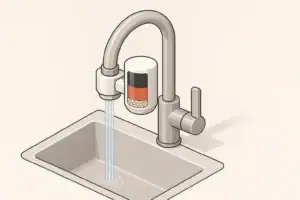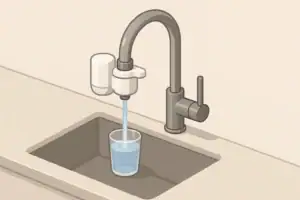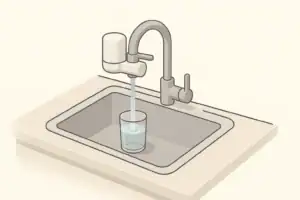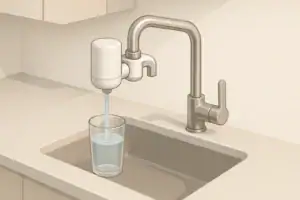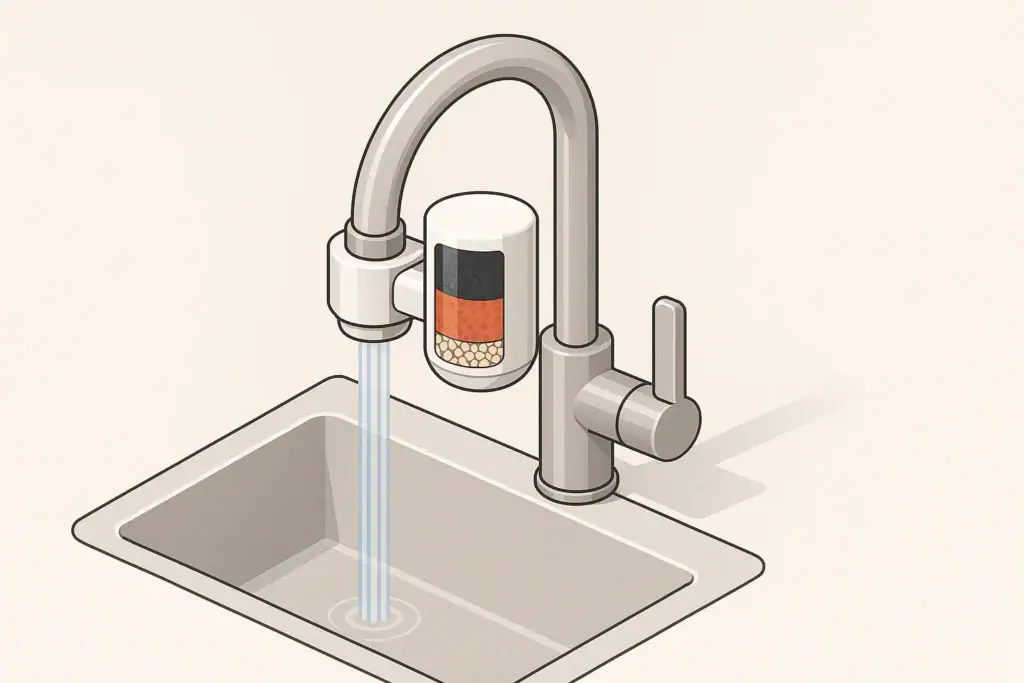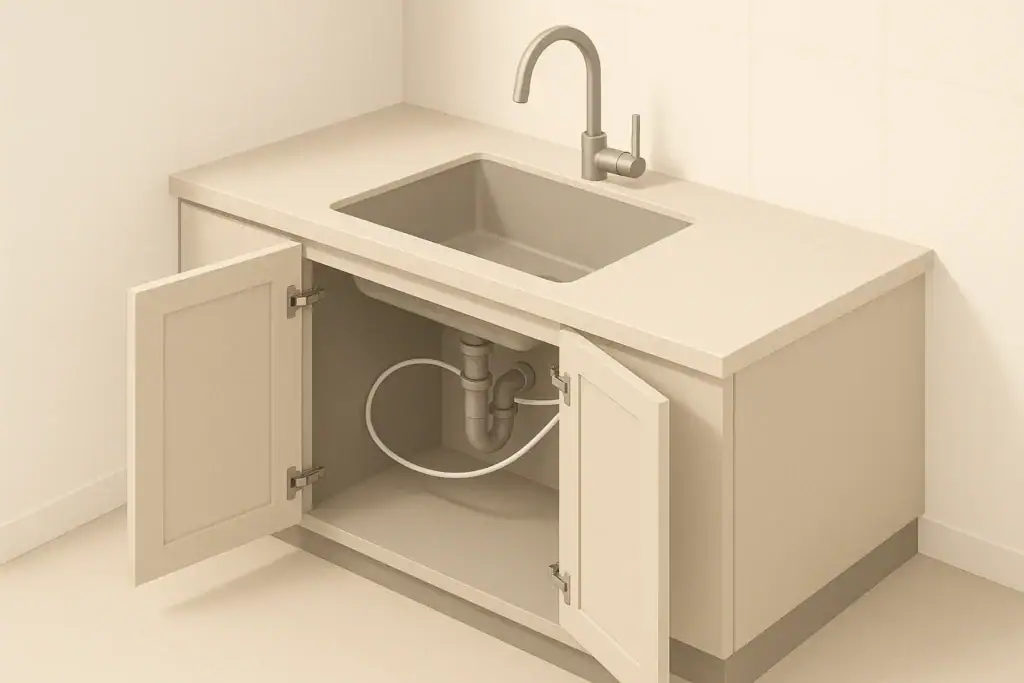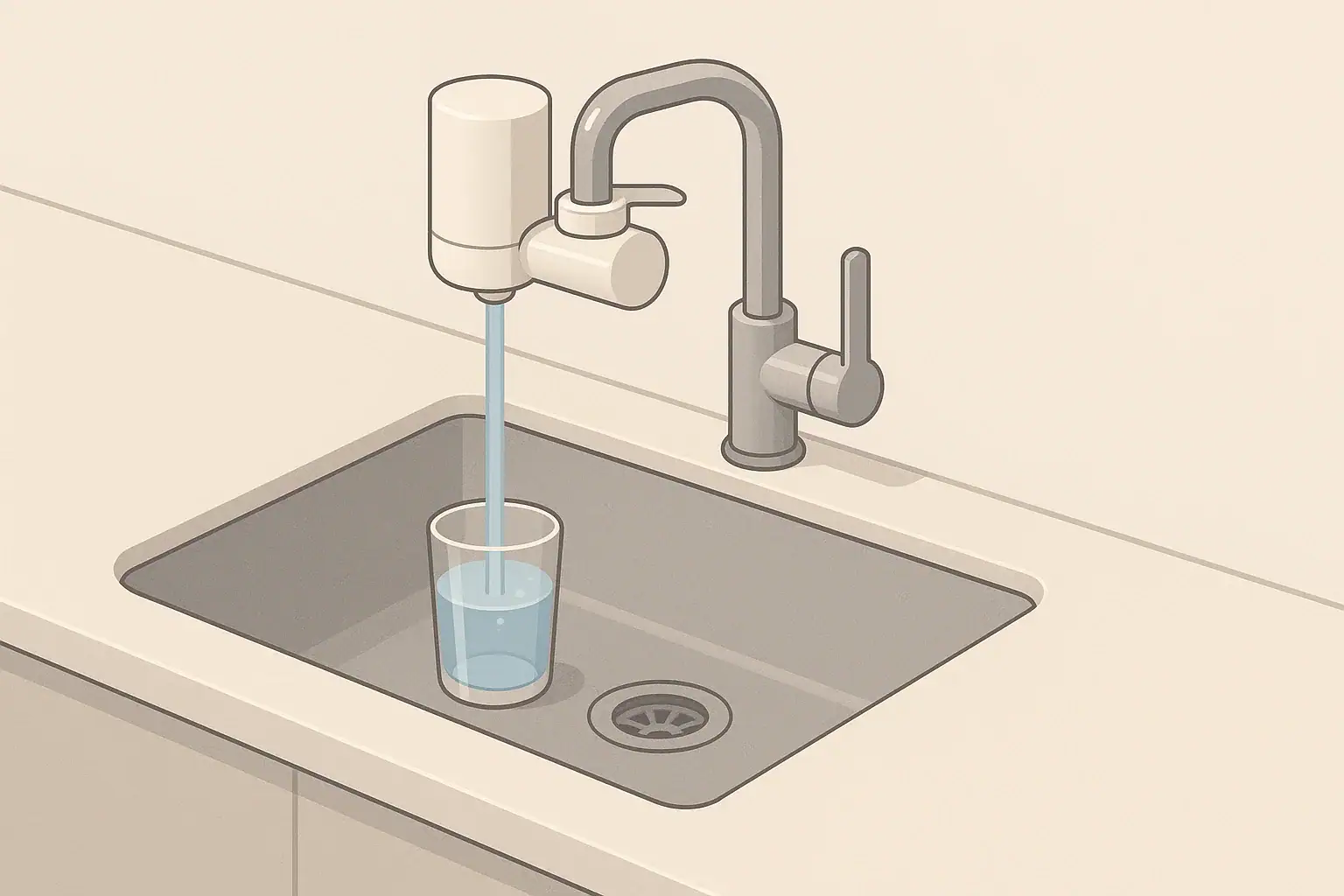
A new faucet-mount filter often changes the taste of tap water for the first few gallons. Many people notice metallic, plastic, or chemical notes even when they installed the filter correctly. This does not always mean the water is unsafe, but it does mean the system needs proper break-in and troubleshooting.
Faucet filters typically use a combination of media such as activated carbon, sometimes with additional components for metals or scale. When a new cartridge is first used, tiny amounts of manufacturing residues, trapped air, and fine particles can influence taste and odor.
Several factors can cause metallic or plastic taste right after installation:
In most cases, thorough flushing and a short break-in period significantly reduce these flavors. Persistent, strong, or worsening metallic tastes, however, deserve more investigation.
Why a New Faucet Filter Can Taste Metallic or Plastic
Common sources of off-tastes from new faucet filters
Several factors can cause metallic or plastic taste right after installation:
- Manufacturing residues: New plastic housings and cartridges can release trace amounts of harmless compounds that affect odor and flavor.
- Loose carbon fines: Tiny carbon particles can wash out during the first gallons, making the water look grayish and taste dusty or bitter.
- Metallic faucet plumbing: If the faucet or adapter uses brass or other metals, initial water flow can pick up a metallic note until surfaces are fully rinsed.
- Stagnant water in the faucet neck: Water that sits in the faucet pipe between uses can taste different from freshly flushed water.
- Municipal treatment chemicals: Chlorine or chloramine interacting with new filter media can temporarily shift taste.
How Long Should Break-In Taste Last?
New faucet filters are typically designed to be flushed before drinking. Many manufacturers recommend running cold water through the filter-only setting for a few minutes or several gallons to remove air and loose particles. If this step is rushed or skipped, odd tastes are more likely.
Typical taste timeline for a new faucet filter
Every system is different, but many households notice a general pattern:
- First few glasses: Water may look slightly cloudy, contain visible dark specks, and taste dusty or flat.
- First 1–3 gallons: Carbon fines usually clear; plastic smell or taste often fades quickly with steady flushing.
- After several gallons: Water should taste stable and consistent. Any strong metallic or plastic note at this point is worth troubleshooting.
Use cold water only when flushing and drinking through a faucet filter. Hot water can draw out plastic-like odors from housings and may damage some cartridges, reducing performance and worsening taste.
Example values for illustration.
| Situation | What it suggests | Practical next step |
|---|---|---|
| Taste improves after 2–3 gallons of flushing | Normal break-in of new media and housing | Begin regular use, monitor taste weekly |
| Mild plastic smell only when water first turned on | Stagnant water in faucet neck or housing | Run filter for 10–20 seconds before filling glasses |
| Persistent metallic taste after thorough flushing | Possible interaction with plumbing or worn faucet parts | Try unfiltered faucet water; compare taste and consider plumbing check |
| Strong chemical or solvent-like odor | Potential contamination upstream of the filter | Stop using water for drinking and contact local water utility |
| Filter water tastes worse than unfiltered water | Incorrect installation, damaged cartridge, or expired filter | Reinstall or replace cartridge; verify filter age |
| Taste returns suddenly after months of good performance | Filter capacity likely reached | Replace cartridge and reset any tracking method |
Step-by-Step: Flushing and Resetting a New Faucet Filter
A careful new faucet filter flushing routine is the simplest way to clear metallic or plastic taste from a new faucet filter. The exact instructions vary by product, but the general sequence is similar.
1. Confirm cold-water connection only
Faucet-mount filters are designed for cold water. If your faucet has a single handle, make sure it is set to the coldest position before using the filter. Running hot water through a faucet filter can soften plastics, release more odor, and shorten cartridge life.
2. Remove aerator debris before installing
Before installing the filter attachment, remove the faucet aerator and rinse away any grit or scale. If debris from the faucet collects inside the new filter, it can change taste and clog early.
- Unscrew the aerator from the faucet spout.
- Rinse mesh screens under running water.
- Brush away mineral flakes with a soft brush, if needed.
- Reattach or install the filter adapter as required by the product.
3. Flush the system thoroughly
Once the filter is attached and the cartridge is in place, flush it according to the printed directions that came with the product. If you no longer have them, use a conservative approach:
- Turn the faucet to cold.
- Rotate or switch the diverter to the filtered-water setting.
- Run water at a moderate flow rate—not a trickle, not full blast—for several minutes.
To keep track of volume, catch the water in a container of known size and empty it periodically. Many households choose to flush several gallons before regular use, especially if the initial water is cloudy or gray with carbon particles.
4. Cycle between filtered and unfiltered modes
Some faucet filters include a bypass mode for unfiltered water. Cycling between modes during the first flush can help release trapped air bubbles and move water through all parts of the housing.
- Switch to unfiltered mode for 20–30 seconds.
- Switch back to filtered mode and run for another minute.
- Repeat a few times to stabilize flow and taste.
5. Check for trapped air and unusual noises
Gurgling or sputtering during the first use is common. Persistent sputtering after several minutes may indicate trapped air or an imperfect seal.
- Turn water off and gently reseat the cartridge if accessible.
- Ensure any O-rings are in place and free of debris.
- Check that the main housing is fully tightened, without cross-threading.
After adjustments, flush again. Once the sound smooths out and the water runs clear, taste a small amount to check for improvement.
Distinguishing Filter Taste from Source Water Taste
Sometimes a metallic taste is not from the new filter at all, but from the incoming water or the faucet’s plumbing. Comparing filtered and unfiltered water from the same tap, as well as from other fixtures in the home, can help isolate the cause.
Compare filtered vs. unfiltered water
To understand what part of the system is affecting taste, perform a side-by-side comparison:
- Collect a glass of unfiltered cold water from the same faucet.
- Then collect a glass of filtered cold water after running the filter setting for 10–20 seconds.
- Smell both glasses first, then taste small sips.
If both samples share the same metallic note, the taste is likely from the source water or household plumbing before the filter. If only the filtered water tastes off, the issue is more likely related to the filter cartridge or housing.
Check other taps in the home
Different fixtures sometimes show different taste characteristics, especially if some are connected to older pipes or separate branches of plumbing.
- Compare kitchen faucet water to bathroom sink or tub water.
- Note whether metallic or plastic tastes appear at all taps or just at one location.
- If taste issues occur throughout the home, the cause is more likely municipal supply, private well characteristics, or whole-house plumbing.
If only one faucet shows a problem, mineral buildup or worn parts inside that fixture may be influencing taste, independent of the new filter.
Other Causes of Metallic or Plastic Taste
When thorough flushing does not solve the issue, it helps to consider other contributors related to water chemistry, plumbing materials, and filter maintenance.
Water chemistry and local treatment practices
Municipal water utilities may adjust disinfectant levels, corrosion control chemicals, or source water blends over time. These changes can subtly or noticeably alter taste, even if water quality remains within regulatory standards.
- Chlorine or chloramine levels: Strong disinfectant smell may interact with filter media and temporarily modify taste.
- pH changes: Slightly more acidic or alkaline water can bring out metallic notes from pipes or fittings.
- Hardness and minerals: High-calcium and high-magnesium water may taste mineral-rich; a filter can accentuate or smooth this flavor.
If you suspect a change in your municipal supply, consult your utility’s published water quality reports or contact them to ask about recent adjustments. These reports often mention pH ranges, hardness, disinfectant use, and common metals monitored in the distribution system.
Household plumbing and fixtures
Even with a good faucet filter, taste can be influenced by the pipes and fittings between the main supply and your kitchen sink.
- Older metal pipes: Copper, galvanized steel, or other metals can contribute to taste if water sits for long periods.
- New plumbing work: Recently installed pipes, solder, or sealants can add new flavors until thoroughly flushed.
- Rubber or plastic hoses: Some flexible connectors and supply lines can leach plastic-like odors, especially with warm water.
Running the cold tap for a minute each morning before using the faucet filter can help reduce stagnant water and associated tastes from plumbing segments.
Filter age, capacity, and flow rate
Metallic or musty flavors are not limited to new filters. A faucet filter approaching the end of its life may also change how water tastes and smells.
- Approaching capacity: Once a cartridge nears its rated gallon or time limit, it may no longer reduce certain compounds, and adsorbed material can affect taste.
- Clogged media: Sediment buildup lowers flow, causing water to spend longer inside the filter. This can sometimes intensify off-flavors.
- Irregular use: If water sits in the filter for several days between uses, stagnant water can taste flat or unusual.
Tracking cartridge changes by date and approximate gallons used can help you replace filters before taste issues arise.
When to Replace the Cartridge vs. Reinstall
Knowing whether to reseat the cartridge, reinstall the housing, or replace the filter entirely can save time and reduce frustration with taste problems.
Signs the cartridge may be defective
While most taste issues are normal break-in behavior, a small number of cartridges may be damaged from shipping or manufacturing. Consider replacing the cartridge if:
- Water tastes strongly chemical, solvent-like, or rubbery after extensive flushing.
- The filter water is consistently cloudier than unfiltered water, beyond initial carbon fines.
- You see cracked or deformed plastic on the cartridge.
- The housing will not seal properly around the cartridge, even after careful reinstallation.
If you install a new cartridge of the same model and the problem disappears, the original cartridge was likely the source of the taste.
Signs the installation needs adjustment
Sometimes a simple adjustment to the housing or adapter is enough to improve taste or flow:
- Water sprays from joints or leaks around the diverter.
- The filter only produces a thin stream, even with strong main faucet flow.
- You hear whistling or chattering sounds when water is running through the filter.
In these cases, remove the filter attachment, inspect washers and O-rings, clean any grit, and reinstall according to the printed instructions. Then repeat the flushing process and reassess taste.
Basic Water Quality Checks at Home
Simple at-home observations and inexpensive tests can help you understand whether taste issues are likely from the filter or from underlying water characteristics.
Everyday sensory checks
Before using any test kits, pay attention to what you can easily observe:
- Color: Is water clear, or does it have a faint yellow, brown, or green tint?
- Odor: Do you notice bleach-like, earthy, metallic, or plastic smells?
- Residue: Does dried water leave white, chalky deposits or reddish-brown staining?
These clues are useful when you contact your water utility, a plumber, or a local water lab for further guidance.
Simple home test tools
For households that want a closer look at water quality (beyond taste alone), common tools include:
- Test strips: Often measure parameters like hardness, pH, chlorine, and sometimes metals in an approximate way.
- Handheld meters: Devices for total dissolved solids (TDS) or conductivity can show general mineral content changes before and after filtration.
- Lab-based kits: Some services provide bottles for sending samples to a certified laboratory, which can measure specific metals, organic compounds, and other contaminants.
While these tests cannot directly tell you why water tastes metallic or plastic, they can reveal patterns—such as elevated iron, manganese, or high chlorine—that may explain certain flavors.
Understanding Certifications and What They Mean for Taste
Faucet filters sold in the United States may be independently tested to various NSF/ANSI standards. These standards focus on aesthetic improvements (taste and odor), reduction of specific contaminants, structural integrity, and system performance claims.
Common NSF/ANSI standards for point-of-use filters
Certifications do not guarantee that you will like the taste of your water, but they do indicate that the system has been evaluated to reduce particular substances under controlled conditions.
- NSF/ANSI 42: Covers aesthetic effects such as chlorine taste and odor and certain particulates.
- NSF/ANSI 53: Covers reduction of specific health-related contaminants such as certain heavy metals and organic chemicals.
- NSF/ANSI 401: Covers certain emerging compounds, such as some pharmaceuticals and personal care products.
- NSF/ANSI 58: Applies primarily to reverse osmosis systems, which may be used under the sink rather than at the faucet spout.
When selecting a new faucet filter or replacement cartridge, review the packaging and documentation to see which standards it has been tested against and which contaminants it is designed to reduce.
Example values for illustration.
| Standard | Focus area | What to verify on documentation |
|---|---|---|
| NSF/ANSI 42 | Aesthetic: chlorine, taste, odor, some particulates | Specific claims for chlorine taste and odor reduction |
| NSF/ANSI 53 | Specified contaminants such as certain metals | List of metals or chemicals the filter is tested to reduce |
| NSF/ANSI 401 | Certain emerging compounds | Which additional compounds were included in testing |
| NSF/ANSI 58 | Reverse osmosis system performance | Applicable mainly for under-sink RO, not faucet-mount units |
| Structural integrity | Pressure and leak resistance | Maximum operating pressure and temperature ratings |
| Material safety | Materials in contact with drinking water | Statement that wetted parts meet safety criteria |
Keeping Faucet Filter Taste Consistent Over Time
Once the metallic or plastic taste from a new faucet filter has been resolved, a few habits can help keep water flavor stable:
- Flush briefly before filling glasses: Run the filter for 10–20 seconds if it has been idle for several hours.
- Replace cartridges on schedule: Use a calendar reminder, note on the housing, or simple log to track changes.
- Use only cold water: Avoid running hot water through the filter to reduce plastic-like odors and protect the media.
- Clean the exterior: Periodically wipe the housing and diverter with a mild, non-abrasive cleaner to prevent buildup.
- Address plumbing issues: Investigate recurring metallic taste that appears even without the filter, which may indicate pipe or fixture concerns.
By combining proper flushing, regular maintenance, and basic awareness of your home’s water characteristics, you can usually minimize metallic or plastic taste and get more reliable performance from a faucet-mounted filter.
Frequently asked questions
How long should I flush a new faucet filter to remove a metallic or plastic taste?
Flush cold water at a moderate flow for several minutes or until a few gallons have passed; many users find 1–3 gallons clears carbon fines and manufacturing residues. Continue flushing until the water runs clear and tastes normal, and move to troubleshooting if off-tastes persist after several gallons.
Is a metallic or plastic taste from a new faucet filter dangerous?
Most often the taste comes from harmless sources like carbon fines, manufacturing residues, or trapped air and is temporary after flushing. However, strong chemical or solvent-like odors could indicate contamination—stop using the water for drinking and contact your local water utility or a certified lab for testing.
Can I use hot water or boil the filter to remove plastic taste?
No; use only cold water when flushing or drinking from faucet-mounted filters because hot water can soften plastics, increase odors, and damage the cartridge. Boiling or running hot water through the filter is not recommended and may reduce filter performance or lifespan.
What should I do if the taste persists after thorough flushing?
Compare filtered versus unfiltered water from the same tap and other fixtures, reseat the cartridge, inspect O-rings and aerator debris, and try a replacement cartridge if available. If the metallic or chemical taste remains, consider plumbing checks or laboratory testing and contact the filter supplier or utility for guidance.
How can I tell whether the filter or my plumbing is causing the metallic taste?
Collect side-by-side samples of unfiltered and filtered cold water from the same tap and test other taps in your home; if both samples share the metallic note, the source is likely upstream or in plumbing. If only the filtered water tastes off, the cartridge, housing, or installation is the more probable cause.
Recommended next:
- Best Faucet-Mount Filters for Chlorine Taste (High Flow Picks)
- Faucet-Mount Filter Compatibility: How to Check Your Faucet Type
- Faucet-Mount vs Under-Sink Filters: Convenience vs Performance
- How to Install a Faucet-Mount Filter Without Leaks
- Faucet-Mount Filters for Renters: No-Drill Setup Guide
- Troubleshooting a Faucet-Mount Filter with Slow Flow
- More in Faucet-Mount Filters →
- NSF/ANSI standards explained (42/53/401/58)
- Clear trade-offs: pitcher vs faucet vs under-sink vs RO
- Maintenance planning: cost per gallon and replacement cadence