
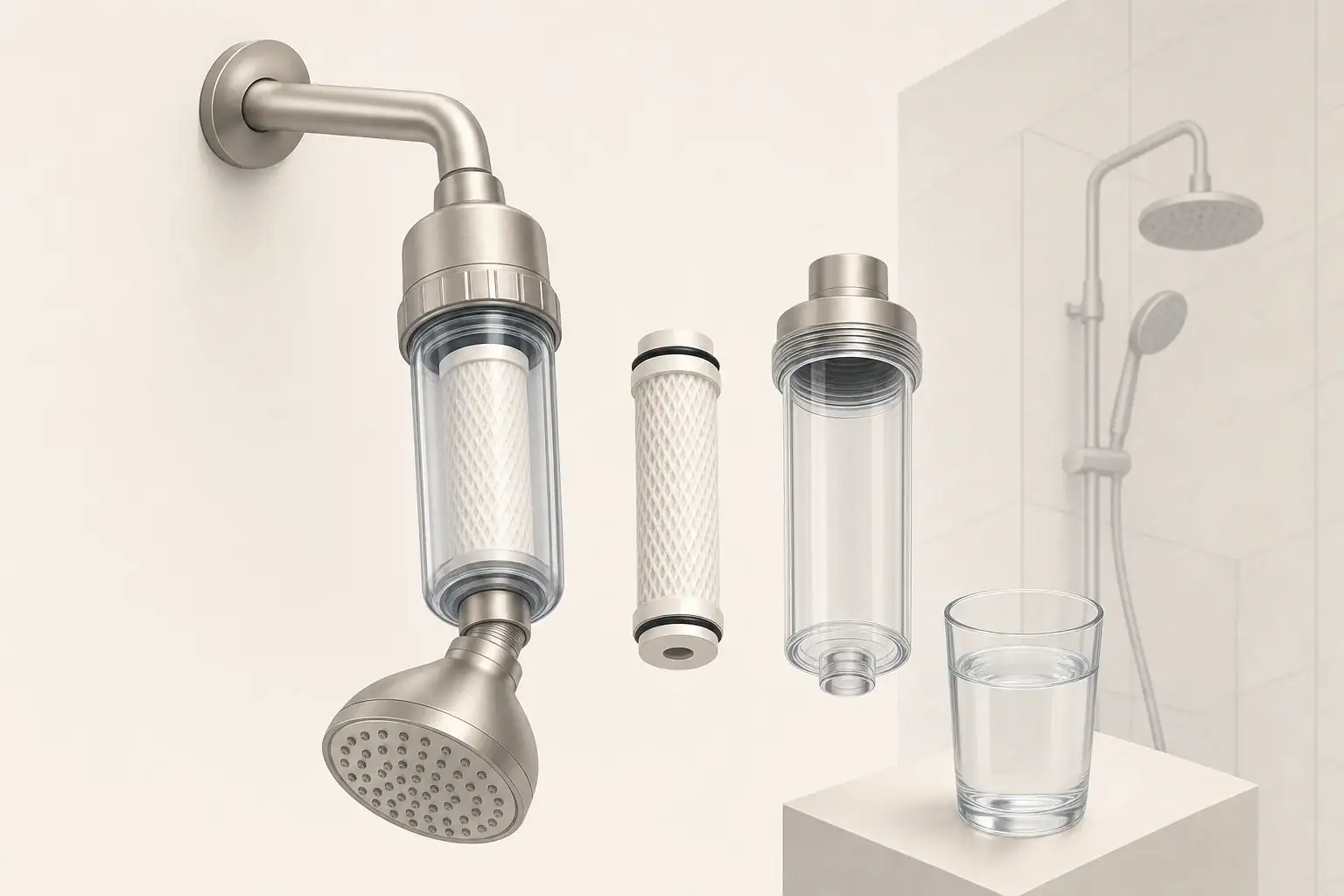
A shower filter does not always stop working on a predictable date. Water chemistry, shower frequency, flow rate, cartridge size, and sediment levels all affect useful life. That makes observable changes important when deciding whether replacement is due.
The most practical shower filter replacement signs include the return of a familiar odor, a noticeable decline in water flow, and changes in the cartridge or housing. None of these clues is conclusive by itself, so it helps to consider them together and rule out unrelated plumbing issues.
Why Shower Filter Replacement Intervals Vary
Manufacturers commonly provide a time-based or water-capacity estimate, but it should be treated as a planning reference rather than a guarantee. A cartridge used by one person may process much less water than the same cartridge serving a household with several daily showers.
Incoming water also matters. Sediment can obstruct a cartridge before its treatment media is chemically exhausted. Higher disinfectant concentrations may use treatment capacity more quickly, while low pressure can make a modest restriction feel significant.
Factors that can shorten cartridge life
- More people or longer showers
- High shower flow
- Visible sand, rust, or pipe debris
- Higher chlorine or other oxidant exposure
- Hot water conditions outside the cartridge’s intended range
- Long periods of stagnation or irregular use
Keep the installation date and expected service interval with the maintenance records. If the stated interval arrives even though no obvious symptom appears, replacement is generally the conservative way to maintain the level of performance the filter was designed to provide.
Smell Changes That May Point to an Exhausted Filter
A return of the same chlorine-like odor that was reduced after installing a fresh cartridge can indicate declining media capacity. Compare the odor under similar conditions, because temperature, ventilation, and temporary changes in utility treatment can affect what you notice.
Chlorine-like odor
If the odor improved with a new filter and gradually returned over weeks or months, cartridge exhaustion is plausible. An abrupt change throughout the home may instead reflect a temporary source-water change. Shower filters for chlorine also differ in their ability to address chlorine and chloramine, so performance depends on the media and its documented intended use.
Musty, sulfur-like, or drain odors
Not every bathroom odor comes from shower water. A sulfur-like smell may originate in the source water, water heater, or plumbing. Musty odors can be associated with a damp shower area, drain, hose, or stagnant filter housing. Compare hot and cold water at more than one fixture to narrow down the source.
Replacing a cartridge may be reasonable when it is overdue, but repeated odor problems deserve broader troubleshooting. A shower filter bad smell is not a substitute for investigating a water heater issue, maintaining a private well, or testing water when the source is uncertain.
Example values for illustration.
| Observed clue | Possible filter-related cause | Other cause to check |
|---|---|---|
| Chlorine-like odor returns gradually | Media capacity declining | Change in incoming water |
| Odor changes suddenly at every fixture | Filter may not be the cause | Source-water or utility change |
| Odor appears only with hot water | Heat may affect performance | Water heater condition |
| Musty smell after nonuse | Stagnation in the housing | Hose, drain, or shower area |
| Flow declines gradually | Cartridge loading | Scale in the showerhead |
| Flow drops suddenly | Shifted or blocked cartridge | Valve or supply problem |
| Leak appears at the housing | Seal or housing issue | Loose or damaged connection |
Flow Changes and Pressure Drop
A filter naturally creates some resistance. As sediment and debris accumulate, that resistance can increase. A gradual reduction in shower flow—especially when it improves after cartridge replacement—is a useful sign that the old cartridge was becoming restricted.
Flow and pressure are related but not identical. Household supply pressure may remain stable even when a clogged cartridge limits the amount of water passing through the showerhead. Conversely, low pressure throughout the home may have nothing to do with the shower filter.
How to separate filter restriction from other problems
- Check whether other fixtures have also lost flow.
- Inspect the showerhead face for mineral buildup.
- Confirm that accessible shutoff or control valves are in their normal operating positions.
- Note whether the decline was gradual or sudden.
- Compare performance before and after a correctly installed fresh cartridge.
Do not remove required flow-control parts, defeat anti-scald features, or make unsupported plumbing modifications to increase flow. If a new cartridge does not restore expected performance, the showerhead, supply plumbing, valve, or household pressure may need qualified evaluation.
Cartridge and Housing Clues to Inspect
Physical condition can support a replacement decision, but appearance alone does not reveal remaining treatment capacity. Some cartridges darken as they trap rust or sediment, while others show little visible change even after their treatment media is spent.
Discoloration and sediment
A heavily coated surface, compacted debris, or obvious sediment loading can explain declining flow. Mild discoloration may be normal. Never open a sealed cartridge to inspect or reuse its media unless its instructions specifically describe that process.
Cracks, distortion, and damaged seals
Replace a cartridge that is cracked, warped, or otherwise damaged. Also inspect the housing and reusable seals. A pinched, flattened, missing, or degraded seal can cause leaks or allow water to follow an unintended path around the cartridge.
Unusual residue or prolonged stagnation
Slime, persistent mustiness, or residue inside a serviceable housing calls for attention beyond simply inserting a new cartridge. Follow the system’s approved cleaning or sanitation procedure and use only compatible materials. After a long vacancy or extended shutdown, consult the product instructions for restart and replacement guidance.
Some filter media contains dark carbon particles that may appear during initial flushing. A small amount can be normal for certain cartridges, but continuing particle release, broken media screens, or visible cartridge damage is a reason to stop and check the installation instructions.
When to Replace the Cartridge and When to Troubleshoot
Replacement is usually reasonable when several clues align: the cartridge is near or beyond its expected interval, the original odor has returned gradually, and flow has declined. A fresh cartridge also provides a practical comparison point.
Troubleshoot the wider water system when a symptom is sudden, appears at multiple fixtures, or continues unchanged after replacement. For example, hard-water scale on a showerhead can reduce flow, but most shower filters do not soften water. Similarly, a cartridge intended mainly for chlorine reduction should not be assumed to address every odor or dissolved substance. Learn more about hard water feel in the shower and the difference between filtration and softening.
Consider water testing when an unexplained taste or odor affects the whole home, when a private well changes noticeably, or when local guidance recommends testing. Select test methods based on the water source and suspected issue rather than relying on smell or cartridge color alone.
Example values for illustration.
| Situation | Suggested response | Reason |
|---|---|---|
| Installation date reaches the stated interval | Plan replacement | Performance cannot be judged by appearance alone |
| Odor returns gradually near the expected interval | Replace and compare | Media may be exhausted |
| Flow declines while other fixtures remain normal | Inspect showerhead and cartridge | Local restriction is likely |
| Cartridge is visibly cracked or distorted | Replace promptly | Water may not follow the intended path |
| Housing leaks after service | Stop use and inspect seals | Connection or seal may be misaligned |
| Problem persists with a fresh cartridge | Troubleshoot beyond the filter | Source water or plumbing may be responsible |
| Household use increases substantially | Check earlier than usual | More water uses capacity faster |
Related guides: How Often to Replace Shower Filter Cartridges • Shower Filters for Chlorine: What They Can (and Can’t) Do • Shower Filter Bad Smell? Cleaning & Sanitizing Tips • Installing a Shower Filter Tool-Free: Avoiding Leaks
A Safe and Consistent Replacement Routine
Follow the filter’s instructions because housing designs, cartridge orientation, flushing requirements, and temperature limits vary. Allow hot components to cool, shut off water as directed, and relieve pressure before opening a serviceable housing. If the assembly cannot be isolated or handled safely, use a qualified plumbing professional.
During replacement
- Confirm that the new cartridge is the correct type and orientation.
- Inspect accessible housing surfaces for cracks or damaged threads.
- Clean reusable parts only with approved methods.
- Seat seals evenly and use only a lubricant specified as compatible, if one is required.
- Tighten components according to the instructions rather than overtightening.
- Flush the cartridge for the stated period before normal shower use.
Restore water slowly and watch the assembly for leaks. If leaking continues after the water is shut off and the seal is correctly reseated, do not keep operating the filter. For more help, see leaking shower filter connections.
Record the replacement date, reason for replacement, and any change in odor or flow. Over several cartridge cycles, these notes can reveal a household-specific pattern and help distinguish routine cartridge exhaustion from recurring plumbing or source-water issues.
Frequently asked questions
How often should a shower filter cartridge be replaced?
Use the manufacturer’s stated time or capacity interval as the baseline, then replace earlier if household use increases, flow declines, or the odor the filter previously reduced gradually returns.
Can a shower filter cause low water pressure?
A loaded cartridge can restrict shower flow, but low flow can also come from mineral buildup in the showerhead, a valve issue, or a broader supply problem. Compare other fixtures and inspect the showerhead before assuming the filter is responsible.
Why does my shower water smell after I replace the filter?
Check that the cartridge is the correct type, installed in the proper orientation, and flushed as directed. If the smell occurs at other fixtures or only with hot water, the source may be the water supply, plumbing, or water heater rather than the new cartridge.
Should I replace a shower filter cartridge if it looks clean?
Yes, if it has reached its recommended service interval. Treatment media can lose capacity without obvious discoloration, so cartridge appearance is not a reliable measure of remaining performance.
What should I do if the filter housing leaks after replacement?
Shut off the water and inspect the cartridge seating, threads, and reusable seal. Reseat the seal if appropriate and follow the installation instructions; do not continue using the filter if leaking persists.
- NSF/ANSI standards explained (42/53/401/58)
- Clear trade-offs: pitcher vs faucet vs under-sink vs RO
- Maintenance planning: cost per gallon and replacement cadence