Most municipal water systems in the United States use chlorine or related disinfectants to control microorganisms in drinking water. This disinfection is important for safety, but it can also affect how your water smells, tastes, and feels, including in the shower.
When hot water comes out of the showerhead, chlorine in the water can become more noticeable. You may detect a pool-like smell, or feel that your skin and hair are left drier than you would like. A shower filter designed for chlorine is one way people try to manage these comfort and cosmetic issues at the point of use.
Understanding what shower filters can and cannot do helps you set realistic expectations, choose the right type, and maintain it properly.
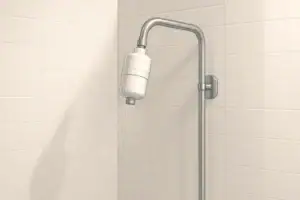
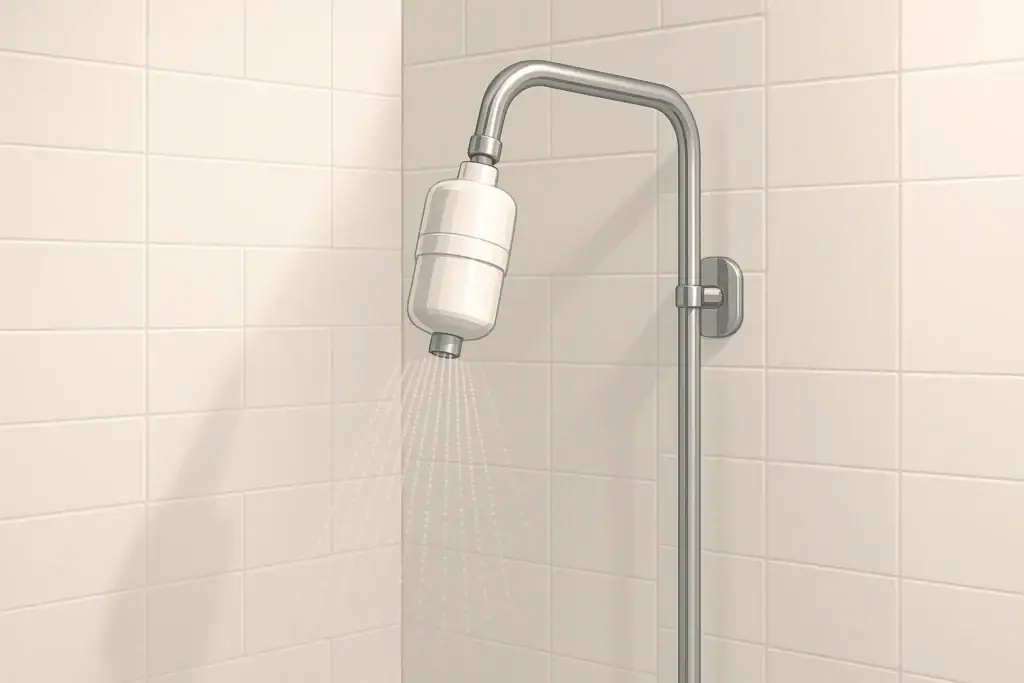
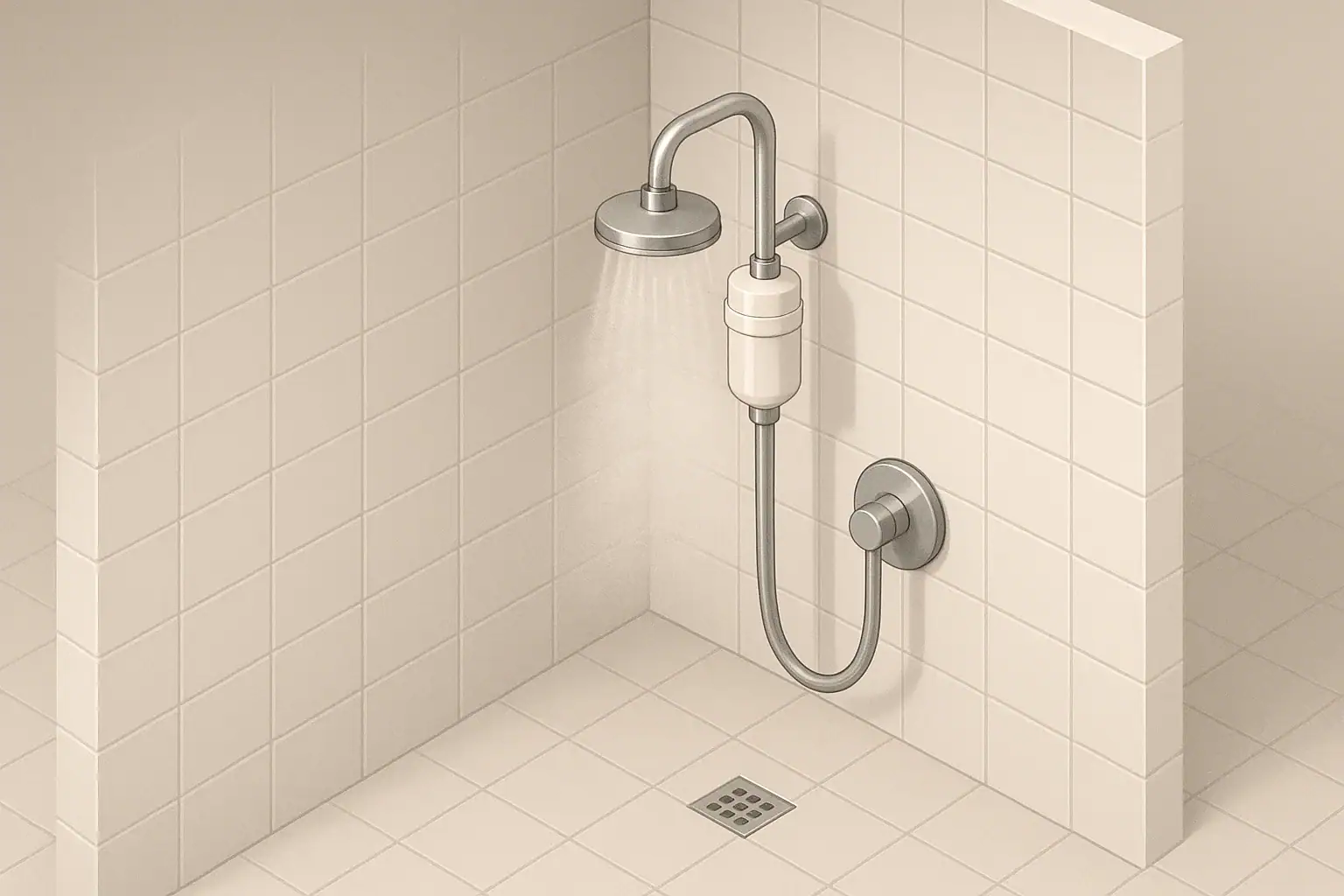
Shower filters are usually compact cartridges that install between the shower arm and the showerhead, or they are built into a dedicated filtered showerhead. Their main goal, in most cases, is to reduce chlorine and improve odor and feel, not to make water sterile or remove every possible contaminant.
Why Chlorine Shows Up in Your Shower
Most municipal water systems in the United States use chlorine or related disinfectants to control microorganisms in drinking water. This disinfection is important for safety, but it can also affect how your water smells, tastes, and feels, including in the shower.
When hot water comes out of the showerhead, chlorine in the water can become more noticeable. You may detect a pool-like smell, or feel that your skin and hair are left drier than you would like. A shower filter designed for chlorine is one way people try to manage these comfort and cosmetic issues at the point of use.
Understanding what shower filters can and cannot do helps you set realistic expectations, choose the right type, and maintain it properly.
How Shower Filters for Chlorine Work
Common Filter Media Used for Chlorine
Most chlorine-focused shower filters rely on one or more of these media types:
- Activated carbon: A porous material that can adsorb many chlorine byproducts and improve odor. It works best with cooler water and sufficient contact time.
- KDF (copper-zinc alloy granules): A redox (reduction–oxidation) medium that can convert free chlorine into chloride ions and may help with scale and certain metals, depending on design.
- Other specialty media: Some filters include ceramics or proprietary blends to target hardness or additional taste and odor compounds.
Because shower water is typically hot and flows quickly, manufacturers often combine different media to improve performance under these less-than-ideal conditions for carbon alone.
Chlorine vs. Chloramine in Showers
Not all systems use the same disinfectant. Many use free chlorine, while others use chloramine (a combination of chlorine and ammonia). These behave differently in filters:
- Free chlorine: Generally easier to reduce with activated carbon and KDF.
- Chloramine: More stable and resistant to basic carbon filters, especially at high temperatures and short contact times typical of shower use.
Some advanced media blends are designed to reduce both, but performance varies by design, flow rate, and water chemistry. If your water utility uses chloramine, it is important to check whether a given shower filter claims chloramine reduction and what testing backs that up.
Example values for illustration.
| Option | Typical installation location | Focus of treatment | Helps with shower chlorine? | Whole-home effect? |
|---|---|---|---|---|
| Shower filter | At individual showerhead | Shower comfort, odor, cosmetic concerns | Yes, at that shower only | No, limited to one fixture |
| Pitcher filter | Countertop for drinking water | Taste and odor of drinking water | No direct effect on shower water | No |
| Faucet-mount filter | Kitchen/bathroom faucet | Drinking and cooking water | No direct effect on shower water | No |
| Under-sink filter | Below a specific sink | Point-of-use drinking water | No direct effect on shower water | No |
| Whole-house carbon filter | Main water line | All taps, including showers | Yes, for all showers if sized appropriately | Yes |
| Reverse osmosis system | Under sink or dedicated tap | Drinking water purification | Not used for full-flow showers | No (unless part of large custom system) |
What Shower Filters for Chlorine Can Realistically Do
Shower filters can be useful tools, but their capabilities are more limited than whole-house or multi-stage systems. Setting realistic expectations helps you evaluate whether a shower filter is the right tool for your needs.
Help Reduce Chlorine Odor and Improve Shower Comfort
One of the most noticeable benefits of a chlorine-focused shower filter is a reduction in the pool-like smell that can appear with hot water. By converting or adsorbing some of the chlorine, these filters can make shower water smell and feel more neutral.
Some users also report that their hair feels easier to manage and that soap lathers differently. These effects are highly individual and can depend on many factors, including your water’s hardness and your personal care products, but they are a common motivation for installing shower filters.
Improve Aesthetic Qualities of Water
In water treatment, “aesthetic” refers to qualities like taste, odor, and appearance rather than safety. Shower filters focusing on chlorine address these aesthetic concerns by:
- Reducing noticeable chlorine odor in steam
- Softening some of the perceived harshness of water on skin and hair
- Helping soaps and shampoos rinse more predictably in some cases
These improvements are usually limited to the shower where the filter is installed and do not extend to other taps.
Provide Limited Sediment Screening
Some shower filters incorporate a simple screen or a small amount of sediment media. This can help catch larger particles such as sand or rust flakes before they reach your showerhead. As a result, you may see fewer visible particles and potentially fewer showerhead clogs.
However, these sediment features are usually basic and not a substitute for a dedicated whole-house sediment filter if you have persistent particulate issues.
However, these sediment features are usually basic and not a substitute for a dedicated whole-house sediment filter if you have persistent particulate issues.
Offer Targeted, Fixture-Level Treatment
Shower filters are point-of-use devices. They treat water at a single outlet, which has pros and cons:
- Advantages: Lower upfront cost, simple installation, and the ability to treat only the fixtures you care most about.
- Limitations: Each shower needs its own filter, and other taps remain unchanged.
For renters or households that cannot modify main plumbing lines, a shower filter can be a practical compromise.
What Shower Filters Cannot Do (or Do Poorly)
Shower filters are often given credit for capabilities they do not reliably provide. Knowing these boundaries helps you plan your overall water strategy.
They Are Not Full Disinfection Systems
Standard shower filters designed for chlorine reduction are not intended to disinfect water. They typically do not remove or inactivate bacteria, viruses, or protozoa to the same extent as systems specifically designed for microbiological treatment.
If you have concerns about microbiological contamination, you would typically address that at the whole-house level or at a drinking water tap with a system specifically rated for microbiological reduction, rather than relying on a shower filter.
Limited Ability to Handle Chloramine
Chloramine is more difficult to treat than free chlorine, especially at high temperature and flow. Many basic carbon shower filters show reduced effectiveness against chloramine, and some do not target it at all.
Unless a shower filter clearly states that it is designed for chloramine and provides some form of data or certification, it is safer to assume that its reduction of chloramine is modest or inconsistent. For utilities that use chloramine, whole-house carbon systems with longer contact time are often more effective.
Limited Performance on Dissolved Solids and Hardness
Shower filters are not water softeners and do not significantly change total dissolved solids (TDS). While some users may perceive a difference in feel due to reduced chlorine or minor scale effects from KDF media, standard shower filters:
- Do not significantly reduce hardness minerals like calcium and magnesium
- Do not significantly change TDS readings
- Do not function like ion-exchange softeners or reverse osmosis systems
If scale buildup or hard water spots are your main concern, a dedicated water softener or whole-house conditioning solution is typically more appropriate.
Limited Coverage of Other Contaminants
Some shower filters may include media that have theoretical capabilities against certain metals or volatile organic compounds (VOCs). However, for most small, fast-flow shower filters, reduction of contaminants beyond basic chlorine and odor is limited and highly design-dependent.
Contaminants such as lead, PFAS, or many industrial chemicals are usually better addressed with certified drinking water systems at the tap or whole-house systems that provide longer contact time and more robust media volumes.
Understanding Metrics: Flow, Capacity, and Temperature
Because showers involve warm water and relatively high flow rates, performance is closely tied to a few key metrics: flow rate, filter capacity, and operating temperature range.
Flow Rate and Contact Time
Effective chlorine reduction requires contact time between water and media. In a shower environment:
- Typical shower flow is around a few gallons per minute.
- Higher flow usually means less contact time and potentially lower reduction.
- Any clogging from sediment can reduce flow and change how water moves through the media.
Some filters are designed to balance chlorine reduction with a comfortable flow. When considering a filter, it is worth checking whether it is intended for standard low-flow showers or if it restricts flow more than you would like.
Filter Capacity and Replacement Intervals
Filter cartridges have a finite capacity—usually expressed as a certain number of gallons or an estimated number of months of use. In practice, actual life depends on:
- How many people use the shower
- Average shower length
- Your water’s chlorine level and sediment load
It is common for a typical household to change a shower filter cartridge every several months, but you may need more frequent changes with heavy use. Once a cartridge is exhausted, chlorine reduction and odor improvement usually drop off.
Temperature Limits
Most shower filters are designed for typical household hot water, but very high temperatures can shorten media life or reduce performance, especially for activated carbon. Manufacturers often specify an operating temperature range.
Extremely hot water can also increase the volatility of some compounds, making odor more noticeable if the filter is exhausted. Keeping water at a comfortable but not extreme temperature can support both comfort and filter longevity.
NSF/ANSI Certifications for Shower Filters
Some shower filters are tested and certified under NSF/ANSI standards, which provide independent verification of certain claims. Not all products are certified, and the absence of certification does not automatically mean a product is ineffective, but certification gives you a way to compare products on a consistent basis.
Relevant Standards for Chlorine and Aesthetic Effects
For shower filters, the most commonly relevant standards are:
- NSF/ANSI 42: Focuses on aesthetic effects such as chlorine, taste, odor, and particulate reduction. This is the standard most closely tied to chlorine reduction claims.
- NSF/ANSI 53: Covers health-related contaminant reduction (like certain metals or organic chemicals) for drinking water systems. Some shower filters may reference media similar to 53-rated products, but full 53 certification is more common in drinking water filters.
Standards such as NSF/ANSI 401 (emerging contaminants) and 58 (reverse osmosis) are usually more relevant to drinking water devices than to simple in-line shower filters.
How to Read and Verify Certification Claims
When you see a certification claim, it is important to look for details, not just the logo. Specifically, check:
- Which standard is referenced (for example, 42 vs. 53)
- Which specific reduction claims are certified (for example, free available chlorine, not chloramine)
- Any flow rate and capacity assumptions used during testing
Certification listings from recognized third-party organizations typically include model numbers, claimed capabilities, and operating conditions. Matching this information to your own usage helps you understand what the certification means for your shower.
Example values for illustration.
| Standard | Main focus | Typical application | What to verify on a spec sheet |
|---|---|---|---|
| NSF/ANSI 42 | Aesthetic effects (chlorine, taste, odor, particulates) | Pitchers, faucet filters, some shower and whole-house units | Check if free chlorine reduction is listed and at what flow rate |
| NSF/ANSI 53 | Health-related contaminants (e.g., some metals, VOCs) | Under-sink, countertop, and faucet-mount drinking water filters | Confirm which specific contaminants are certified, not just the standard name |
| NSF/ANSI 58 | Reverse osmosis system performance | Point-of-use RO systems for drinking water | Look for recovery, efficiency, and contaminant reduction notes |
| NSF/ANSI 401 | Selected emerging compounds and incidental contaminants | Advanced drinking water filters | Check which compounds are included; coverage varies by product |
| NSF/ANSI 177 | Specific to shower filters for chlorine reduction | Showerhead or in-line shower filters | Verify model number, chlorine reduction claims, and flow conditions |
| NSF/ANSI 61 | Material safety in contact with drinking water | Pipes, fittings, and system components | Confirm that wetted materials meet basic safety requirements |
Choosing and Maintaining a Shower Filter for Chlorine
Once you understand what a shower filter can and cannot do, selection and maintenance become more straightforward. Your goal is to align the device with your water conditions, expectations, and budget.
Questions to Ask Before You Buy
Before choosing a filter, consider the following:
- What disinfectant does your utility use? Free chlorine vs. chloramine can influence which media type is suitable.
- Do you want a separate showerhead or an integrated filtered head? In-line units can let you keep your preferred showerhead; integrated heads may be more compact.
- How important is flow rate? If you prefer strong pressure, look for filters designed for your desired flow within typical conservation limits.
- Do you need certification? If you are relying on chlorine reduction claims, a relevant NSF/ANSI certification can offer additional assurance.
- What is the ongoing filter cost? Estimate how often you will change cartridges and the cost per replacement.
Basic Installation Considerations
Most shower filters install without specialized tools. Common steps include:
- Unscrewing the existing showerhead from the shower arm
- Wrapping plumber’s tape (if recommended) on threads
- Threading the filter unit onto the arm
- Reattaching the showerhead to the filter outlet
After installation, you typically run water for a few minutes to flush out loose carbon fines or trapped air. Always follow the specific instructions for your model.
Maintenance and When to Replace the Cartridge
Filter performance declines as media reach capacity. Common signs that it may be time to replace a shower filter cartridge include:
- Return of noticeable chlorine or chemical odor
- Visible discoloration or cloudiness in the water stream
- Persistently reduced flow after cleaning the showerhead screen
- Reaching the recommended time or usage interval, even if odor seems acceptable
Tracking approximate usage can be as simple as marking the installation date on the cartridge or keeping a note near the bathroom. Replacing on schedule helps maintain more consistent performance and avoids sudden drops in reduction.
Fitting Shower Filters into a Whole-Home Water Strategy
Shower filters are one piece of a larger water quality picture. Many households combine them with other systems:
- A whole-house carbon filter for overall chlorine reduction, plus a shower filter for added comfort at specific fixtures.
- A drinking water system (pitcher, faucet-mount, under-sink, or RO) for targeted contaminant reduction, plus a shower filter focused on odor and feel.
By recognizing both the capabilities and limits of shower filters for chlorine, you can integrate them thoughtfully with other filtration options to address taste, odor, and comfort at home.
Frequently asked questions
Will a shower filter for chlorine remove chloramine?
Chloramine is more chemically stable than free chlorine and many basic shower filters do not remove it effectively. If your utility uses chloramine, choose a filter that explicitly states chloramine reduction and provides test data, or consider a whole-house carbon system with longer contact time for better results.
How often should I replace a shower filter for chlorine?
Typical replacement intervals are every few months, but actual life depends on shower frequency, average shower length, and your water’s chlorine level and sediment load. Replace the cartridge when you notice return of chlorine odor, visible discoloration, reduced flow, or when you reach the manufacturer’s recommended interval.
Can a shower filter for chlorine improve my skin and hair condition?
Reducing free chlorine can lessen the pool-like smell and some users report that hair and skin feel less dry or that soaps rinse more predictably. However, shower filters do not remove hardness minerals or significantly change total dissolved solids, so perceived improvements vary by individual and water chemistry.
Do shower filters for chlorine protect against bacteria or viruses?
No, standard shower filters designed for chlorine reduction are not full disinfection systems and are not intended to reliably remove or inactivate bacteria, viruses, or protozoa. If microbiological safety is a concern, use systems specifically rated for microbiological reduction at the whole-house level or at drinking-water taps.
How can I verify a shower filter’s chlorine reduction claims?
Look for independent certifications such as NSF/ANSI 42 or 177 that list model numbers and test conditions; check whether the claim refers to free chlorine or chloramine and note the tested flow rate and capacity. Matching those test conditions to your expected usage helps you interpret what the certification means for your shower.
Recommended next:
- NSF/ANSI standards explained (42/53/401/58)
- Clear trade-offs: pitcher vs faucet vs under-sink vs RO
- Maintenance planning: cost per gallon and replacement cadence