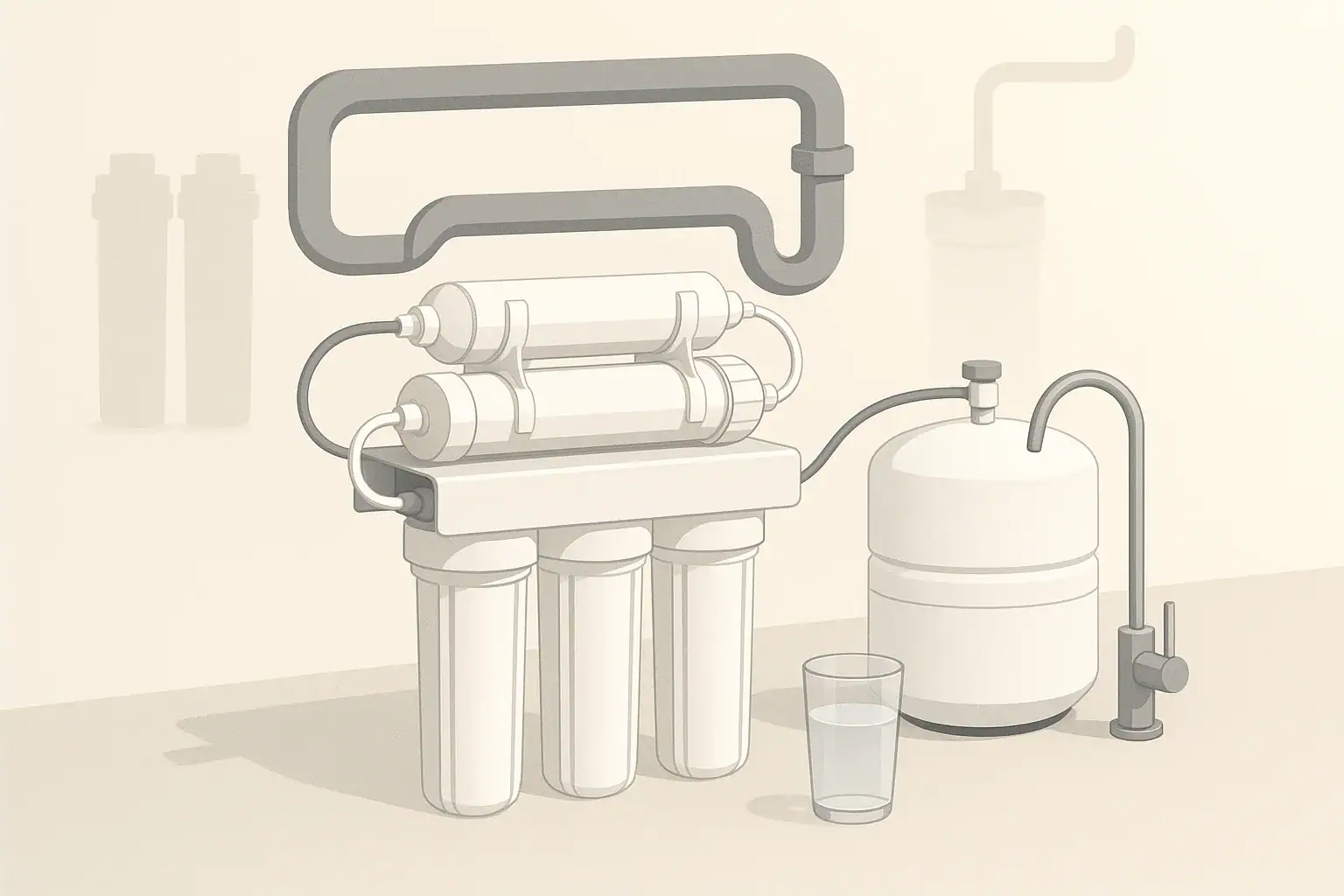
Why Well Water Changes the Under-Sink Filter Decision
Under-sink filters can be very useful for private well water, especially when the goal is better drinking water at one faucet. However, well water is different from treated municipal water. It may carry sediment, iron, manganese, hardness minerals, sulfur odors, or naturally occurring dissolved substances that vary by location and season.
That does not mean every well needs a complicated treatment system. It does mean the best starting point is a recent water test and a realistic look at what an under-sink filter is designed to handle.
Many under-sink systems are point-of-use devices. They treat water at one location, commonly the kitchen sink. A whole-house prefilter is a point-of-entry device. It treats water before it reaches the plumbing, water heater, fixtures, and appliances. For many wells, the point-of-entry step protects the point-of-use filter so it can do its job more consistently.
The practical question is not whether an under-sink filter is good or bad for well water. The better question is whether the well water should be conditioned before it reaches that filter.
What an Under-Sink Filter Can and Cannot Do on Well Water
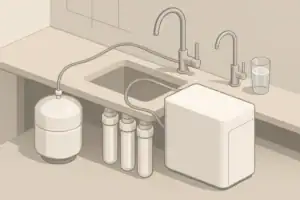
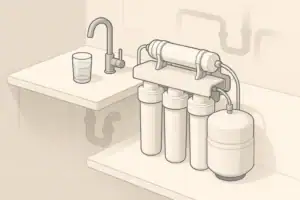
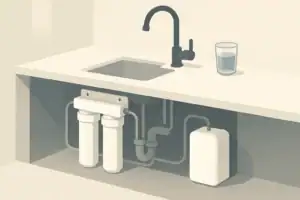
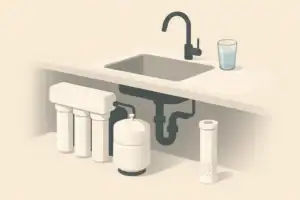
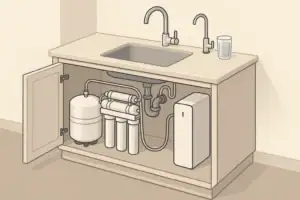
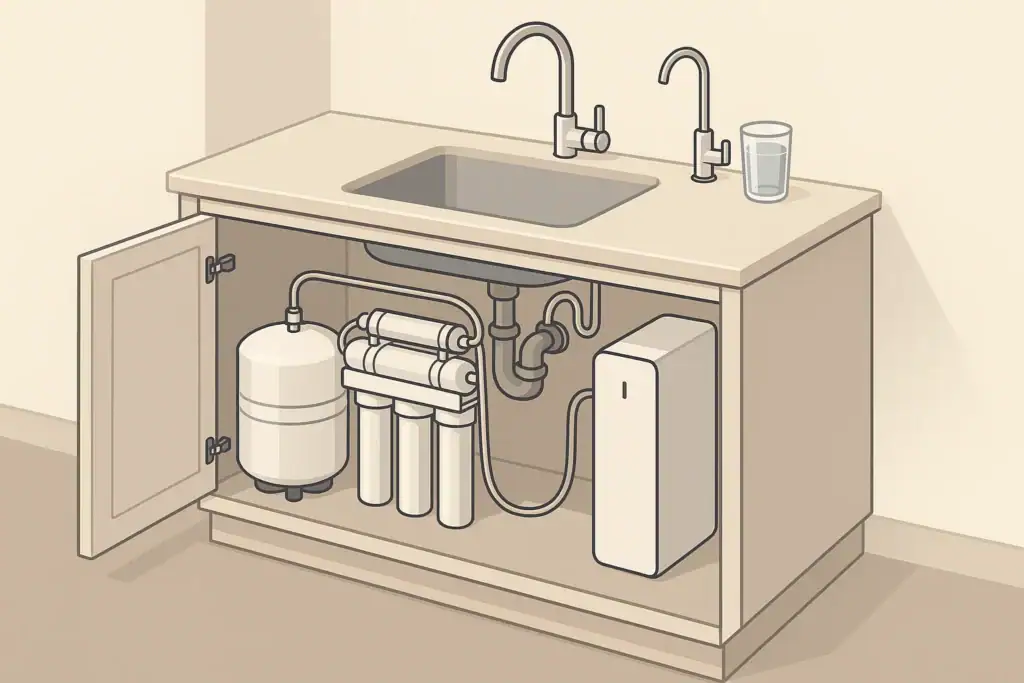
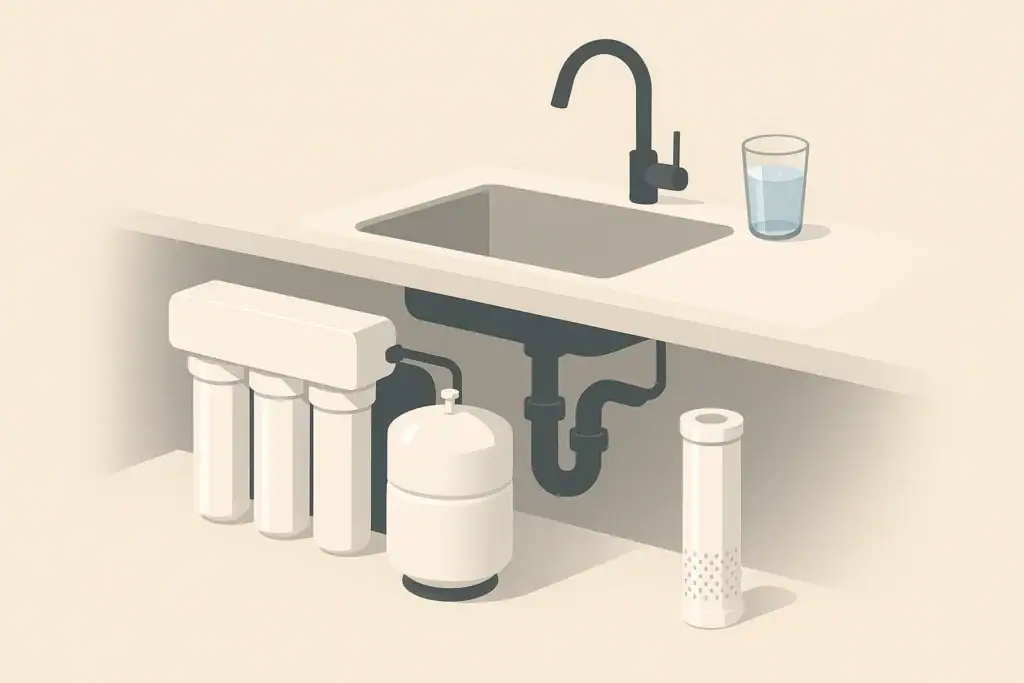
Under-sink filters come in several common forms. Some use carbon cartridges for taste, odor, and certain chemical reductions. Some include sediment prefilters. Reverse osmosis systems use a membrane and typically include prefiltration and postfiltration. Some systems add ultraviolet treatment, although UV performance depends heavily on water clarity and maintenance.
These systems are most effective when water entering them is reasonably clear, stable, and within the equipment limits for pressure, temperature, and water quality. Heavy sediment, iron fouling, or scale can shorten cartridge life and reduce flow.
Common under-sink roles
- Improve taste and odor at a drinking water faucet
- Reduce fine particles when paired with the right sediment cartridge
- Reduce selected dissolved substances when using reverse osmosis
- Provide final polishing after whole-house treatment
- Serve drinking and cooking needs without treating every tap
Common limits on untreated well water
They are not a substitute for a full well inspection or water test. If you are comparing setup options, a whole-house vs point-of-use filters guide can help clarify which stage should come first.
- They are not a substitute for a full well inspection or water test
- Small cartridges can clog quickly with sand, silt, or rust-like particles
- Carbon alone is not a complete solution for hardness, nitrate, microbes, or many dissolved minerals
- RO membranes can foul faster when feed water contains iron, manganese, hardness scale, or sediment
- UV systems need clear water and routine lamp and sleeve maintenance to work as intended
Example values for illustration.
| Water observation or test result | Why it matters | Practical first step |
|---|---|---|
| Visible sand or grit | Can clog small cartridges and faucets | Whole-house sediment filtration or well service review |
| Cloudiness after pumping | May indicate suspended particles or air | Test and add appropriate prefiltration if particles remain |
| Rust-colored staining | Often associated with iron or pipe corrosion | Test for iron and choose point-of-entry treatment as needed |
| Black staining | Often associated with manganese or sulfide issues | Test and treat before fine under-sink filtration |
| Rotten egg odor | May involve hydrogen sulfide or bacteria-related conditions | Test and consider whole-house odor treatment before polishing |
| Hard scale on fixtures | Scale can foul heaters, valves, and some filter components | Evaluate softening or scale control ahead of RO |
| Positive coliform result | Indicates the well system needs attention | Follow local guidance and retest before relying on point-of-use treatment |
When a Whole-House Prefilter Comes First
A whole-house prefilter should come first when untreated well water would damage, clog, or overwhelm the under-sink system. This is common when the issue affects more than drinking water. If the same problem shows up at showers, toilets, laundry, water heaters, or refrigerator lines, treating only the kitchen sink may leave the larger problem in place.
Sediment, sand, and turbidity
Visible particles are one of the clearest signs that point-of-entry filtration should be considered. Sediment can collect in faucet aerators, toilet fill valves, washing machine screens, and water heater tanks. It can also plug small under-sink cartridges quickly. A whole house sediment filter is often the first step when grit or cloudiness is the main issue.
A whole-house sediment filter may use a cartridge, spin-down design, or backwashing media system depending on particle size and loading. The best choice depends on whether the particles are occasional grit, fine silt, or persistent turbidity.
Iron, manganese, and staining
Iron and manganese can cause staining and can foul filter media and RO membranes. They may be dissolved in clear water and then oxidize later, or they may already appear as colored particles. Carbon cartridges and small sediment filters may catch some oxidized particles, but they are not usually the right first treatment for an ongoing iron or manganese problem. For broader background, see iron in water treatment options.
Testing helps determine the form and concentration. Treatment may involve oxidation, filtration, softening in limited cases, or other point-of-entry approaches selected for the specific water chemistry.
Hardness and scale
Hardness is common in well water. It is not the same as total dissolved solids, and it is not always a reason to install a drinking water filter. The issue is scale. Scale can build up in water heaters, fixtures, valves, and some under-sink systems, especially RO systems. A whole house filters vs water softeners comparison can help when scale is part of the problem.
If hardness is high enough to cause frequent scale, a whole-house softener or scale-control system may be considered before an under-sink RO system. The goal is to reduce fouling and improve equipment life, not to make broad claims about health effects.
Microbiological concerns
Private wells should be tested periodically for coliform bacteria and other locally relevant indicators. A positive result is not simply a filter-shopping problem. It can point to well construction, cap integrity, surface water intrusion, plumbing contamination, or the need for disinfection and retesting.
UV is sometimes used as part of a whole-house treatment approach, but it depends on clear water and proper sizing. Sediment, iron, color, and hardness scale can interfere with UV performance. A qualified water professional or local health department can help interpret test results and appropriate next steps. If you are evaluating disinfection at the tap, when UV disinfection makes sense is a useful reference.
Typical Treatment Order from the Well to the Kitchen Sink
Well water treatment usually works best when the most equipment-stressing problems are handled first. This does not mean every home needs every stage. It means each stage should have a purpose, and the order should protect downstream equipment.
Point-of-entry treatment
A general treatment train may start after the pressure tank and before distribution to the house. The exact location and components should follow plumbing codes, manufacturer requirements, and safe installation practices.
Common point-of-entry steps include:
- Pressure tank and shutoff access
- Sediment reduction for sand, silt, or rust particles
- Iron, manganese, or sulfur treatment when testing supports it
- Softening or scale control when hardness is causing practical problems
- UV disinfection when appropriate and after water clarity is addressed
Point-of-use polishing
After whole-house treatment, the under-sink filter can focus on drinking water priorities. This is where carbon filtration, reverse osmosis, or a combination system may make sense. The under-sink unit no longer has to act as the first line of defense against heavy sediment or staining minerals.
This layered approach often improves flow stability and replacement intervals. It also helps separate household treatment goals from drinking water polishing goals.
Choosing the Right Under-Sink Filter After Prefiltration
Once the well water has been tested and major point-of-entry issues are addressed, the under-sink choice becomes more straightforward. If you are deciding between technologies, RO vs carbon under-sink is a helpful side-by-side comparison. The best option depends on the remaining water quality goals, available space, pressure, maintenance preference, and whether a drain connection is acceptable for RO.
Carbon under-sink filters
Carbon filters are commonly used for taste and odor improvement and for reducing certain chemicals that carbon is suited for. On well water, carbon is often best used after sediment, iron, and microbiological concerns are already controlled. Carbon can support bacterial growth if neglected, so replacement schedules and sanitation matter.
Reverse osmosis systems
RO can reduce a broad range of dissolved substances, but it is sensitive to feed water quality. Sediment, iron, hardness scale, and low pressure can reduce performance. Many RO systems include their own sediment and carbon prefilters, but those small cartridges should not be expected to solve whole-house well water problems.
RO systems also create a reject stream. The amount varies by design, pressure, water temperature, and membrane condition. Tank systems may have slower production but provide stored water. Tankless systems may need stronger pressure and more electrical and space planning.
Under-sink UV or specialty cartridges
Some under-sink systems include UV or specialty media. These should be selected based on water test results and the device specifications. UV does not remove sediment or dissolved substances. Specialty cartridges vary widely, so it is important to match the device to a documented water concern rather than a general label.
Sizing Factors: Flow, Pressure, and Daily Use
Well systems vary in pressure. Many homes operate within a pressure switch range rather than at one constant pressure. Under-sink filters add resistance, and resistance increases as cartridges load with particles. If the well pump, pressure tank, or existing plumbing already provides weak flow, adding an under-sink system may make that more noticeable.
For carbon and sediment under-sink filters, look at rated service flow and cartridge capacity. For RO, look at daily production, storage tank size if present, minimum pressure requirements, and recovery expectations. These values are best treated as planning guides because real-world performance changes with temperature, pressure, and water quality. A under-sink filter flow rate guide can help translate those numbers into day-to-day usability.
A household that uses filtered water for drinking only may need less capacity than one that uses it for cooking, coffee, tea, pet bowls, humidifiers, and refrigerator ice. If the under-sink system also feeds a refrigerator, the tubing run and pressure needs should be considered carefully.
Maintenance and Testing Plan for Well Water Filters
Maintenance is where many well water under-sink systems succeed or fail. A system that is well matched but neglected can produce slow flow, taste changes, leaks, or reduced treatment performance. A system that is mismatched may need cartridges far more often than expected.
Set a replacement schedule, then adjust
Manufacturer intervals are starting points, not guarantees. On well water, cartridge life can vary widely. Sediment load, iron, manganese, hardness, pH, and water use all affect replacement timing. If a cartridge plugs in a few weeks, the issue is usually upstream water quality, not simply a bad cartridge interval.
Retest when conditions change
Well water can change after flooding, drought, nearby construction, pump service, well repairs, or long periods of nonuse. Periodic testing for common private well concerns is a practical habit. Local extension offices, health departments, or certified labs can help identify regionally relevant tests.
Watch for pressure drop and leaks
Under-sink spaces are easy to ignore. Check periodically for moisture, mineral deposits, swollen cabinet material, or changes in faucet flow. Use leak detection devices where appropriate, and do not bypass shutoffs, air gaps, pressure controls, or other safety features. Plumbing work should follow local code and manufacturer instructions.
Example values for illustration.
| Component | Typical planning concern | What may shorten service life |
|---|---|---|
| Whole-house sediment prefilter | Protects plumbing and smaller filters | Sand, silt, rust particles, disturbed well conditions |
| Iron or manganese treatment media | Reduces staining and fouling before the sink | Incorrect sizing, changing chemistry, lack of service |
| Softener or scale-control stage | Helps limit scale before RO or fixtures | High hardness, high use, missed maintenance |
| Under-sink sediment cartridge | Polishes fine particles at the faucet | No whole-house prefilter, high turbidity |
| Carbon cartridge | Improves taste and reduces suitable compounds | Heavy sediment, long stagnation, missed changes |
| RO membrane | Reduces many dissolved substances | Iron, scale, low pressure, exhausted prefilters |
| UV lamp and sleeve | Supports disinfection when properly applied | Cloudy water, fouled sleeve, expired lamp |
Related guides: Best Whole House Sediment Filters • Whole House Filters vs Water Softeners • RO vs Carbon Under-Sink • Under-Sink Filter Flow Rate
Practical Takeaways Before Installing an Under-Sink Filter
For well water, an under-sink filter is usually the final treatment step, not the first diagnostic tool. Start with testing, identify problems that affect the whole house, and address sediment, staining minerals, hardness scale, or microbiological concerns before relying on a small kitchen filter.
A whole-house prefilter comes first when it protects plumbing, appliances, and the under-sink system from water quality issues that are already visible or documented. Once those concerns are managed, an under-sink carbon filter or RO system can be selected for the remaining drinking water goals with fewer surprises.
The most practical setup is the one matched to actual well conditions, installed safely, and maintained on a schedule that reflects real water use.
Frequently asked questions
Do I need a whole-house prefilter before an under-sink filter on well water?
Not always, but it is often smart when the water has visible sediment, iron staining, hardness scale, or other issues that could clog a small kitchen filter.
Can an under-sink carbon filter handle untreated well water?
It can improve taste and odor, but it is not a full solution for sediment, hardness, microbes, or many dissolved minerals.
When is reverse osmosis a better choice for well water?
RO can be a good option when you want broader reduction of dissolved substances, but it works best after sediment, iron, and scale issues are addressed.
What water test results should I check before installing a filter?
Start with a recent test for sediment, iron, manganese, hardness, and bacteria indicators that are relevant in your area.
How often should I replace under-sink filters on well water?
Use the manufacturer schedule as a starting point, then adjust based on actual water quality, flow changes, and how quickly cartridges load up.
Recommended next:
- Under-Sink vs Pitcher: Which Is Better for Families?
- Best Under-Sink Filters for Chlorine Taste & Odor
- Under-Sink Filter Installation: Tools, Parts, and Common Mistakes
- No-Drill Under-Sink Filters for Renters: What’s Possible?
- Under-Sink Filters for Lead Reduction: What Certifications to Look For
- Under-Sink Filter Flow Rate Explained: Why GPM Matters
- More in Under-Sink Filters →
- NSF/ANSI standards explained (42/53/401/58)
- Clear trade-offs: pitcher vs faucet vs under-sink vs RO
- Maintenance planning: cost per gallon and replacement cadence