
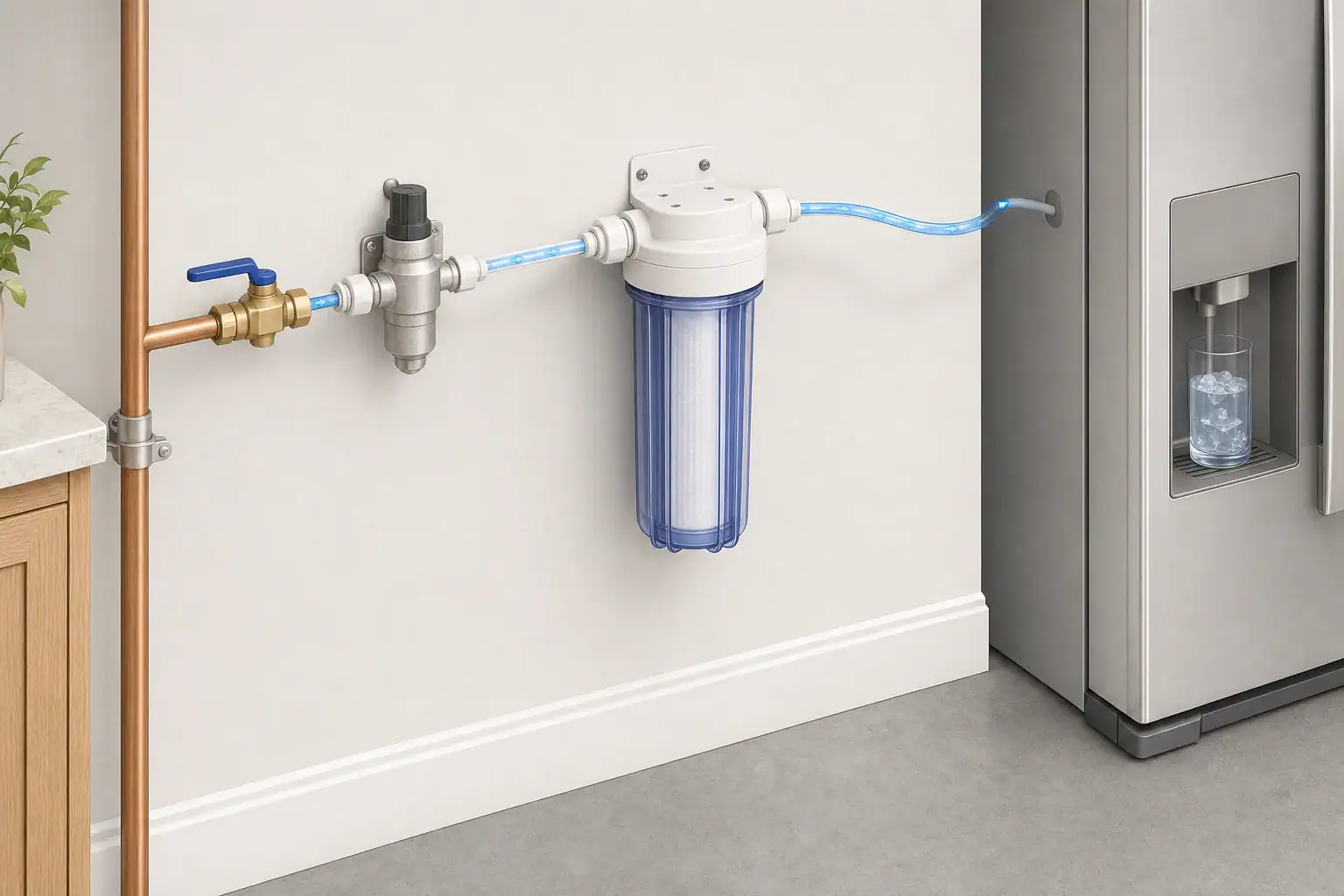
A refrigerator filter may make a hammering, knocking, or pulsing noise when trapped air, restricted flow, an improperly seated cartridge, valve chatter, or excessive water pressure disrupts the supply line. If the noise started immediately after a filter change, air in the filter and housing is the most likely explanation. If it persists, the inlet valve and water supply deserve closer attention.
The sound may seem to come from the filter even when the actual source is the refrigerator’s inlet valve or the plumbing behind the appliance. Identifying when the noise occurs is the quickest way to narrow down the cause.
Start With the Timing and Location of the Noise
Operate the water dispenser while listening near the filter housing, the rear of the refrigerator, and the wall connection. Also note whether the noise occurs during an automatic ice-maker fill.
| Noise pattern | Likely cause | First check |
|---|---|---|
| Noise began after filter replacement | Trapped air or incorrect cartridge installation | Purge the dispenser and reseat the filter |
| Rapid pulsing while dispensing | Restricted flow or inlet valve chatter | Check the filter, tubing, and supply valve |
| Single bang when flow stops | Water hammer from a fast-closing valve | Have supply pressure and plumbing support checked |
| Noise only during ice-maker fill | Ice-maker inlet valve or supply-line movement | Observe the rear tubing during a fill cycle |
| Noise appears throughout the house | Broader pressure or well-system issue | Check other fixtures and consult a plumber |
Clear Trapped Air After a Filter Change
A new cartridge contains dry filter media and empty internal spaces. As water enters, displaced air can make the flow sputter and cause vibration in the housing, tubing, or valve. This usually improves as the cartridge becomes fully saturated.
Follow the refrigerator manufacturer’s flushing procedure. In general, dispense water in controlled intervals rather than holding the dispenser continuously for an unusually long period. Continue until the stream is steady and no longer releases bursts of air. The required flushing amount varies by refrigerator and cartridge, so use the appliance or filter instructions rather than assuming a universal volume.
During flushing, watch for leaks around the filter housing and connections. Stop the water flow if a leak appears. Persistent sputtering after a thorough purge may indicate that air is entering through a loose filter, damaged seal, or supply-line connection.
Confirm That the Filter Is Installed Correctly
A cartridge that is not fully locked into place can interrupt flow and make the internal check valves open and close repeatedly. Remove and reinstall the cartridge according to the refrigerator instructions, paying attention to its orientation and locking position.
Before reinstalling it:
- Check that protective caps or packaging have been removed.
- Inspect accessible O-rings or seals for twisting, cuts, or displacement.
- Look for debris around the filter connection.
- Confirm that the cartridge is the correct physical type for the housing.
- Do not force a cartridge that will not align or lock normally.
A compatible-looking filter may fit poorly or operate its internal valves differently. If the noise began with a different cartridge type, reinstalling the previously specified type can help identify a fit or flow problem. Do not modify the filter, housing, or locking mechanism to make a cartridge fit.
Look for a Flow Restriction
A clogged filter or restricted supply line can reduce pressure downstream of the restriction. The refrigerator’s inlet valve may then chatter as it struggles to maintain flow. The dispenser may pulse, slow down, or produce an uneven stream at the same time.
Check the cartridge’s condition
Replace a cartridge that is overdue under the manufacturer’s service guidance or that has developed a substantial flow reduction. Actual filter life depends on water use and sediment loading, not just elapsed time. Homes with private wells may experience faster clogging when sediment reaches the refrigerator line.
Inspect the tubing and shutoff valve
With the refrigerator moved only as directed by its manual, look for kinked or sharply bent tubing. Avoid pulling the appliance far enough to strain the water or electrical connection.
Make sure the dedicated supply valve is fully open. A valve left partially open can create turbulence and restriction. Older self-piercing saddle valves are also prone to limited flow and mineral buildup; replacement with an appropriate code-compliant shutoff valve is generally a job for a qualified plumber.
Separate Filter Noise From Inlet Valve Chatter
The refrigerator inlet valve opens when the dispenser or ice maker requests water. If its internal components wear or if available flow is unstable, the valve can vibrate rapidly. The sound may travel through the cabinet and make the filter housing appear to be the source.
A manufacturer-approved filter bypass plug can sometimes help with diagnosis. If the refrigerator is designed to operate with such a plug, compare operation with the cartridge installed and with the approved bypass in place. If the hammering stops with the bypass, the cartridge, filter connection, or restricted flow through the filter is more likely. If it continues, the inlet valve, tubing, or household supply is more likely.
Do not run the refrigerator without a filter or bypass component unless the manufacturer specifically permits it. A bypass test also says nothing about filtered-water quality; it only helps isolate the hydraulic cause of the noise.
Consider Excessive or Fluctuating Water Pressure
A sharp bang when the dispenser stops is more consistent with water hammer than with trapped air. Water hammer occurs when moving water is stopped abruptly, sending a pressure wave through the tubing. Loose supply lines can amplify the sound.
Check the refrigerator manual for its permitted inlet-pressure range. Household pressure should be measured with a suitable gauge at an appropriate connection, ideally under both static and flowing conditions. A plumber can determine whether a pressure regulator, pipe support, or properly selected hammer arrestor is appropriate.
A hammer arrestor should not be used to hide a defective inlet valve or an unusually high household pressure condition. The underlying pressure and flow problem should be identified first.
Pressure changes in homes with private wells
On a well system, pressure naturally moves between the pressure switch’s cut-in and cut-out settings. A failing pressure tank, rapid pump cycling, clogged sediment treatment, or misadjusted controls can make those changes more abrupt. If refrigerator noise coincides with pump starts or other fixtures also surge, the issue may be upstream of the appliance.
Well pressure tanks and pump controls should be serviced with the power isolated and according to system requirements. Because incorrect adjustments can damage equipment or create unsafe conditions, diagnosis is best left to a qualified well or plumbing professional.
A Safe Troubleshooting Order
- Note whether the noise occurs during dispensing, ice filling, flow startup, or shutoff.
- If the filter was recently changed, flush it according to the manufacturer’s instructions.
- Shut off the refrigerator’s water supply before removing and correctly reseating the cartridge.
- Inspect accessible tubing for kinks and confirm that the supply valve is fully open.
- Replace an overdue or severely restricted cartridge with the specified type.
- If permitted, use the manufacturer-approved bypass component to distinguish a filter issue from a valve or supply issue.
- Have pressure, the inlet valve, and the household plumbing evaluated if the hammering remains.
Do not disassemble the inlet valve while the refrigerator is connected to electricity and water. Disconnecting appliances, testing energized components, and opening pressurized plumbing should be handled according to the appliance instructions or by a qualified technician.
Related guides: Air in the line after a filter change • Fixing low flow from a refrigerator dispenser • Refrigerator filter leaks
When the Refrigerator Should Be Serviced
Arrange service if the noise continues after purging and reseating the filter, if the dispenser flow repeatedly pulses, or if the inlet valve buzzes or chatters with an approved bypass installed. Prompt attention is also appropriate when there is leaking, visible tubing movement, a sudden loss of flow, or repeated banging elsewhere in the house.
A brief sputter after filter replacement is usually an air-purging issue. Persistent hammering, especially when accompanied by poor flow or a sharp bang at shutoff, points more strongly to a restriction, unstable valve, unsupported line, or pressure problem.
Frequently asked questions
Why is my refrigerator filter making a hammering noise after replacement?
Trapped air is a common cause immediately after replacement. Flush the new filter according to the refrigerator manufacturer’s instructions until the water stream is steady.
Can a clogged refrigerator filter cause knocking or pulsing?
Yes. A restricted filter can reduce flow and contribute to inlet-valve chatter, pulsing dispenser flow, or vibration in the supply line.
Is a banging noise when the water dispenser stops water hammer?
A single sharp bang at shutoff can indicate water hammer. Excessive pressure, a fast-closing valve, or loose tubing can make the sound more noticeable.
Can I test the refrigerator with the filter removed?
Only if the manufacturer allows operation with an approved bypass plug. Do not operate the refrigerator without the required filter or bypass component.
When should I call for refrigerator or plumbing service?
Arrange service for persistent hammering, leaks, repeated flow pulsing, valve chatter with an approved bypass installed, or banging that also occurs at other fixtures.
- NSF/ANSI standards explained (42/53/401/58)
- Clear trade-offs: pitcher vs faucet vs under-sink vs RO
- Maintenance planning: cost per gallon and replacement cadence