
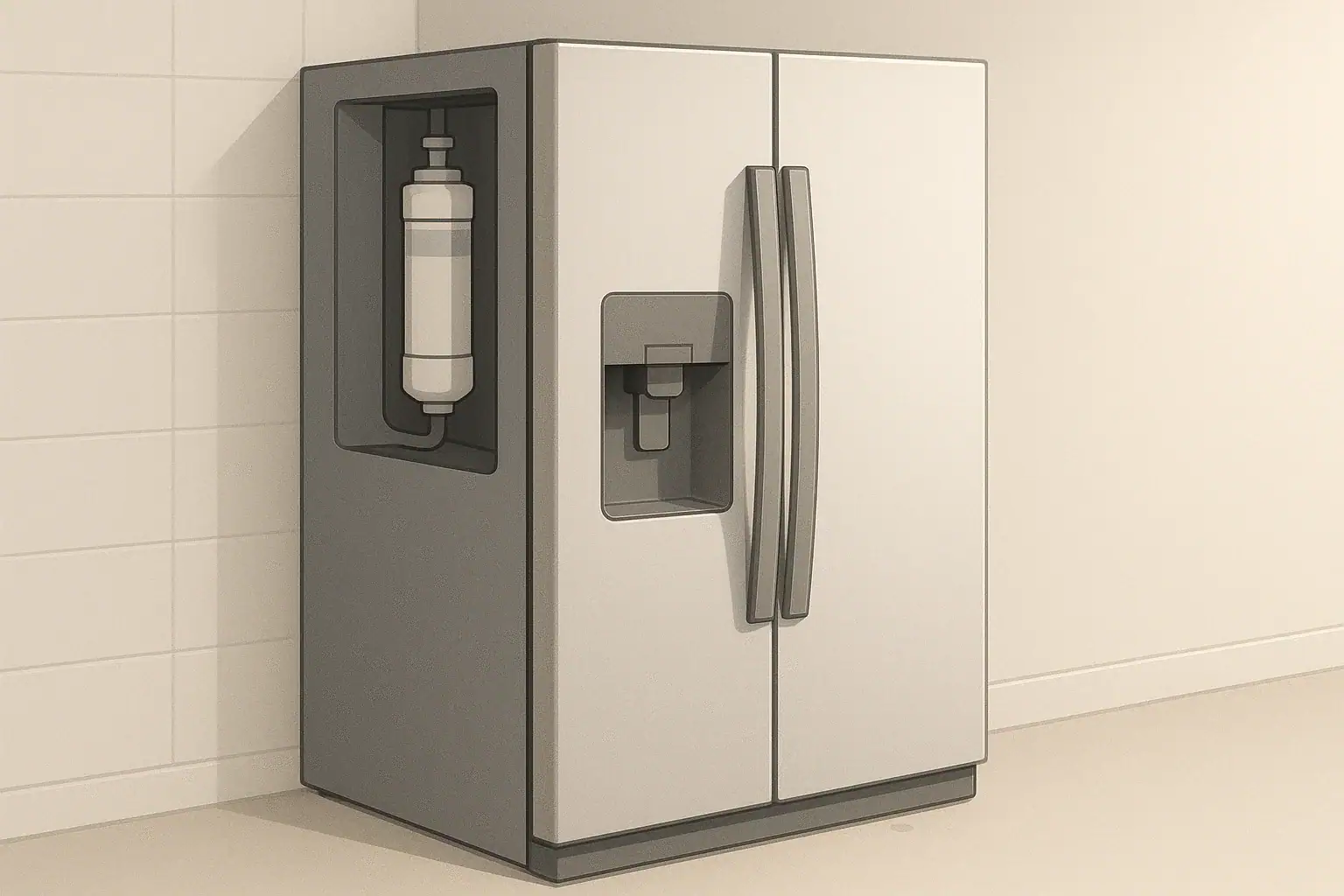
Why Refrigerator Filter Leaks Matter
Refrigerator water and ice dispensers are convenient, but leaks around the filter can create puddles, damage flooring, and reduce filtration performance. Most leaks come from a few predictable issues: worn seals, incorrect installation, poor water line connections, or pressure problems in the home plumbing system.
Understanding how refrigerator filters fit into your home water setup can make troubleshooting easier. A fridge filter is usually the last stage in a chain that might include whole-house filters, under-sink filters, or even reverse osmosis systems. Any change in flow, pressure, or sediment upstream can affect the small seals and fittings inside the refrigerator.
This guide focuses on practical, home-level checks and quick fixes for refrigerator filter leaks, along with basic maintenance habits to reduce the chance of repeat problems.
Before trying to fix a leak, it helps to identify where the water is coming from. A small flashlight and a dry paper towel are useful tools. Always turn off the water supply to the refrigerator before removing any parts.
Common Places Refrigerator Filters Leak
1. Leak at the Filter Housing or Filter Head
Many refrigerators use an internal filter that twists or pushes into a filter head or housing. Leaks here often appear as:
- Drips from the filter area inside the fridge compartment
- Water pooling on a shelf under the filter
- Water under the fridge if it runs down an internal panel
Likely causes include:
- Filter not fully locked or seated
- Damaged or missing O-rings on the filter or in the housing
- Hairline cracks in the plastic filter head
- Debris on sealing surfaces preventing a tight seal
2. Leak at the Filter Cap or Cartridge End
Some designs use a separate cap that attaches to the filter cartridge. Leaks here may show as slow drips from the bottom of the filter or from the cap threads.
Typical reasons:
- Cap cross-threaded or not tightened evenly
- Flattened or hardened gasket in the cap
- Using a cap that does not match the current filter style
3. Leak from Water Line Connections
Refrigerator filters also connect to flexible water lines behind or beneath the appliance. Common connection types include push-to-connect fittings and compression nuts.
Signs of a water line leak include:
- Water on the floor behind or under the refrigerator
- Visible drips from tubing connections near the filter
- Occasional spraying when the dispenser is activated
Likely causes:
- Tube not fully inserted into a push-to-connect fitting
- Cracked plastic fittings or brittle tubing
- Over-tightened or under-tightened compression nuts
4. Leak Related to the Dispenser Area
Some leaks appear at the front dispenser rather than at the filter itself. In these cases, the filter can still be part of the problem.
Possible issues:
- Air in the line after a filter change causing splashing
- Clogged or partially frozen dispenser line increasing back pressure
- Drip tray overflow that looks like a leak
Example values for illustration.
| What you see | Most likely area | First safe check |
|---|---|---|
| Puddle on shelf under filter | Filter housing / head | Verify filter is fully seated and locked |
| Drip from bottom of filter cartridge | Filter cap or end gasket | Inspect O-ring or gasket for damage |
| Water on floor behind fridge | Rear water line connections | Check tubing for kinks, cracks, loose fittings |
| Splashing, then drips at dispenser | Air in line / high pressure | Run water for several minutes to flush air |
| Intermittent leak when ice maker runs | Ice maker inlet line | Inspect line and valve area for moisture |
| Constant slow drip even when unused | Shutoff valve or main feed line | Verify valve position and look for seepage |
Step-by-Step: Safe Checks Before You Start
Before working on a leaking refrigerator filter, focus on safety and preventing additional water damage.
Turn Off Water and Power (If Needed)
- Locate the refrigerator water shutoff valve. This may be under the sink, in a basement, or behind the fridge.
- Turn the valve fully off. If the valve has not been used in years, turn it slowly to avoid damaging it.
- If you will move the refrigerator or work near wiring, unplug the appliance to avoid electrical hazards.
Protect Floors and Collect Water
- Place towels or a shallow tray under the filter area or behind the fridge.
- Keep paper towels or a dry cloth handy to see fresh drips clearly.
Document What You See
- Note exactly where the water appears first.
- Take photos of tubing routes and fittings before disconnecting anything.
- Record the current filter type and installation orientation for reassembly.
Quick Fixes for Filter-Related Leaks
Many refrigerator filter leaks are resolved with basic adjustments or simple part replacements. The following steps assume the water supply is turned off.
1. Reseat or Reinstall the Filter
Filters that are slightly misaligned or not fully locked can leak even if they are new.
- Remove the filter according to the refrigerator instructions. Pay attention to any twist direction or push-release tabs.
- Inspect the filter body and the connection point for cracks, chips, or rough spots.
- Wipe sealing surfaces with a clean damp cloth to remove sediment or debris.
- Reinstall the filter firmly until it clicks, stops turning, or reaches the marked position.
- Turn the water back on and observe the area for several minutes.
If the leak stops after reseating, it was likely caused by incomplete installation or debris on the seal.
2. Check and Replace O-Rings or Gaskets
Most filter connections rely on soft O-rings to create a watertight seal. Over time, these can dry out, flatten, or crack.
- Carefully inspect O-rings on the filter and in the housing or cap.
- Look for cuts, flattening, or areas that look out of round.
- If the design allows, gently remove O-rings with a non-sharp tool to avoid damage.
- Compare to new O-rings of the same size and type if you have them.
- Lightly moisten O-rings with clean water before reassembly to help them seat without twisting.
If an O-ring is visibly damaged or missing, it should be replaced before using the filter again.
3. Replace a Cracked Filter Cartridge
Cracks in the plastic shell of the filter or around the connection collar can cause direct leaks.
- Examine the filter in good light for fine cracks, especially near the top where it connects.
- If you find a crack, do not attempt to seal it with glue or tape; replace the filter instead.
- Confirm that the replacement filter matches the required connection type and size.
4. Flush the Filter After Installation
New filters often trap air pockets that can cause sputtering or apparent leaks at the dispenser.
- After installing a new filter, run several minutes of water through the dispenser.
- Dispense in short intervals to allow air to clear without overfilling the drip tray.
- Some systems may require flushing several gallons of water (for example, 2–4 gallons) before normal flow returns. This is an example range, and actual guidance should follow the refrigerator instructions.
If the “leak” is actually splashing from trapped air, this usually stops once the line is fully purged.
5. Tighten or Reseat External Water Line Fittings
For filters mounted outside the refrigerator (such as inline filters on the water line), fittings are a frequent source of dripping.
- Gently tug on tubing to be sure it is fully seated in push-to-connect fittings.
- For compression fittings, tighten by hand, then slightly with a wrench. Avoid overtightening, which can crack the fitting or deform the ferrule.
- Inspect tubing for kinks, flattened spots, or age-related discoloration that may indicate brittleness.
When the Leak Is Caused by Water Pressure or Sediment
Even if the filter and fittings are installed correctly, conditions in your home’s plumbing can cause leaks to appear at the refrigerator filter connection points.
High Water Pressure
Refrigerator filter components are small and may be sensitive to unusually high water pressure.
- Some homes experience higher-than-typical static water pressure, especially at night.
- Excessive pressure can stress O-rings, housings, and fittings, causing intermittent or constant leaks.
- If you suspect high pressure, a plumber or knowledgeable homeowner can measure it with a simple threaded gauge connected to a hose bibb.
If pressure is significantly above the range recommended for household plumbing, a whole-home pressure-reducing valve may be considered. This is a plumbing modification and is typically handled by a professional.
Sediment and Debris
Particles such as sand, rust, or mineral flakes can get into the refrigerator’s small passageways and seals.
- Sediment can scratch sealing surfaces or prevent O-rings from seating fully.
- Clogging can increase localized pressure and lead to leaks around weak points.
- If you notice frequent filter clogging or visible particles on seals, an upstream sediment filter on the home supply line may help.
Whole-house filters or point-of-entry sediment filters can reduce the load on refrigerator filters and other fixtures. This can improve taste and appearance of water and may reduce maintenance.
Filter Leaks, Water Quality, and Certifications
Although a leaking refrigerator filter is often viewed as a plumbing nuisance, it is also connected to your overall household water quality strategy.
How Refrigerator Filters Fit into Your Filtration Setup
Refrigerator filters are usually designed to address taste and odor issues, and sometimes additional contaminants, depending on the design. Common roles include:
- Reducing chlorine taste and odor from municipal supplies
- Capturing fine sediment that passes other filters
- Providing additional polishing filtration for ice and drinking water
If you already use pitcher filters, under-sink filters, reverse osmosis, or whole-house systems, the refrigerator filter is one part of a larger chain. Leaks at this last stage may indicate that other parts of the system need attention, such as:
- Upstream filters at the end of their service life
- Changes in water pressure after plumbing work
- Increased sediment after municipal line flushing or seasonal changes
NSF/ANSI Standards and What They Mean for Leaks
NSF/ANSI certifications relate to how filters perform for specific contaminant reduction claims and structural integrity, not just leak prevention. However, structural testing is part of many certifications, so understanding the basics can help you choose filters that are designed for consistent performance under normal household conditions.
- NSF/ANSI 42 commonly covers aesthetic effects such as chlorine taste and odor reduction and may include structural performance tests.
- NSF/ANSI 53 commonly addresses filters designed to reduce certain health-related contaminants, along with structural integrity checks.
- NSF/ANSI 401 is often used for filters that claim reduction of certain emerging compounds.
- NSF/ANSI 58 typically applies to reverse osmosis systems rather than refrigerator filters, but it is relevant when the fridge uses RO-treated water supplied from under the sink.
When evaluating a filter replacement for a leaking installation, it can be helpful to verify:
- Which NSF/ANSI standards it is certified to, if any
- Whether the certification includes structural performance or pressure-related testing
- That the filter is intended for your type of refrigerator connection
Example values for illustration.
| Standard | Common focus area | What to verify on documentation |
|---|---|---|
| NSF/ANSI 42 | Aesthetic effects (taste, odor, appearance) | Chlorine taste/odor reduction claim and structural test notes |
| NSF/ANSI 53 | Selected health-related contaminant reduction | Specific contaminants listed and compatible operating pressure range |
| NSF/ANSI 401 | Certain emerging compounds | Which specific compounds are addressed and any flow constraints |
| NSF/ANSI 58 | Reverse osmosis systems | That the RO system is suitable as a feed source for a refrigerator |
| Additional markings | Structural integrity and materials safety | That materials in contact with water are tested for typical home use |
Maintenance Habits to Prevent Future Filter Leaks
Consistent, simple maintenance can reduce the chance of leaks returning and help your refrigerator filter perform predictably.
Follow Replacement Intervals
Filters are usually rated for a certain time period or approximate gallon capacity. Overused filters may clog and increase pressure drop, which can stress seals and housings.
- Use time-based reminders, such as a calendar or digital note, to track replacement dates.
- If the refrigerator has a filter indicator, use it as a prompt, but also note calendar timing in case the indicator is reset by accident.
Check for Leaks After Every Filter Change
- Inspect the filter area for several minutes immediately after installation.
- Return after an hour and again after a day to check for any new moisture.
- If you see condensation, confirm whether it is from humidity or an actual leak by drying the area and watching for fresh water.
Monitor Water Quality Changes
Changes in taste, odor, or appearance of your refrigerator water may indicate that filters are clogging or no longer performing as expected. In some cases, this is accompanied by changes in flow rate or unusual dispenser behavior.
- Slower flow can point to clogging, which may increase internal stress on fittings.
- Sudden cloudiness or particles may signal upstream disturbances, such as plumbing work or municipal line flushing.
- In areas with very hard water, mineral deposits can build up more quickly, and filters or lines may need more frequent attention.
Know When to Seek Professional Help
Some leaks are beyond simple homeowner fixes. Consider contacting a qualified technician or plumber if:
- You see persistent water under the refrigerator, but cannot find the source.
- Plastic components inside the fridge, such as the filter head, appear cracked or deformed.
- Shutoff valves, copper lines, or wall connections are corroded or hard to operate.
- You suspect unusual water pressure or complex interactions with other filtration systems.
Taking a systematic approach—starting with the filter and seals, then connections, then household water conditions—can help you address refrigerator filter leaks efficiently and keep your water and ice supply reliable over time.
Related guides
replace refrigerator water filters
Frequently asked questions
How can I tell whether the water under my refrigerator is coming from the filter housing or an external water line?
Start by turning off the refrigerator water supply and drying the area, then use a flashlight and a dry paper towel to trace fresh drips. Water pooling on a shelf or dripping directly from the filter area usually indicates the filter housing, while water on the floor behind the fridge or spraying when the dispenser runs points to a rear water line or connection.
Can I reuse an O-ring if it looks okay, or should I always replace it when changing the filter?
If an O-ring is intact, clean and lightly moisten it before reinstalling to help it seat properly; this can be acceptable for a short time. However, replace any O-ring that is flattened, cracked, cut, or out of shape because damaged seals are a common cause of leaks.
Will flushing a newly installed filter prevent leaks or splashing from the dispenser?
Flushing removes trapped air in the line, which often causes sputtering and apparent splashing; running water for a few minutes typically clears the air and stops that behavior. If splashing or leaks continue after flushing, inspect seals and fittings for damage or improper installation.
Can high home water pressure cause refrigerator filter leaks and how should I check it?
Yes, unusually high static water pressure can stress small seals, fittings, and housings, leading to leaks. Measure pressure with a simple gauge or consult a plumber; if pressure is excessive, a pressure-reducing valve may be recommended and should be installed by a professional.
When should I call a plumber instead of attempting DIY fixes for a leaking refrigerator filter?
Contact a professional if you cannot locate the leak source, if plastic components inside the fridge appear cracked or deformed, if shutoff valves or supply connections are corroded or hard to operate, or if the leak persists despite replacing seals and checking fittings. Persistent floor water or suspected pressure-system issues also warrant a plumber to avoid further damage.
Recommended next:
- Why Your Ice Tastes Bad (and How a Fridge Filter Helps)
- Refrigerator Filter Compatibility: How to Find the Right Replacement
- Inline Fridge Filters: When to Use an External Inline Filter
- How Often to Replace Refrigerator Water Filters (By Gallons & Usage)
- Fixing Low Flow from a Refrigerator Dispenser
- Do Refrigerator Filters Reduce Lead? How to Check Claims
- More in Refrigerator & Ice Filters →
- NSF/ANSI standards explained (42/53/401/58)
- Clear trade-offs: pitcher vs faucet vs under-sink vs RO
- Maintenance planning: cost per gallon and replacement cadence