
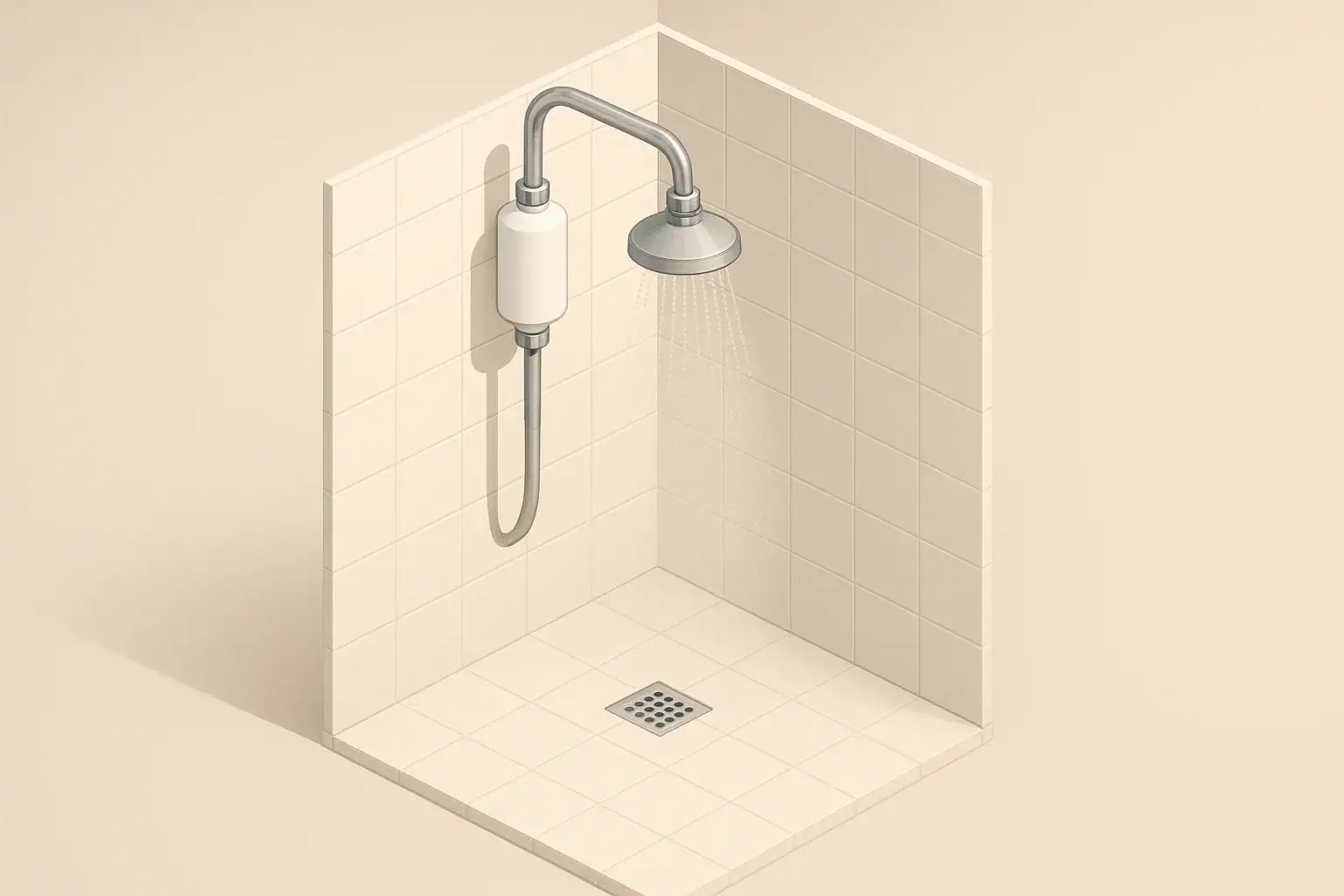
Introduction: This article explains what KDF media is, how it works, and why it’s used in shower filters. It reviews the underlying redox mechanisms, typical pairings with activated carbon and other media, performance at hot water temperatures, common strengths and limitations, certification considerations, and practical maintenance tips. The goal is to help homeowners understand when a KDF-based shower filter can enhance shower comfort and fixture longevity, and when additional or alternative water treatment is appropriate. Read on for a clear breakdown of functions, comparisons with activated carbon, standards to look for, and guidance on installation and cartridge replacement. The overview is oriented toward residential use cases such as municipal or well water, and it highlights scenarios where KDF may be a practical choice versus situations that require more robust treatment. It is not a substitute for certified drinking-water treatments for contaminants like lead or PFAS, but it often improves aesthetic issues such as chlorine odor in showers.
What Is KDF Media in Shower Filters?
KDF media is a granular filtration material made from high-purity copper and zinc. It is widely used in shower filters and some other point-of-use water treatments because it is stable at higher temperatures and can help reduce certain contaminants commonly found in municipal water.
The term “KDF” usually refers to a family of proprietary copper–zinc alloys used as a filter bed. In a shower filter, these granules are packed into a cartridge through which water passes before leaving the shower head.
Unlike fine carbon block cartridges used in drinking water filters, KDF granules are relatively coarse. This design supports good flow at typical shower rates while still providing contact between the water and the metal surface, where many of the treatment reactions occur.
How KDF Media Works in Water Treatment
KDF media relies mainly on redox (reduction–oxidation) reactions. As water flows through the copper–zinc bed, electrons are transferred between the metals and certain dissolved substances. These changes can alter how those substances behave in water or how easily they can be removed by other filter stages.
Key Functions of KDF Media
In shower filters and similar devices, KDF media is commonly used for:
- Chlorine reduction: Chlorine added for disinfection can be chemically changed to forms that are less reactive in water, which may help improve odor.
- Supporting scale control: Redox reactions can influence how hardness minerals (like calcium and magnesium) behave, sometimes helping reduce visible scale buildup on fixtures. This is not the same as fully softening water.
- Helping protect other media: By handling some oxidizing compounds, KDF can help extend the useful life of activated carbon or other media in the same cartridge.
- Discouraging certain biological growth on the media surface: The conditions at the copper–zinc interface can make it harder for some microorganisms to colonize the media bed itself. This does not turn the shower filter into a sterilization device.
Why KDF Is Paired With Other Media
Many shower filters combine KDF with other media, such as granular activated carbon, ceramic elements, or sediment screens. KDF handles oxidation-related reactions well and works at hot shower temperatures, while other media can address particles or additional taste-and-odor concerns.
On its own, KDF does not address every potential contaminant. Pairing it with other materials allows the filter to target a broader set of water quality issues while balancing flow, pressure, and cartridge life.
Example values for illustration.
| Situation | What you mainly notice | How a KDF-based shower filter is typically used |
|---|---|---|
| Municipal water with strong chlorine smell | Noticeable odor in hot showers | Often used to help reduce chlorine-related odor and improve shower experience |
| Moderately hard water with visible spotting | Spots on glass and fixtures | Sometimes combined with other media to help manage visible scaling on shower surfaces |
| High concern about lead or PFAS | Focus on contaminant reduction beyond taste and odor | Usually not relied on alone; whole-house or certified point-of-use drinking filters are often considered |
| Well water with sediment | Sand or grit visible at fixtures | Pre-filtration for sediment is typically needed before a KDF shower filter |
| Desire to keep normal shower flow | Do not want a weak spray | Granular KDF designs aim to preserve flow while still offering treatment contact time |
| Rental housing where plumbing changes are limited | Cannot install whole-house systems | Shower filter with KDF is often used as a simple screw-on option at the fixture |
Why KDF Is Commonly Used in Shower Filters
Shower filters face different design constraints than drinking water filters. They must operate at higher temperatures, allow higher flow rates, and fit into compact housings. KDF media is well-suited to these constraints, which is why it appears in many shower filter cartridges.
Performance at Hot Water Temperatures
Many common filter media work best with cold or room-temperature water. In contrast, KDF media remains stable and active at typical shower temperatures. This makes it helpful in:
- Homes where hot showers intensify chlorine-related odor
- Situations where the filter is installed directly before a shower head on the hot line
Because the media is metallic and not polymer-based, it does not soften or deform under normal residential hot water conditions.
Maintaining Water Flow and Pressure
Shower filters need to pass several gallons of water per minute without creating an uncomfortably weak spray. KDF granules are larger than the tightly packed particles used in some drinking water cartridges, so water can flow through more easily.
Designers can adjust:
- The size and shape of the KDF bed
- The blend of KDF with other media
- The internal baffles and screens to distribute flow
This helps balance contact time with the media and perceived shower performance.
Longevity and Cartridge Life
KDF’s redox reactions are not consumed in the same way as some adsorptive media. Over time, the surface can foul or scale, but under typical residential conditions, KDF often supports relatively long replacement intervals compared with some other granular media.
Actual life depends on:
- Incoming water quality (especially chlorine level and hardness)
- Shower frequency and duration
- Whether other media in the cartridge clog from sediment
Manufacturers typically provide a usage-based or time-based replacement guideline, such as a certain number of months or estimated gallons. These are general estimates, not guarantees.
What KDF Media Can and Cannot Address
Understanding the realistic role of KDF media can help set expectations for a shower filter. It is one component in an overall water treatment approach, not a universal solution for every contaminant.
Typical Strengths of KDF in Shower Filters
In combination with other media and proper housing design, KDF is often used to help with:
- Chlorine-related taste and odor: Many users notice that water from a KDF-based shower filter has a reduced chlorine smell, especially with hot water.
- Support for scale management: Some systems use KDF as part of a strategy to influence the way hardness minerals deposit on fixtures, which can help with cleaning.
- Protecting downstream media: By handling oxidizing compounds, KDF can reduce stress on activated carbon and other media in the same cartridge.
Limitations of KDF Media
There are also important limits to what KDF alone typically addresses in a shower setup:
- Heavy metals like lead: While KDF can interact with some dissolved metals under certain conditions, shower filters are not usually the primary treatment for heavy metals in household water. Point-of-use drinking filters or whole-house systems are often considered instead.
- PFAS and many organic chemicals: KDF is not the main media used to address these; activated carbon and other specialized media are more commonly involved.
- Microbial pathogens: Typical shower filters with KDF are not certified as disinfecting devices. They may help protect the media bed from colonization, but they are not designed to produce sterile water.
- Very high sediment loads: KDF granules are not a primary sediment filter. Significant sand or silt can clog the cartridge; pre-filtration may be needed in such cases.
For households with complex water quality concerns, KDF-based shower filters are often used as a comfort- and cosmetic-oriented step, while more robust treatment systems handle drinking water or whole-house protection.
Comparing KDF Media With Activated Carbon in Shower Filters
KDF and activated carbon are frequently used together. Each type of media has strengths and limitations, and many cartridges combine them to improve overall performance while maintaining shower-friendly flow.
How Activated Carbon Works Differently
Activated carbon relies primarily on adsorption, where dissolved substances adhere to the large internal surface area of the carbon particles. It is commonly used for:
- Improving taste and odor
- Reducing many organic compounds
- Helping reduce certain disinfection byproducts, depending on design
However, standard activated carbon usually performs best with cooler water and relatively lower flow rates than a typical shower uses. Granular carbon in shower filters is therefore often arranged to balance contact time and flow, and KDF can help share the treatment load.
Why Many Shower Filters Use Both Media
In a combined KDF–carbon cartridge, the two media can complement each other:
- KDF may help manage oxidizing compounds, which can help preserve carbon capacity.
- Carbon can address a wider variety of organic taste-and-odor compounds.
- Both media together can broaden the range of issues the shower filter can address without overly restricting flow.
When reviewing product literature, you may see references to both media and sometimes to additional layers such as sediment screens or ceramic components. The performance of the full filter depends on how all of these are combined and tested.
NSF/ANSI Standards and KDF-Based Shower Filters
Independent testing and certification can help verify claims made for shower filters, including those using KDF media. Two of the most common standards for residential water treatment devices are NSF/ANSI 42 and NSF/ANSI 53.
Relevant NSF/ANSI Standards
While not every shower filter is certified, the following standards are often referenced in marketing and documentation:
- NSF/ANSI 42: Covers aesthetic effects, such as chlorine taste and odor reduction and particulate reduction. Many shower filters that claim chlorine reduction refer to testing under this standard.
- NSF/ANSI 53: Addresses health-related contaminant reduction, such as certain heavy metals or specific organic compounds, for drinking water systems. Shower filters are less commonly certified under this standard, but it may be mentioned for some products.
- NSF/ANSI 401: Concerns emerging contaminants, such as certain pharmaceuticals and personal care products, mainly in the context of drinking water point-of-use systems.
- NSF/ANSI 58: Specific to reverse osmosis systems, which typically are not used as shower filters.
Because shower filters are installed on fixtures that deliver water over the body rather than for drinking, manufacturers may focus on aesthetic performance claims and practical features such as flow rate and cartridge life.
Example values for illustration.
| Standard | Typical focus | What a homeowner might verify |
|---|---|---|
| NSF/ANSI 42 | Aesthetic effects (chlorine taste and odor, particulates) | Whether the device is listed for chlorine reduction at shower-like flow rates |
| NSF/ANSI 53 | Health-related contaminants (e.g., certain metals, some organics) | If applicable, which specific contaminants the device is certified to reduce |
| NSF/ANSI 401 | Emerging contaminants (selected pharmaceuticals and chemicals) | Whether the device is intended for drinking water or general household use |
| NSF/ANSI 58 | Reverse osmosis systems | Usually not relevant for shower filters, but useful for under-sink RO units |
| System-specific listings | Device-level performance claims | Model number, flow rate, and rated capacity on the official listing |
| Maintenance notes | Filter life and replacement guidance | Recommended replacement interval and any conditions that shorten life |
Practical Tips for Using and Maintaining a KDF Shower Filter
Getting consistent performance from a KDF-based shower filter depends on proper installation and timely replacement. While specific instructions vary by device, some general practices are widely recommended.
Installation Considerations
Before installing a shower filter that uses KDF media:
- Check compatibility: Confirm that the filter threads and size match your shower arm and shower head.
- Review flow and pressure ratings: Make sure your household water pressure and typical shower flow are within the device’s stated range.
- Flush after installation: Most cartridges should be flushed for several minutes to rinse fine particles before regular use.
Recognizing When to Replace the Cartridge
Common cues that a KDF-based shower filter cartridge may need replacement include:
- Return of chlorine-related odor during showers after a period of improvement
- Noticeable reduction in water flow not explained by the shower head alone
- Manufacturer’s recommended time or usage limit being reached
Keeping a simple log or setting a reminder can help ensure the cartridge is changed before performance declines significantly.
Where a KDF Shower Filter Fits in a Whole-Home Strategy
For many households, a KDF-based shower filter is one piece of a broader water management plan. Other elements might include:
- A whole-house sediment or carbon system for incoming water
- A point-of-use drinking water filter at the kitchen sink or refrigerator
- A water softener, if scale control is a major concern
In that context, the shower filter focuses on improving the shower experience and protecting fixtures, while other systems address drinking water quality and household-wide concerns.
Frequently asked questions
How well do KDF media shower filters reduce chlorine in hot showers?
KDF media reduces free chlorine through redox reactions that convert it to less reactive forms, which often lessens chlorine odor in hot showers. The degree of reduction depends on factors such as contact time, flow rate, and cartridge design, and is best verified by independent testing when available.
Can KDF media remove lead or other heavy metals in shower water?
KDF can interact with some dissolved metals under certain conditions, but shower filters are generally not relied upon as the primary treatment for heavy metals like lead. For known heavy-metal concerns, homeowners should consider certified point-of-use or whole-house systems specifically tested for those contaminants.
Will a KDF shower filter prevent scale buildup on fixtures?
KDF can influence how hardness minerals behave and may reduce visible spotting or scale buildup in some cases, but it does not soften water in the way an ion-exchange softener does. It’s often used as part of a broader strategy to manage scale rather than as a standalone softening solution.
How often should I replace a KDF shower filter cartridge?
Cartridge life varies with incoming water quality (chlorine level, sediment, hardness), shower frequency, and flow rate; manufacturers typically give a months-or-gallons guideline. Replace the cartridge if chlorine odor returns, flow drops noticeably, or the manufacturer’s recommended interval is reached.
Do KDF-based shower filters remove PFAS or disinfect water?
KDF is not the primary media used to remove PFAS and typical KDF shower filters are not certified for disinfection. For PFAS reduction or pathogen removal, use devices specifically designed and certified for those purposes, such as certain activated carbon, reverse osmosis, or disinfecting systems.
Recommended next:
- NSF/ANSI standards explained (42/53/401/58)
- Clear trade-offs: pitcher vs faucet vs under-sink vs RO
- Maintenance planning: cost per gallon and replacement cadence