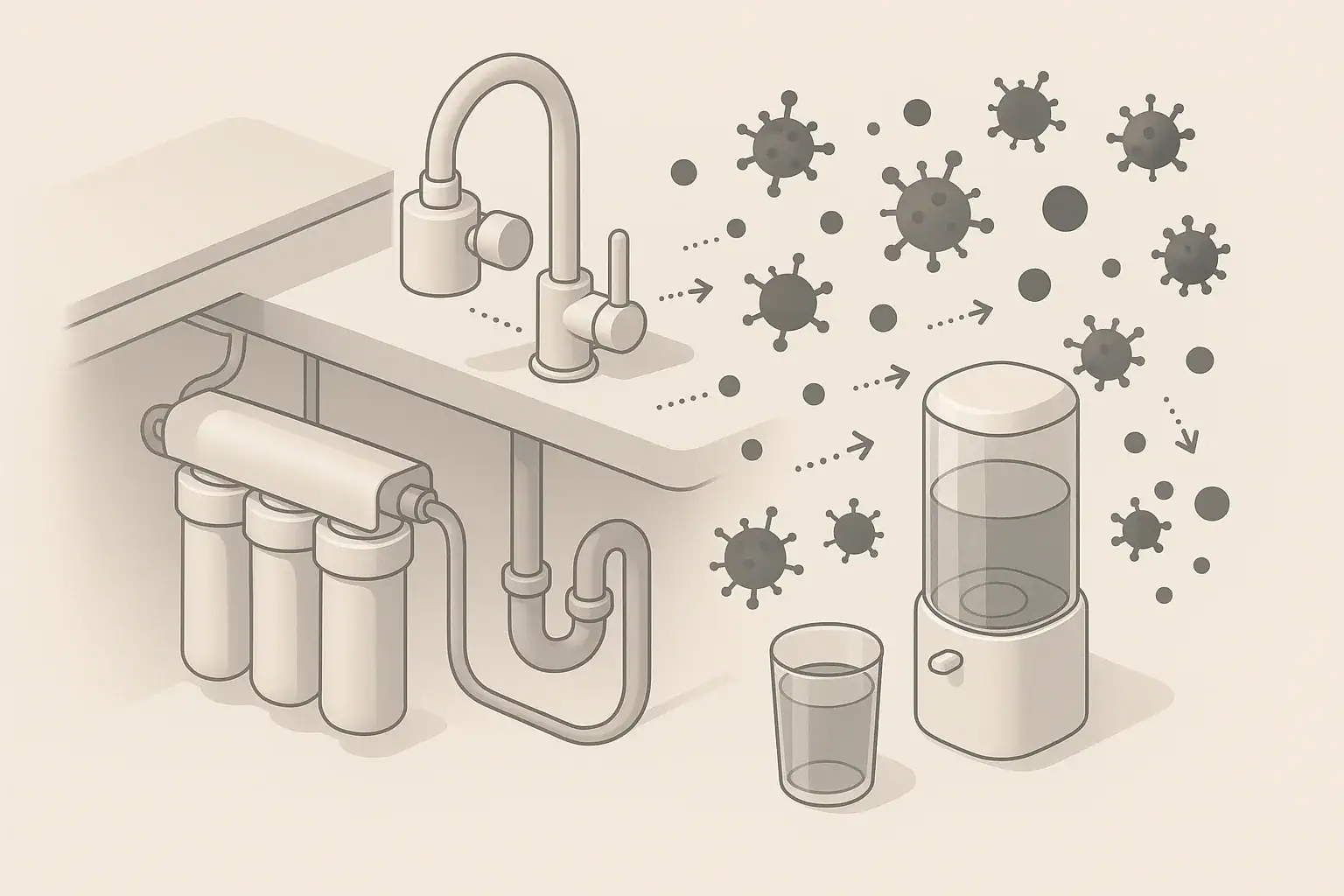
A water filter gurgling sound usually means air and water are moving through the filter, tubing, faucet, tank, or drain line at the same time. In many home filtration systems, brief gurgling is normal after installation, after a cartridge change, or after the system has been unused for a while.
Gurgling becomes more important when it is new, loud, continuous, paired with poor flow, or followed by leaking. The cause depends heavily on the filter type. A pitcher filter can gurgle because air is escaping from carbon media. A reverse osmosis system can gurgle because product water and reject water are moving through different lines. A refrigerator filter can gurgle when trapped air moves through the dispenser.
The sound itself is not a reliable measure of water quality. It is a mechanical clue. To interpret it well, consider where the sound comes from, when it happens, and whether water flow or taste has changed.
Why a Water Filter Makes a Gurgling Sound
A water filter gurgling sound usually means air and water are moving through the filter, tubing, faucet, tank, or drain line at the same time. In many home filtration systems, brief gurgling is normal after installation, after a cartridge change, or after the system has been unused for a while.
Gurgling becomes more important when it is new, loud, continuous, paired with poor flow, or followed by leaking. The cause depends heavily on the filter type. A pitcher filter can gurgle because air is escaping from carbon media. A reverse osmosis system can gurgle because product water and reject water are moving through different lines. A refrigerator filter can gurgle when trapped air moves through the dispenser.
The sound itself is not a reliable measure of water quality. It is a mechanical clue. To interpret it well, consider where the sound comes from, when it happens, and whether water flow or taste has changed.
When Gurgling Is Normal vs When to Check the System
Some gurgling is expected when air is being purged. New carbon, sediment, and reverse osmosis cartridges often trap air in their pores and housings. After water begins flowing, the air breaks loose and creates bubbling, sputtering, or glugging sounds.
Gurgling is more likely to need attention if it continues for days, appears after months of quiet operation, happens with a pressure drop, or comes from a drain connection that did not previously make noise. It is also worth checking if the filter housing, tubing, faucet base, or cabinet floor shows moisture.
Use a calm, step-by-step approach. Avoid disassembling plumbing beyond the normal maintenance steps described by the system instructions. Do not plug drains, bypass shutoff devices, defeat leak sensors, or modify pressure controls to silence a sound.
Example values for illustration.
| Sound pattern | Common situation | Practical response |
|---|---|---|
| Brief bubbling after a new cartridge | Air trapped in filter media | Flush as directed and monitor |
| Sputtering at a refrigerator dispenser | Air in the water line | Dispense water in short cycles until steady |
| Gurgling from an RO drain | Reject water moving to drain | Normal during production if no leak or backup exists |
| Long gurgle with weak flow | Clogged cartridge or low pressure | Check cartridge age and inlet valve position |
| Noise only when tank refills | RO storage tank and automatic shutoff cycling | Observe frequency and compare with normal use |
| New sound after moving tubing | Kinked line or shifted connection | Inspect visible tubing without forcing fittings |
| Gurgling with visible water | Possible leak or loose housing | Turn off supply if safe and seek service if needed |
Common Causes by Filter Type
Different filters move water in different ways. The most useful troubleshooting starts with the type of system you have.
Pitcher and Dispenser Filters
Pitcher filters often gurgle as water passes through carbon and resin media by gravity. Air trapped in the cartridge rises through the upper reservoir while filtered water drops into the lower chamber. A slow glugging sound is usually normal during the first few fills.
If the sound is paired with extremely slow filtration, the cartridge may not be fully wetted, may be clogged with fine particles, or may be near the end of its useful life. Soaking or flushing should only be done according to the filter instructions. Tapping, cutting, or opening the cartridge is not recommended.
Faucet-Mounted Filters
Faucet-mounted filters can gurgle when water flow changes quickly from unfiltered to filtered mode. The small internal channels can hold air, and a diverter valve may make bubbling or chattering sounds if water pressure is uneven.
Common causes include a newly installed cartridge, a partially clogged aerator, a cartridge at the end of its service life, or a loose connection at the faucet threads. A steady stream after a brief flush is a good sign. Persistent sputtering, spraying from the connection, or visible leakage suggests the unit should be inspected and reseated according to its instructions.
Countertop Gravity Systems
Countertop gravity filters may gurgle as air leaves ceramic, carbon, or composite elements. Because gravity systems operate slowly, the gurgling can be intermittent. It may occur when the upper chamber is full and then stop as the water level drops.
If a gravity element has been stored dry, it may need time to re-wet. If it has been used for a long period, reduced flow can indicate clogging from sediment or mineral scale. Cleaning or replacing elements should follow the manufacturer-style maintenance guidance for that filter design.
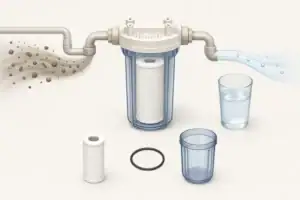
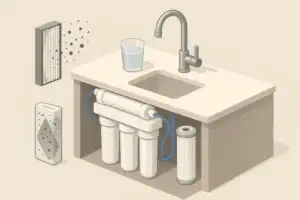
Under-Sink Carbon or Sediment Filters
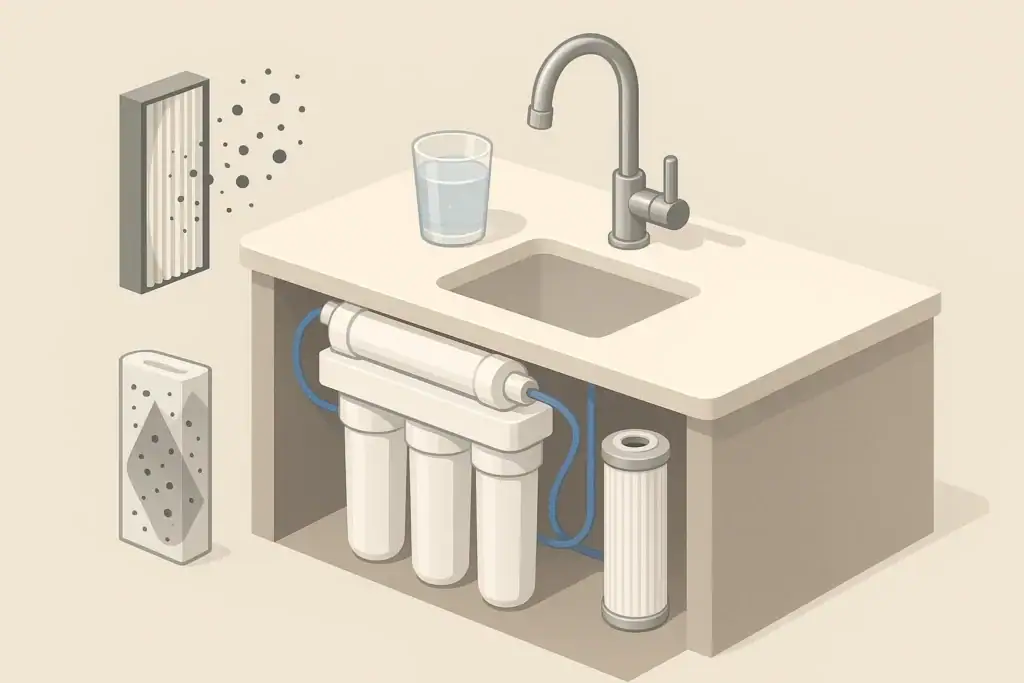
Single-stage and multi-stage under-sink filters can gurgle after installation or cartridge replacement. Air may be trapped in the housing, in the outlet tubing, or in a dedicated drinking water faucet. The sound often fades after several minutes of flushing.
Gurgling that starts later may point to a restricted cartridge, a partially closed supply valve, or a kinked tube. If the filter has a clear housing, trapped bubbles may be visible. If it has opaque housings, rely on filtered water flow, pressure behavior, and moisture checks instead of opening the system unnecessarily.
Refrigerator Water Filters
Refrigerator filters commonly gurgle, sputter, or pulse after a filter change. The dispenser line and ice maker feed can hold air. When water starts moving, bubbles push through the dispenser and may cause uneven flow.
Short dispensing cycles can help purge air without overfilling a glass. If gurgling continues with poor flow, check that the filter is seated correctly and that the water supply valve is fully open. A filter that is not locked into place can restrict flow or allow air to remain in the line.
Reverse Osmosis Systems With Storage Tanks
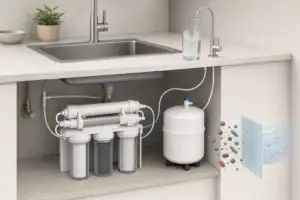
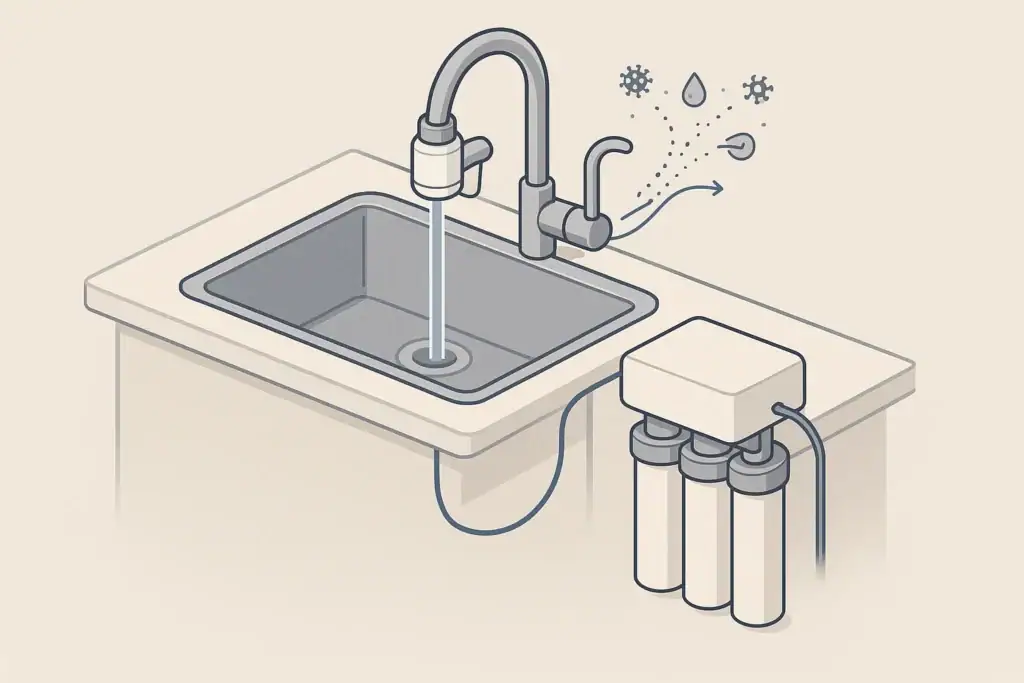
Reverse osmosis systems are one of the most common sources of water filter gurgling. A typical RO system sends filtered water to a storage tank and sends reject water to a drain. During production, a drain line may gurgle as air and water move through the air gap faucet or drain connection.
Some gurgling at the drain is normal while the unit is making water. The sound may be more noticeable at night because the home is quieter. However, constant drain noise, very frequent cycling, or a tank that never fills can suggest low feed pressure, a depleted tank air charge, a clogged prefilter, a fouled membrane, or an automatic shutoff problem.
RO systems also may gurgle at the dedicated faucet after filter changes. Air can remain in the postfilter, tank, and tubing. Normal flushing often clears this, but a persistent cloudy appearance from tiny air bubbles should gradually dissipate in a glass. If it does not, inspect for low RO flow or seating issues.
Tankless Reverse Osmosis Systems
Tankless RO systems run on demand and often use a pump. Their sounds can include humming, pulsing, and brief gurgling at the faucet or drain. Because there is no storage tank, the system may produce sound every time water is drawn.
More concerning signs include a pump that rapidly starts and stops, a drain that runs continuously when no water is being used, or flow that alternates between strong and weak. These symptoms can involve pressure, sensors, cartridge restriction, or drain-line issues. Service should stay within normal maintenance procedures unless a qualified technician is involved.
Whole-House Sediment and Carbon Filters
Whole-house filters may create gurgling or rushing sounds after a cartridge change, especially when several fixtures are opened to purge air. Because these systems treat water before it reaches the rest of the house, trapped air can appear at faucets, showers, toilets, and appliances.
If gurgling occurs only after service, it may be temporary. If it appears with banging pipes, reduced pressure throughout the home, or repeated air spurts, the cause may be broader than the filter. Well systems, pressure tanks, check valves, and plumbing conditions can all influence air in the lines. Avoid adjusting pressure tank settings or pump controls unless you are qualified to do so.
UV Water Treatment Units
A UV unit itself does not usually create gurgling because ultraviolet treatment is not a filter media process. However, UV systems are often installed after sediment or carbon filtration, so the sound may come from nearby housings or trapped air in the plumbing.
If gurgling appears after replacing a UV lamp sleeve, changing a prefilter, or reopening a shutoff valve, air may be moving through the pipe. If the UV chamber or nearby fittings show moisture, stop and check the installation instructions or call for service.
Remineralization and Alkaline Postfilters
Remineralization cartridges, often used after RO, can hold air in granular media. Gurgling may be heard when water first contacts the media or when flow starts after a long pause.
Because these cartridges are often installed near the faucet line, the sound can seem like it is coming from the faucet itself. Slow flow, unusual taste, or persistent bubbles after the recommended flush may indicate the cartridge is exhausted, installed in the wrong direction, or not fully seated.
How Location Helps Identify the Cause
Where you hear the gurgling matters. A sound at the faucet often points to air in the final line, a faucet diverter, or a postfilter. A sound under the sink can involve a housing, tubing, RO tank, pump, or drain line. A sound at multiple fixtures suggests air is entering or moving through the home plumbing rather than just one drinking water filter.
Timing also helps. Gurgling during the first gallon or two after a cartridge change is different from gurgling every hour when no one is using water. A noise that occurs only while an RO system refills is expected to some degree. A noise that occurs at random may point to pressure changes, a slow leak, or a valve that is not sealing properly.
For city water, sudden gurgling can sometimes follow utility work, plumbing repairs, or changes in household demand. For well water, air can be related to the well, pump, pressure tank, or treatment equipment. The filter may simply be where the sound is easiest to hear.
Safe Troubleshooting Steps Before Calling for Help
Start with low-risk checks. Look for visible water around the filter, tubing, faucet base, refrigerator connection, or cabinet floor. If you see dripping or pooling, shut off the water supply to the filter if it is safe and accessible.
Next, compare the sound to recent changes. Ask whether a cartridge was replaced, the home water supply was shut off, a refrigerator was moved, or an under-sink item bumped tubing. Many gurgling problems begin immediately after a normal maintenance event.
Try these practical checks:
- Confirm the filter cartridge is fully seated and locked.
- Check that visible tubing is not kinked or sharply bent.
- Open the filtered faucet and flush according to the system instructions.
- Replace cartridges that are past their recommended interval.
- Make sure a dedicated supply valve is fully open if it was recently closed.
- Listen for whether the sound comes from the faucet, housing, tank, pump, or drain.
Do not enlarge drain holes, cap air gaps, remove check valves, defeat leak sensors, or change pressure controls to reduce noise. Those parts may be important for backflow prevention, leak protection, or pressure safety.
Maintenance Issues That Often Create Gurgling
Water filters are most likely to gurgle when maintenance is overdue or recently completed. A clogged cartridge can reduce water speed enough to pull air pockets unevenly through the system. A new cartridge can release trapped air and fines during the first flush. A housing that is not tightened evenly can allow slight movement or vibration.
Replacement timing varies by water use, feed water quality, and filter design. A household with heavy sediment, high chlorine demand, or frequent cooking water use may reach a cartridge limit sooner than a household with lower use. Instead of relying only on the calendar, watch for slower flow, changing taste or odor, recurring air noises, or pressure drop.
For reverse osmosis systems, prefilters protect the membrane and help maintain steady pressure. When prefilters clog, the system may refill slowly and produce longer drain gurgling. A storage tank with improper air charge can also cause poor delivery and odd cycling. Tank pressure checks should be done only according to the system instructions and with appropriate care.
Example values for illustration.
| Component | Gurgling-related clue | Typical action |
|---|---|---|
| Pitcher cartridge | Glugging with very slow drip | Replace if flow remains slow after normal prep |
| Faucet filter | Sputter at filtered setting | Check seating and cartridge age |
| Under-sink prefilter | Weak flow and air noise | Replace on schedule or when pressure drops |
| RO carbon prefilter | Longer refill and drain sound | Replace before heavy restriction develops |
| RO membrane | Slow production after prefilters are changed | Evaluate according to system guidance |
| Refrigerator filter | Dispenser sputter after replacement | Purge air and confirm cartridge is locked |
| Whole-house cartridge | Air at several fixtures after service | Flush fixtures and check housing for leaks |
Related guides: Air in the Line After a Filter Change • Noisy RO System: Common Causes and Fixes • Why Your Filtered Water Flow Suddenly Dropped • Fixing Under-Sink Filter Leaks
When Gurgling Deserves Prompt Attention
Most water filter gurgling is either temporary air purging or normal operating sound. Still, some situations deserve prompt attention. Take the sound seriously if it comes with leaking, repeated pressure loss, a drain that appears backed up, a pump that short-cycles, or water flow that has become unreliable.
For under-sink and RO systems, also watch for cabinet moisture, swelling wood, mineral crust around fittings, or a faucet base that stays wet. For refrigerator systems, check for water under or behind the appliance. For whole-house systems, note whether air is appearing at every fixture or only at one filtered tap.
If the system is under warranty, recently installed, connected to electrical components, or tied into a well pump or pressure tank, it is reasonable to contact a qualified installer or service professional. The goal is not to eliminate every small sound. The goal is to confirm that water is flowing where it should, air is being purged normally, and the filter is operating within its intended design.
Frequently asked questions
Is a gurgling water filter always a problem?
No. Brief gurgling is often normal after installation, cartridge replacement, or a period of nonuse. It becomes more concerning if it is loud, continuous, or paired with weak flow or leaks.
How long should gurgling last after changing a filter?
It usually fades after flushing the system and purging trapped air. If the sound continues for days or returns frequently, check the cartridge seating, tubing, and water pressure.
Why does my reverse osmosis system gurgle at the drain?
RO systems send reject water to the drain, so some drain noise is expected while the unit is producing water. A constant or unusually loud gurgle can point to a clog, low pressure, or a drain-line issue.
Why does my refrigerator filter gurgle after replacement?
Air often stays in the dispenser line and ice maker feed after a filter change. Dispensing water in short cycles usually helps clear the air and reduce sputtering.
When should I stop using the system and check for leaks?
If gurgling comes with visible water, cabinet moisture, a loose fitting, or a sudden drop in flow, stop and inspect the system. Shut off the supply if needed and follow the unit’s normal service steps.
Recommended next:
- Why Your Filtered Water Flow Suddenly Dropped (Diagnostic Checklist)
- Low Pressure After Installing a Filter: 8 Things to Check
- Leaking Under the Sink: How to Identify the Source Fast
- Air in the Line After a Filter Change: How to Purge It
- Noisy RO System: Common Causes and Fixes
- Bad Taste After Installing a New Filter: Quick Fixes
- More in Troubleshooting →
- NSF/ANSI standards explained (42/53/401/58)
- Clear trade-offs: pitcher vs faucet vs under-sink vs RO
- Maintenance planning: cost per gallon and replacement cadence