
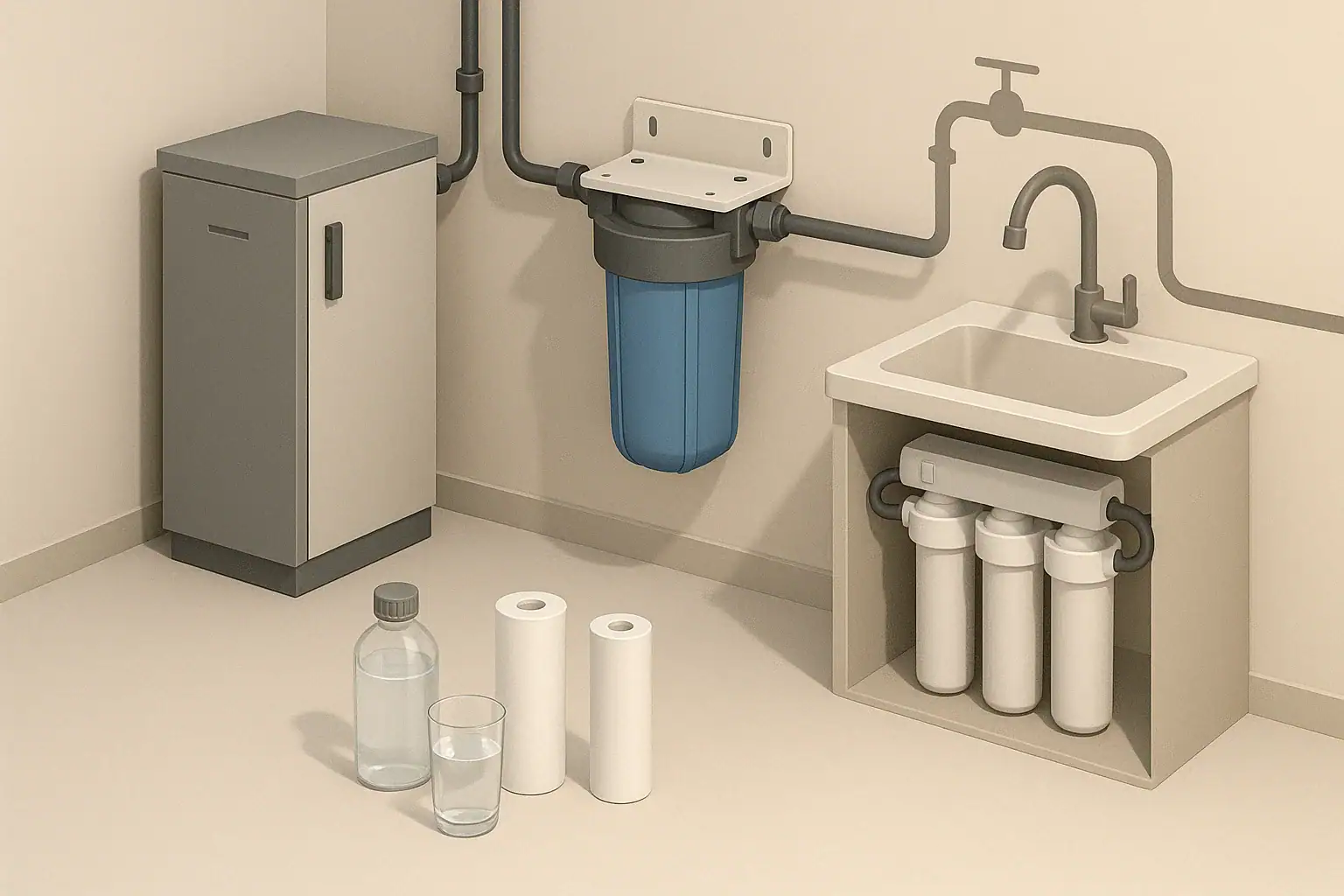
A well water test report is most useful when it leads to clear next steps. Instead of choosing a filter by guesswork, start with the contaminants actually found in your water, then match each result to the treatment type that is commonly used for that issue.
This checklist is written for private well owners in the United States. It focuses on practical decisions: what to test, how to read a lab report, which filter categories usually fit which results, and when one device is not enough. It is not a substitute for local code requirements, a certified laboratory, or a licensed water treatment professional when a result is complex or safety-related.
Why well water test results should drive filter selection
Private wells are not managed the same way as public water systems. The water quality can vary by region, depth, nearby land use, plumbing materials, seasonal changes, and the condition of the well itself. Two homes on the same road can have different test results.
That is why a general filter recommendation can miss the real problem. A carbon filter may improve certain taste and odor issues, but it is not a complete answer for hardness, bacteria, nitrate, iron staining, or high sediment. A reverse osmosis system may reduce many dissolved substances at a drinking water tap, but it does not disinfect a whole plumbing system or fix orange staining at every fixture.
A test-first approach helps you avoid three common mistakes:
- Over-treating: buying equipment for contaminants that were not found or are not a priority.
- Under-treating: using a taste filter for an issue that needs a different method.
- Wrong location: putting a point-of-use filter under the sink when the issue affects the whole house, or installing a whole-house device when only drinking water needs polishing.
Build a prioritized well water test checklist
A useful well water test covers more than taste. Many important water quality indicators cannot be seen, smelled, or tasted. Start with a certified or qualified laboratory when possible, especially for bacteria, nitrate, metals, and other regulated or health-related analytes.
A baseline well test commonly includes:
- Total coliform and E. coli
- Nitrate and nitrite
- pH and alkalinity
- Hardness
- Iron and manganese
- Total dissolved solids, often called TDS
- Arsenic, lead, and other metals when relevant locally
- Hydrogen sulfide indicators or sulfur odor evaluation
- PFAS, VOCs, pesticides, or petroleum-related compounds when local conditions suggest risk
Your first priority is usually any result that indicates microbial contamination or a contaminant of local concern. Next come plumbing compatibility issues, such as low pH or high iron, followed by aesthetic concerns like staining, scale, taste, odor, and cloudiness. This order keeps the decision process calm and practical.
Example values for illustration.
| Test result or symptom | What it may indicate | Common treatment categories to consider | Typical location |
|---|---|---|---|
| Total coliform or E. coli detected | Microbial contamination or well integrity concern | Well inspection, disinfection plan, UV after proper prefiltration | Whole-house point of entry |
| High sediment or grit | Sand, silt, or particulate matter | Sediment filter, spin-down separator, cartridge filtration | Whole-house prefilter |
| Iron or manganese | Staining, metallic taste, dark particles | Oxidation and filtration, specialty media, sometimes softener support | Usually whole-house |
| Hardness minerals | Scale on fixtures and appliances | Water softener or scale-control device depending on goal | Whole-house |
| Low pH | Potentially corrosive water | Acid neutralizer, pH correction media | Whole-house |
| Nitrate or arsenic | Dissolved contaminants needing targeted treatment | Reverse osmosis or selective media chosen by test chemistry | Often drinking water point of use |
| Sulfur odor | Hydrogen sulfide or related conditions | Oxidation, catalytic carbon, aeration, or specialty filtration | Often whole-house |
| PFAS or VOC concern | Organic chemicals or emerging contaminants | Activated carbon, reverse osmosis, or specialty media matched to report | Point of use or whole-house by scope |
How to match specific results to filter types
The best filter choice depends on the contaminant, its concentration, flow demand, and whether the issue affects all water or only drinking and cooking water. A single cartridge rarely handles every well water condition on its own.
Sediment, sand, and cloudy water
Sediment filtration is often the first stage in a well water system. It protects valves, UV chambers, carbon filters, reverse osmosis membranes, and appliances from particles that can clog or scratch components.
Common options include spin-down filters for larger grit, pleated cartridges for reusable particle capture, and depth cartridges for finer sediment. Micron ratings are comparative, not a full description of performance. A very fine cartridge may improve clarity but can also create pressure drop if the water has heavy sediment.
Bacteria indicators and UV disinfection
If a lab reports total coliform or E. coli, the filter decision should begin with the well and plumbing conditions, not just a device purchase. A positive result may call for well inspection, checking the cap and casing, evaluating surface water intrusion, and following appropriate disinfection and retesting steps.
Ultraviolet systems are commonly used after sediment removal when ongoing microbial control is needed. UV performance depends on clear water, correct flow rate, lamp maintenance, and proper installation. It does not remove sediment, chemicals, hardness, nitrate, or metals.
Iron, manganese, and staining
Iron and manganese can cause orange, brown, black, or gray staining. They may appear as dissolved minerals, particles, or bacteria-related deposits. The form matters because treatment can involve oxidation, filtration, specialty media, or sometimes softener-based reduction for limited conditions.
Before selecting equipment, compare the iron and manganese levels with pH, hardness, sulfur odor, and sediment. These factors influence whether a simple cartridge will clog quickly or whether a backwashing whole-house system is more practical.
Hardness and scale
Hardness is mainly a scale and soap-performance issue. A traditional ion exchange softener exchanges hardness minerals for other ions and is often used when the goal is to reduce scale throughout the home. Salt-free scale-control devices may help manage scale behavior in some conditions, but they do not remove hardness minerals in the same way. For a closer comparison, see whole house filters vs water softeners.
If your report shows both hardness and iron, equipment order matters. Many systems use sediment or iron treatment before softening so the softener does not become overloaded with particles or oxidized iron.
Low pH and corrosive water
Low pH may contribute to corrosion of metal plumbing and fixtures. It can also affect how other treatment media perform. Acid neutralizing filters commonly use mineral media to raise pH, but they may increase hardness or require periodic media replenishment.
When lead or copper appears in a well water report, consider both the source water and the home plumbing. A first-draw and flushed sample comparison may help determine whether metals are coming from plumbing materials rather than the aquifer itself. If lead is a concern, review lead in tap water before choosing the next step.
Nitrate, arsenic, PFAS, and dissolved contaminants
Dissolved contaminants often require targeted treatment. Reverse osmosis is a common point-of-use choice for drinking and cooking water because it can reduce many dissolved substances when properly designed and maintained. However, performance varies by contaminant, membrane condition, water pressure, temperature, and pretreatment.
Activated carbon is widely used for many organic chemicals, taste, odor, and chlorine-related applications, but well water with sediment, iron, or bacteria concerns may need pretreatment first. Specialty media may be appropriate for arsenic, PFAS, or other contaminants, but it should be selected based on the specific laboratory result and water chemistry. For emerging chemical concerns, compare options in PFAS removal options and nitrates in well water.
Decide between whole-house and drinking water treatment
The treatment location should match how the contaminant affects the home. Whole-house point-of-entry treatment is usually considered when the issue affects plumbing, bathing, laundry, appliances, or every fixture. Point-of-use treatment is usually considered when the main goal is drinking and cooking water at one tap.
Examples of whole-house priorities include sediment, iron staining, hardness, sulfur odor, pH correction, and UV disinfection. Examples of point-of-use priorities include nitrate, arsenic, PFAS, lead reduction at a kitchen tap, and general drinking water polishing.
Some homes use both. A typical layered approach might include a whole-house sediment filter, an iron or softening system if needed, and a kitchen reverse osmosis system for drinking water. The exact order depends on the report. For example, UV should generally be installed after filtration that improves clarity, while reverse osmosis membranes often need protection from sediment, iron, and hardness scale.
Flow rate matters as much as contaminant matching. Whole-house filters must handle showers, laundry, and multiple fixtures without excessive pressure loss. Drinking water systems can be sized for daily gallons and storage rather than whole-house peak demand.
Example values for illustration.
| Filter type | What to watch | General maintenance checkpoint | Retesting focus |
|---|---|---|---|
| Sediment cartridge | Pressure drop, visible dirt, reduced flow | Replace when flow falls or on a set schedule | Turbidity or sediment symptoms |
| Spin-down filter | Collected sand or grit | Flush or clean as needed | Particle load changes |
| Carbon filter | Taste, odor, flow reduction, media exhaustion | Replace by capacity, time, or test-based plan | Target organics or odor indicators |
| Water softener | Scale return, salt use, regeneration issues | Check salt level and settings periodically | Hardness after treatment |
| Iron or manganese filter | Staining, backwash performance, media condition | Follow backwash and media service schedule | Iron and manganese after treatment |
| UV system | Lamp age, sleeve clarity, alarm status | Replace lamp and clean sleeve as specified | Coliform after installation and service |
| Reverse osmosis | Slow production, taste change, drain flow changes | Replace prefilters, postfilters, and membrane on schedule | TDS trend and target contaminants |
| pH neutralizer | Media level, pH drift, hardness increase | Replenish media and verify pH | pH, hardness, metals if relevant |
Related guides: Whole House Filters vs Water Softeners • Reverse Osmosis 101 • PFAS Removal Options • Nitrates in Well Water
Retest after treatment and keep the checklist updated
A filter choice is not finished on installation day. Retesting verifies whether the system is doing what it was selected to do. It also creates a record that can help you notice seasonal changes, media exhaustion, or changes in the well.
After installing treatment, confirm the specific contaminant that drove the purchase. If the system was installed for iron, test iron after treatment. If it was installed for coliform control, follow an appropriate bacteria retesting plan. If a kitchen reverse osmosis system was installed for nitrate or arsenic, test the treated drinking water, not only the untreated well water.
Retesting is also useful after major plumbing work, flooding near the well, a change in taste or odor, a pressure tank replacement, or a long period of nonuse. Keep the original lab report, equipment manuals, service dates, cartridge changes, and retest results in one folder. Over time, that record becomes your best well water treatment checklist.
The practical goal is not to chase absolute purity. It is to understand your actual water, address the results that matter for your home, and maintain the equipment that was chosen for those results.
Frequently asked questions
How do I know which well water test result matters most?
Start with any microbial result, then focus on contaminants that affect health or plumbing, such as nitrate, arsenic, low pH, iron, and hardness. Taste and odor issues are usually lower priority unless they point to a specific contaminant.
Can one filter handle every problem in my well water?
Usually not. Different contaminants need different treatment methods, and some homes need more than one device in sequence. A common setup is a whole-house prefilter plus a separate drinking water system.
Is a carbon filter enough for well water?
Carbon can help with some taste, odor, and organic chemical issues, but it does not solve sediment, hardness, bacteria, or most dissolved mineral problems. Check the lab report before choosing it as the main treatment.
Should I treat the whole house or only the kitchen tap?
Use whole-house treatment when the issue affects bathing, laundry, fixtures, or appliances. Use point-of-use treatment when the concern is mainly drinking and cooking water at one tap.
How often should I retest after installing a filter?
Retest after installation to confirm the target contaminant is reduced, then repeat testing on a schedule that fits the water issue and local conditions. Also retest after flooding, plumbing changes, or noticeable changes in taste, odor, or pressure.
Recommended next:
- Cost per Gallon Calculator: How to Compare Filters Fairly
- Replacement Planner Tool: Estimate Your Next Filter Change Date
- Flow Rate Calculator: Estimate GPM for Your Kitchen Faucet
- Filter Selector Quiz: Find the Right Filter Type in 2 Minutes
- Cost per Gallon Walkthrough: Pitcher vs Under-Sink Example
- Filter Capacity Calculator: Convert Daily Use into Months
- More in Tools & Calculators →
- NSF/ANSI standards explained (42/53/401/58)
- Clear trade-offs: pitcher vs faucet vs under-sink vs RO
- Maintenance planning: cost per gallon and replacement cadence