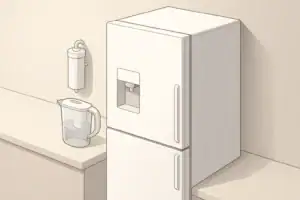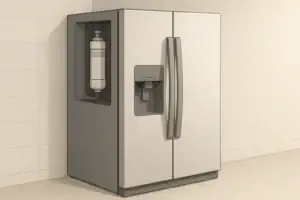
A fridge water filter bypass plug is a small component that allows a compatible refrigerator’s water dispenser and ice maker to operate without the normal filter cartridge installed. Depending on the refrigerator design, the plug may seal the filter connection, open an internal valve, or complete a mechanical connection needed for water to flow.
Using a bypass plug does not filter the water. It simply routes water around the refrigerator cartridge. That distinction matters when deciding whether a plug is suitable for temporary troubleshooting, long-term use with upstream filtration, or a period when a replacement cartridge is unavailable.
Not every refrigerator requires a separate plug. Some models have an automatic internal bypass that activates when the cartridge is removed. Compatibility is model-specific, so the appliance documentation should be the primary reference.
What Is a Fridge Water Filter Bypass Plug?
A bypass plug usually fits into the same filter housing or connection used by the refrigerator cartridge. Its shape may resemble a short cartridge, cap, or keyed insert. It is designed to engage the refrigerator’s existing seals and valves without adding filtration media.
The plug can serve several functions:
- Seal openings that would otherwise leak when the cartridge is removed
- Open a spring-loaded valve so water can reach the dispenser and ice maker
- Maintain the intended water path through the refrigerator
- Help determine whether a clogged cartridge is causing low flow
A bypass plug is different from a filter housing cap that merely covers an opening. It is also different from cutting, rerouting, or connecting water lines outside the appliance. Only a compatible component intended for the refrigerator’s filter interface should be used.
Refrigerators with an automatic bypass
Some refrigerators allow normal water flow when no cartridge is present. In those designs, an internal valve automatically changes position after the filter is removed. A separate plug may be unnecessary.
Other designs keep the water valve closed unless either a cartridge or a matching bypass plug is installed. Removing the filter from one of these systems may stop dispenser flow, interrupt ice production, or allow water to enter the filter compartment.
What Changes When the Bypass Plug Is Installed?
The main change is that refrigerator-level filtration stops. Incoming water travels to the dispenser and ice maker without passing through the removable cartridge.
Many refrigerator cartridges use activated carbon to reduce chlorine-related taste and odor and, depending on the cartridge design and verified performance, may reduce certain additional substances. A bypass plug contains no carbon, sediment media, membrane, or other treatment stage. It should not be expected to provide any contaminant reduction.
Flow may increase if the removed cartridge was heavily loaded or restricted. However, an improvement does not prove that the cartridge was the only problem. Low household pressure, a kinked supply tube, a partially closed valve, frozen tubing, or deposits at the dispenser can also reduce flow.
The ice maker normally receives the same bypassed water as the dispenser. If the refrigerator previously improved taste or odor, those characteristics may become noticeable in both drinking water and ice after bypassing.
Example values for illustration.
| Situation | General approach | Reason |
|---|---|---|
| Replacement filter is briefly unavailable | Temporary bypass may be practical | Restores water flow without refrigerator filtration |
| Home has suitable upstream filtration | Long-term bypass may be reasonable | Refrigerator cartridge may duplicate existing treatment |
| Dispenser flow recently became slow | Use bypass as a diagnostic check | Flow improvement can indicate a restricted cartridge |
| Water has noticeable chlorine taste | Retain effective carbon filtration | Bypass will not address the taste source |
| Water quality is uncertain | Evaluate the water before bypassing | Treatment decisions should reflect actual conditions |
| Filter housing leaks with the plug installed | Stop use and inspect compatibility | A damaged seal or wrong plug can release water |
| Refrigerator has an automatic bypass | A separate plug may not be needed | The internal valve may allow flow without a cartridge |
When Using a Bypass Plug Makes Sense
When the home already has upstream filtration
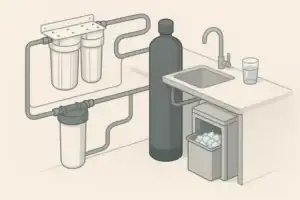
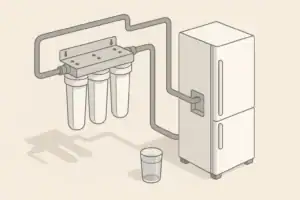
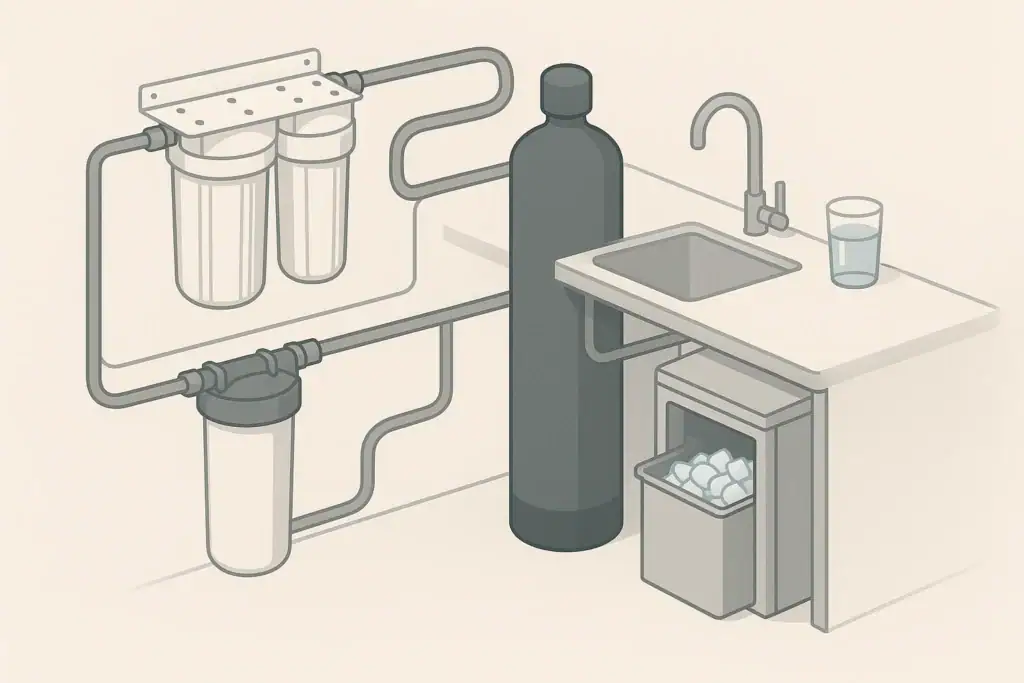
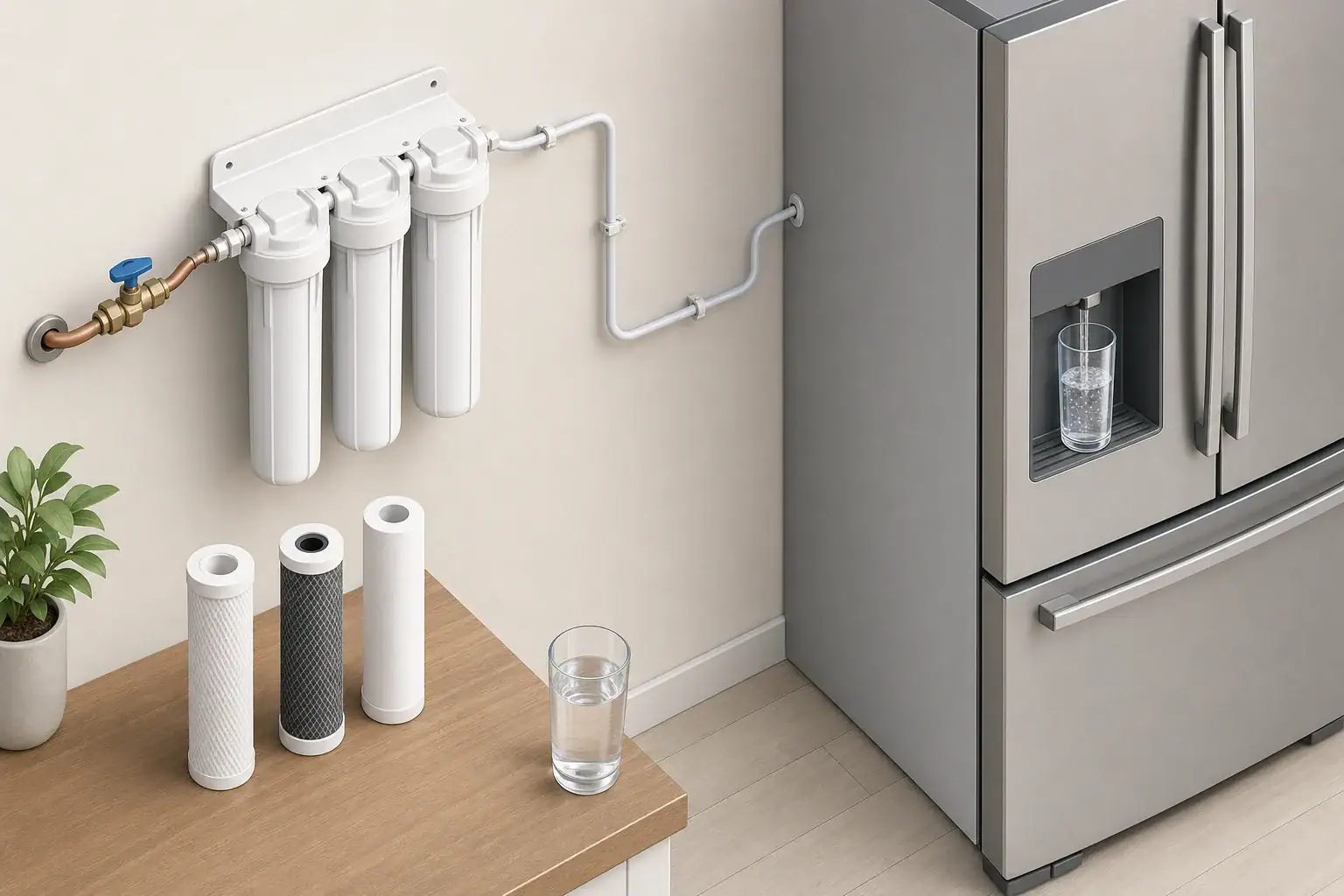
A refrigerator cartridge may be redundant when the appliance is supplied by a properly maintained whole-house or under-sink system. For example, a dedicated carbon system might already address chlorine-related taste before water reaches the refrigerator.
The upstream system must actually serve the refrigerator line. An under-sink filter connected only to the kitchen faucet does not automatically treat water sent to a refrigerator across the room. The plumbing route should be confirmed rather than assumed.
Different treatment methods also serve different purposes. A sediment filter may capture particles but do little for dissolved taste compounds. A softener addresses hardness but is not a substitute for carbon treatment. Reverse osmosis can change pressure and flow characteristics, so appliance compatibility and supply pressure still matter.
During a short gap between cartridges
A bypass plug can keep the dispenser and ice maker available while waiting for the correct replacement cartridge. During this period, the refrigerator supplies the same general water entering its supply line, without the cartridge’s treatment.
For troubleshooting low flow
Comparing flow with the cartridge and then with a compatible bypass plug can help isolate a restriction. A substantial improvement suggests that the cartridge may be clogged, incorrectly seated, or overdue for replacement.
This is a diagnostic comparison, not a complete pressure test. If flow remains poor with the bypass installed, the cause is likely elsewhere in the supply path or appliance. See this guide to fixing low flow from a refrigerator dispenser for additional checks.
When a Bypass Plug May Not Be Appropriate
Bypassing is not a good default when the refrigerator cartridge provides a useful treatment function that is not available upstream. Removing it may cause taste, odor, or appearance changes even when the water remains suitable for its normal household use.
Situations that call for additional evaluation include:
- The water has a known issue that the cartridge was selected to address
- The refrigerator is supplied by a private well with changing water conditions
- Recent testing or a utility notice suggests a need for specific treatment
- Household members strongly prefer the taste after refrigerator filtration
- The correct plug cannot be confirmed for the appliance
A bypass plug should not be improvised with tape, tubing, modified cartridges, or unrelated caps. Those approaches can damage internal valves, defeat seals, contaminate connections, or cause hidden leaks.
A filter status light is not proof that water is being treated. Many indicators are simple time or usage reminders. Installing a bypass plug may not automatically disable the reminder, and resetting it does not turn the plug into a filter.
Compatibility and Safe Installation Considerations
Bypass plugs are not universal. Small differences in tabs, seals, depth, and valve engagement can determine whether the connection works safely. The refrigerator model information and appliance manual should be used to identify whether a plug is required and which form is compatible. Review refrigerator filter compatibility before selecting a component.
Installation should follow the appliance instructions rather than general plumbing assumptions. The plug normally uses the existing filter connection; it should not require drilling, cutting water lines, defeating sensors, or modifying the housing.
Check the plug and filter compartment
Before installation, inspect accessible sealing surfaces for debris, cracks, or displaced O-rings. A plug that does not seat with the normal amount of force may be misaligned or incompatible. Forcing it can damage the filter head.
After the water path is restored, examine the filter compartment, supply connection, floor, and nearby cabinet surfaces for moisture. Check again after dispenser use and after the ice maker has completed several cycles. A slow leak may not appear immediately.
Flush according to the appliance instructions
Air commonly enters the water path when a cartridge or plug is changed. The dispenser may sputter temporarily. Following the refrigerator’s flushing guidance helps clear trapped air and stagnant water. Flushing does not add filtration; it only refreshes the line and stabilizes flow.
How Bypassing Affects Water Quality and Maintenance
Without the refrigerator cartridge, water quality depends on the source water, household plumbing, and any upstream treatment. Municipal water may contain a disinfectant residual such as chlorine or chloramine. Private well water can vary with geology, season, maintenance, and nearby conditions.
Taste and odor are useful observations, but they do not identify every water quality issue. Clear, pleasant-tasting water can still contain dissolved substances, while harmless mineral or disinfectant characteristics may create a noticeable taste. Testing should be selected based on the water source and specific concerns rather than appearance alone.
If an upstream filter makes the refrigerator cartridge unnecessary, that system still needs maintenance. A bypass plug eliminates one replacement task but does not eliminate cartridge changes, sanitation, pressure checks, or leak monitoring elsewhere.
Effects on appliance performance
A clean bypass plug often creates less resistance than a loaded refrigerator cartridge. Even so, it cannot correct inadequate incoming pressure. Very high pressure can also stress fittings and appliance valves. Pressure concerns should be addressed according to appliance and plumbing requirements rather than by treating the bypass as a pressure-control device.
Ice appearance can change after bypassing. Cloudiness often relates to trapped air, freezing patterns, or dissolved minerals rather than filter failure. Odor transfer from uncovered food can also affect ice independently of the water supply.
Troubleshooting After Installing a Bypass Plug
If water does not flow, first confirm that the refrigerator is designed to use a separate plug and that the component is fully seated in the correct orientation. Also verify that the supply valve is open and the tubing has not been pinched during appliance movement.
Air can cause brief sputtering, but persistent flow interruptions require further investigation. Stop using the dispenser if water appears around the filter housing or supply connection. A recurring leak may indicate an incompatible plug, a damaged seal, or a problem with the filter head. Consult these refrigerator filter leak checks if needed.
Changes in taste or odor should be considered in context. A chlorine-like taste after bypassing may simply show that the removed carbon cartridge had been reducing the disinfectant’s sensory effect. Musty, sulfur-like, metallic, or otherwise unusual changes may originate from the source, plumbing, stagnant tubing, or ice storage rather than the plug itself.
Example values for illustration.
| Observation | Possible explanation | Practical check |
|---|---|---|
| Stronger chlorine taste | Carbon cartridge is no longer in the water path | Compare with unfiltered tap water |
| Brief sputtering | Air entered during the change | Flush as directed by the appliance manual |
| Persistently low flow | Supply, valve, tubing, or appliance restriction | Inspect accessible connections and confirm supply flow |
| No water flow | Plug is not seated or not required for that design | Confirm model-specific instructions |
| Water near filter housing | Seal damage, debris, or incompatible plug | Stop use and inspect the connection |
| Stale taste after inactivity | Water remained in the refrigerator line | Refresh the line using the recommended flushing process |
| Ice has an odor | Water source or food odors in freezer | Compare fresh dispenser water and inspect ice storage |
Related guides:
Refrigerator Filter Compatibility: How to Find the Right Replacement •
Inline Fridge Filters: When to Use an External Inline Filter •
How Often to Replace Refrigerator Water Filters •
Fixing Low Flow from a Refrigerator Dispenser •
Why Your Ice Tastes Bad (and How a Fridge Filter Helps)
Making the Practical Decision
A fridge water filter bypass plug is most useful when the refrigerator requires one to operate without a cartridge. It can support temporary operation, help diagnose a restricted filter, or prevent redundant treatment when a suitable upstream system already serves the refrigerator.
The decision depends on three questions: whether the refrigerator requires a plug, whether the incoming water already receives appropriate treatment, and whether removing the cartridge causes an unacceptable change in taste, odor, or performance.
Use only a model-compatible component, follow the appliance instructions, and monitor the connection for leaks. If the refrigerator cartridge is the only treatment stage addressing a household preference or documented water concern, bypassing it changes that treatment plan rather than simply removing a maintenance item.
Frequently asked questions
Do all refrigerators need a water filter bypass plug?
No. Some refrigerators have an automatic internal bypass that allows water flow after the filter is removed. Check the appliance manual for the model-specific requirement.
Can I use my refrigerator without a water filter?
Yes, if the refrigerator has an automatic bypass or a compatible bypass plug is installed. The dispenser and ice maker may still work, but the refrigerator cartridge will no longer filter the water.
Will a bypass plug improve slow water flow?
It may improve flow when the installed cartridge is restricted or incorrectly seated. If flow remains slow with the bypass in place, inspect the supply line, valve, and appliance for other causes.
Is it safe to leave a bypass plug installed permanently?
It can be practical when the refrigerator receives suitable upstream treatment and the plug is made for that model. Otherwise, consider the loss of refrigerator-level taste, odor, or other filtration benefits.
What should I do if the filter housing leaks after installing a bypass plug?
Stop using the dispenser, confirm the plug is compatible and correctly seated, and inspect accessible seals for debris or damage. Do not force the plug or use improvised parts.
- NSF/ANSI standards explained (42/53/401/58)
- Clear trade-offs: pitcher vs faucet vs under-sink vs RO
- Maintenance planning: cost per gallon and replacement cadence