Why Faucet Filter Adapters Often Don’t Fit
Many people buy a faucet-mounted or countertop water filter assuming it will screw onto any kitchen faucet. In practice, faucet compatibility is one of the most common stumbling blocks in home water filtration. Adapters may not fit at all, or they may attach but leak, wobble, or restrict flow too much.
Most faucet filters are designed around a few “standard” faucet connection sizes. However, there is no single universal standard across all faucets in the United States. Kitchen and bathroom faucets use different thread sizes, and many modern designs avoid external threads entirely.
When adapters do not fit, it usually comes down to one or more of these factors:
- Thread size mismatch
- Male vs female threads reversed from what the adapter expects
- Non-threaded designer spouts and pull-down spray heads
- Internal aerators that cannot be removed
- Wear, mineral buildup, or damaged threads
Understanding which type of faucet you have and what kind of connection your filter requires is the key to solving, or at least working around, compatibility problems.
Common Faucet Types and Why They Conflict With Adapters
Not every faucet is intended to accept a screw-on accessory. Some are designed only to work with their built-in aerator or spray head. Recognizing your faucet style will help you decide whether to keep trying adapters or switch to a different filtration approach.
Standard threaded faucets
These are the faucets most likely to work with faucet-mounted filters or countertop filters that connect at the spout. Typical characteristics:
- Short, straight spout end
- Removable aerator screwed into or onto the tip
- Visible metal ring at the end of the spout
When you unscrew the aerator, you usually reveal either male threads (external) or female threads (internal). Many filter kits include a few common adapters to switch between these thread types and sizes.
Pull-down and pull-out spray faucets
Pull-down and pull-out faucets integrate a spray head into a flexible hose. The end looks and behaves like a spray nozzle rather than a simple spout. These are often incompatible with faucet adapters because:
- The spray head is not designed to support extra weight from a filter
- The connection is a quick-coupler or proprietary fitting, not standard threads
- Attaching a filter would interfere with spray patterns and hose retraction
Even if you can temporarily screw something onto a pull-down head, it may stress the hose or internal joints, which is not recommended.
Designer and waterfall faucets
Designer faucets with curved, flat, or waterfall-style spouts are typically meant for visual effect, not accessory compatibility. Many have:
- No removable aerator at the tip
- Hidden or proprietary flow-control components
- Unusual shapes that cannot accept standard round adapters
In these cases, you may need a filtration solution that does not rely on the faucet outlet itself, such as an under-sink system with a separate filtered-water faucet.
Bathroom faucets vs kitchen faucets
Bathroom faucets often have smaller spouts and thread sizes than kitchen faucets. Some faucet filters specify that they are intended for kitchen faucets only. When used on bathroom faucets, you may encounter:
- Thread sizes too small for the provided adapters
- Space constraints that prevent the filter from rotating or clearing the sink
- Limited water pressure or flow not suited to the filter device
If your goal is whole-home drinking water coverage, you may be better served by filtering at the kitchen sink, where most cooking and drinking water is drawn.
Example values for illustration.
| Check item | What to look for | Typical outcome |
|---|---|---|
| Aerator present? | Small ring at tip of spout that can be unscrewed | If removable, faucet is more likely to accept adapters |
| Thread direction | Male threads on outside or female threads inside the spout | Determines which adapter side must face the faucet |
| Faucet type | Standard, pull-down, pull-out, or waterfall | Pull-down/pull-out/waterfall are generally poor candidates |
| Clearance around spout | Space behind, above, and below faucet outlet | Ensures filter body will not hit backsplash or sink |
| Condition of threads | Check for corrosion, mineral buildup, or damage | Dirty or damaged threads often cause leaks |
| Manufacturer guidance | Filter manual or specs listing compatible faucet types | May clearly exclude spray heads or non-threaded designs |
How Faucet Threads Work: Sizes, Male vs Female, and Aerators
To understand why so many adapters fail to fit, it helps to look more closely at faucet threads and aerators. Fortunately, you do not need to become a plumbing expert; a few basic ideas go a long way.
Male vs female threads
Faucet outlets usually use one of two thread types:
- Male threads: The threads are on the outside of the spout. The aerator screws onto the outside.
- Female threads: The threads are inside the spout. The aerator screws into the faucet.
Most faucet filters and faucet-adapter kits are designed to convert between these two. However, if your faucet uses a proprietary thread or an unusual diameter, even a male-to-female adapter set may not help.
Thread sizes and standards
In the United States, many kitchen faucets with removable aerators use sizes that are commonly supported by consumer filter products. Bathroom faucets can be smaller, and some imported or specialty faucets use different thread standards.
It is possible to measure thread diameter with a ruler for a rough idea, but most people rely on:
- The faucet manual or specifications
- The information provided in the filter’s installation guide
- A basic adapter kit that lists common sizes
If none of the provided adapters even begin to screw on, it usually means your faucet is outside the expected size range for that product.
Hidden or non-removable aerators
Some modern faucets hide the aerator inside the spout, behind a neat opening, with no visible metal ring. These aerators are sometimes removable only with a special key, and in other cases they are not meant to be removed at all.
Signs of a hidden aerator include:
- Perfectly smooth faucet tip with no flats for a wrench
- No visible seam between the spout and the outlet
- Minimal noise or splash from the flow, indicating internal aeration
If the manufacturer does not intend the aerator to be removed, forcing it out to install an adapter can damage the faucet and is not recommended. In those situations, an alternative filtration method is usually safer and more practical.
Safe Ways to Test and Fit Faucet Adapters
When adapters seem close to fitting but not quite right, many people are tempted to force them into place. This can strip threads or crack the faucet tip. Instead, use a careful, step-by-step approach.
Remove and inspect the aerator
First, remove the existing aerator using your fingers or a soft cloth for extra grip. If it is stuck due to mineral buildup, gentle pressure and patience are better than excessive force. Once removed, check:
- Whether the faucet now has male or female threads
- The condition of the threads
- Whether there is a separate sealing washer or O-ring
Clean any debris or mineral deposits from the threads. Buildup can prevent the adapter from seating properly, even when the size is correct.
Match adapter type and orientation
Most adapter kits are labeled to show which side faces the faucet and which side faces the filter hose or filter body. Check carefully before attaching. Common issues include:
- Using the wrong side of a reversible adapter
- Cross-threading by starting at an angle instead of straight on
- Over-tightening before the washer is properly compressed
Adapters should start threading on by hand with little resistance. If you feel grinding or need tools to begin turning, stop and realign.
Check for leaks and stability
After the adapter is attached, briefly turn on the water at low flow. Look for:
- Drips from the joint between the faucet and adapter
- Spraying at odd angles
- Movement or wobble when you touch the adapter or filter
Some minor seepage can often be solved by re-seating the washer or slightly tightening by hand. A persistent leak or obvious misalignment usually indicates poor fit. For step-by-step help diagnosing & fixing leaks, see our leaking under the sink guide.
When Your Faucet Will Never Be a Good Match
In some situations, it is more realistic to accept that the faucet itself is not compatible with a screw-on filter. Continuing to search for unusual adapters or attempting unsafe modifications can consume time and money without a reliable result.
Signs that a faucet is a poor candidate for adapters
You are likely dealing with a fundamentally incompatible faucet if:
- The spout has no removable aerator and no visible threads
- The end of the faucet is part of a pull-down or pull-out sprayer
- The tip is an unusual shape (flat slot, open waterfall, or very wide outlet)
- The faucet manufacturer clearly states that accessories should not be attached to the spout
In these cases, persistent attempts to attach a filter to the faucet outlet may cause damage or create unreliable seals that leak over time.
Practical alternative filtration options
If faucet adapters will not work for your fixture, you still have several practical ways to get filtered water in the kitchen:
- Countertop filter with dedicated diverter at a side connection (where available), rather than at the main faucet tip
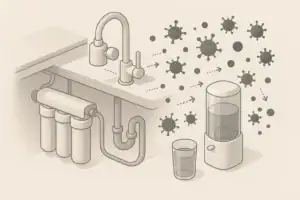
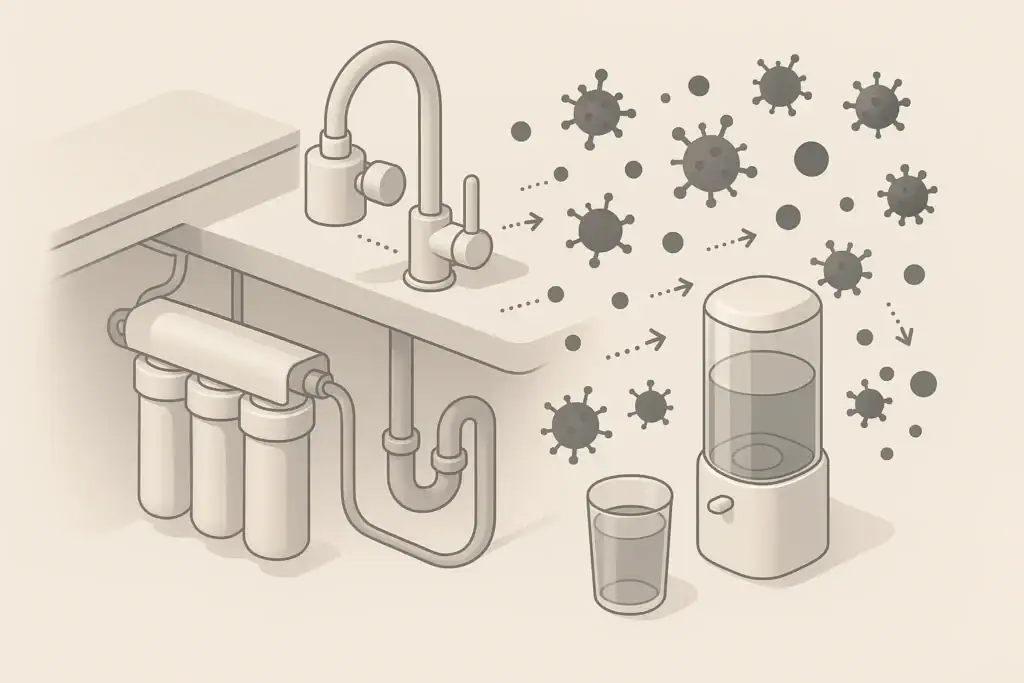
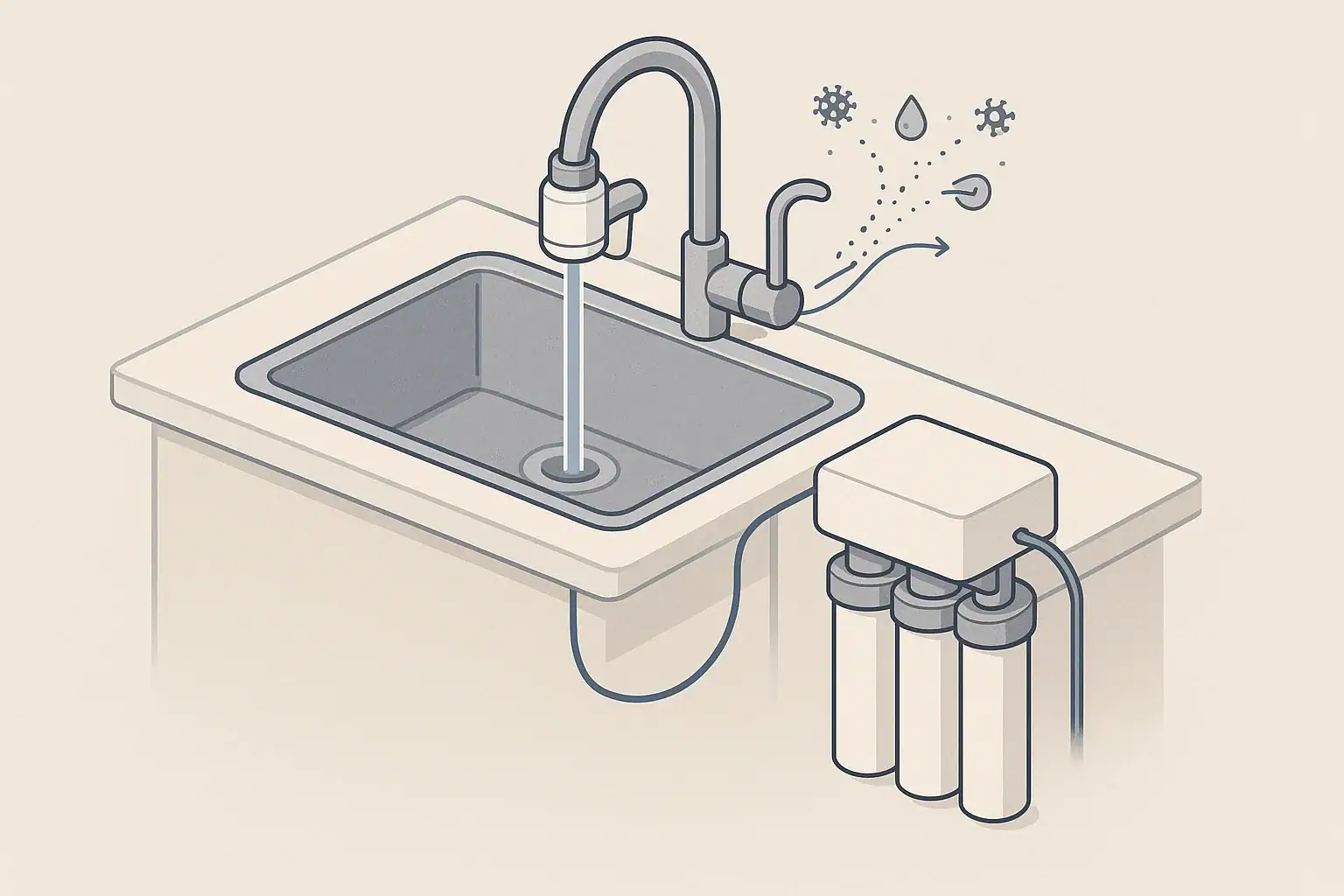
- Under-sink carbon filter feeding a small dedicated drinking-water faucet
- Under-sink reverse osmosis system with its own faucet and possibly a storage tank
- Filtered water pitcher or dispenser for smaller households or renters
Each of these options avoids relying on the main faucet’s outlet threads. Instead, they connect under the sink, to a separate faucet hole, or through a free-standing container.
Planning Alternative Systems When Adapters Don’t Fit
Once you accept that a faucet adapter is not feasible, the next decision is how and where to place filtration in your kitchen. This is where flow rate, space, and usage patterns matter more than thread sizes.
Under-sink systems with a separate faucet
Many under-sink filters include a small, dedicated dispensing faucet that mounts on the sink deck or countertop. This avoids compatibility problems with the main faucet because the filtered-water faucet is designed specifically for that purpose.
Key planning considerations include:
- Available hole in the sink or countertop (such as the spot sometimes used for a soap dispenser)
- Cabinet space for filter cartridges and, if used, a small storage tank
- Expected flow rate, which is typically lower than the main faucet but sufficient for drinking and cooking
Under-sink carbon systems focus on taste, odor, and a range of common chemical contaminants. Reverse osmosis units add a membrane stage and may further reduce dissolved solids. The right choice depends on your water goals and local water characteristics.
Pitchers and countertop dispensers
If you cannot or do not want to modify anything under the sink, pitchers and countertop dispensers are another way to bypass faucet compatibility:
- They fill from any faucet or even a bathroom tap.
- They do not require mechanical connection to the plumbing.
- They are portable and suitable for renters or short-term use.
The trade-off is capacity and speed. Pitchers work well for one or two people with moderate daily drinking-water needs. Larger households may need to refill them frequently, or combine pitchers with another solution at the kitchen sink. Read our guide to the best pitcher water filters for recommendations.
Example values for illustration.
| Filtration setup | Example flow range (gallons per minute) | Typical use pattern |
|---|---|---|
| Faucet-mounted carbon filter | 0.3–0.8 (example range) | On-demand drinking and light cooking water |
| Countertop carbon filter with hose connection | 0.4–1.0 (example range) | Filling pots, kettles, or pitchers |
| Under-sink carbon filter with small faucet | 0.3–0.7 (example range) | Daily cooking and drinking needs at kitchen sink |
| Under-sink RO system with storage tank | 0.2–0.5 (example range) | Steady but slower flow for drinking and cooking |
| RO system without tank (direct flow) | 0.2–0.7 (example range) | On-demand flow, often with minimum pressure needs |
| Gravity pitcher filter | Varies by cartridge; often slower than faucet flow | Batch filling and storage in refrigerator |
Related guides: Faucet-Mount Filter Compatibility: How to Check Your Faucet Type • How to Install a Faucet-Mount Filter Without Leaks • Faucet-Mount vs Under-Sink Filters: Convenience vs Performance • Under-Sink vs Pitcher: Which Is Better for Families?
Summary: Making Peace With Faucet Compatibility Limits
Faucet filter adapters do not fail because you did something wrong; they fail because many faucets were never designed to accept screw-on accessories. Recognizing the type of faucet you have, inspecting the aerator, and testing adapters gently can help when a connection is possible.
When it is not, shifting your focus from “Which adapter will fit?” to “Where else can I add filtration?” often leads to better long-term solutions. Under-sink systems, separate filtered faucets, and pitchers avoid the mechanical limits of certain faucet designs while still giving you practical access to filtered water in your home.
Frequently asked questions
How can I tell if my faucet has a removable aerator?
Look for a small metal ring or seam at the spout tip that you can unscrew by hand. If the tip is perfectly smooth or has no flats for a wrench, the aerator may be hidden or non-removable.
What should I do if none of the adapters in the kit fit my faucet?
Stop forcing fittings. Clean any mineral buildup, verify thread type and size, and try again by hand. If adapters still won’t thread on, choose an alternative such as an under-sink system with its own faucet, a countertop dispenser, or a filtered pitcher.
Can I attach a filter to a pull-down or pull-out spray head?
No. Pull-down and pull-out spray heads use quick-connects or are not designed to hold extra weight; attaching a filter can damage the hose, harm the retraction mechanism, or cause leaks.
Will adding an adapter or faucet-mounted filter noticeably reduce water flow?
Some adapters and filters narrow the outlet and can reduce flow. Faucet-mounted and pitcher-style filters usually lower flow more than under-sink or reverse-osmosis systems. Expect some reduction, and choose a setup that matches your typical use (drinking, filling pots, etc.). If you experience noticeably low pressure after installing a filter, see our low-pressure after installing a filter troubleshooting guide.
Recommended next:
- Why Your Filtered Water Flow Suddenly Dropped (Diagnostic Checklist)
- Low Pressure After Installing a Filter: 8 Things to Check
- Leaking Under the Sink: How to Identify the Source Fast
- Air in the Line After a Filter Change: How to Purge It
- Noisy RO System: Common Causes and Fixes
- Bad Taste After Installing a New Filter: Quick Fixes
- More in Troubleshooting →
- NSF/ANSI standards explained (42/53/401/58)
- Clear trade-offs: pitcher vs faucet vs under-sink vs RO
- Maintenance planning: cost per gallon and replacement cadence