
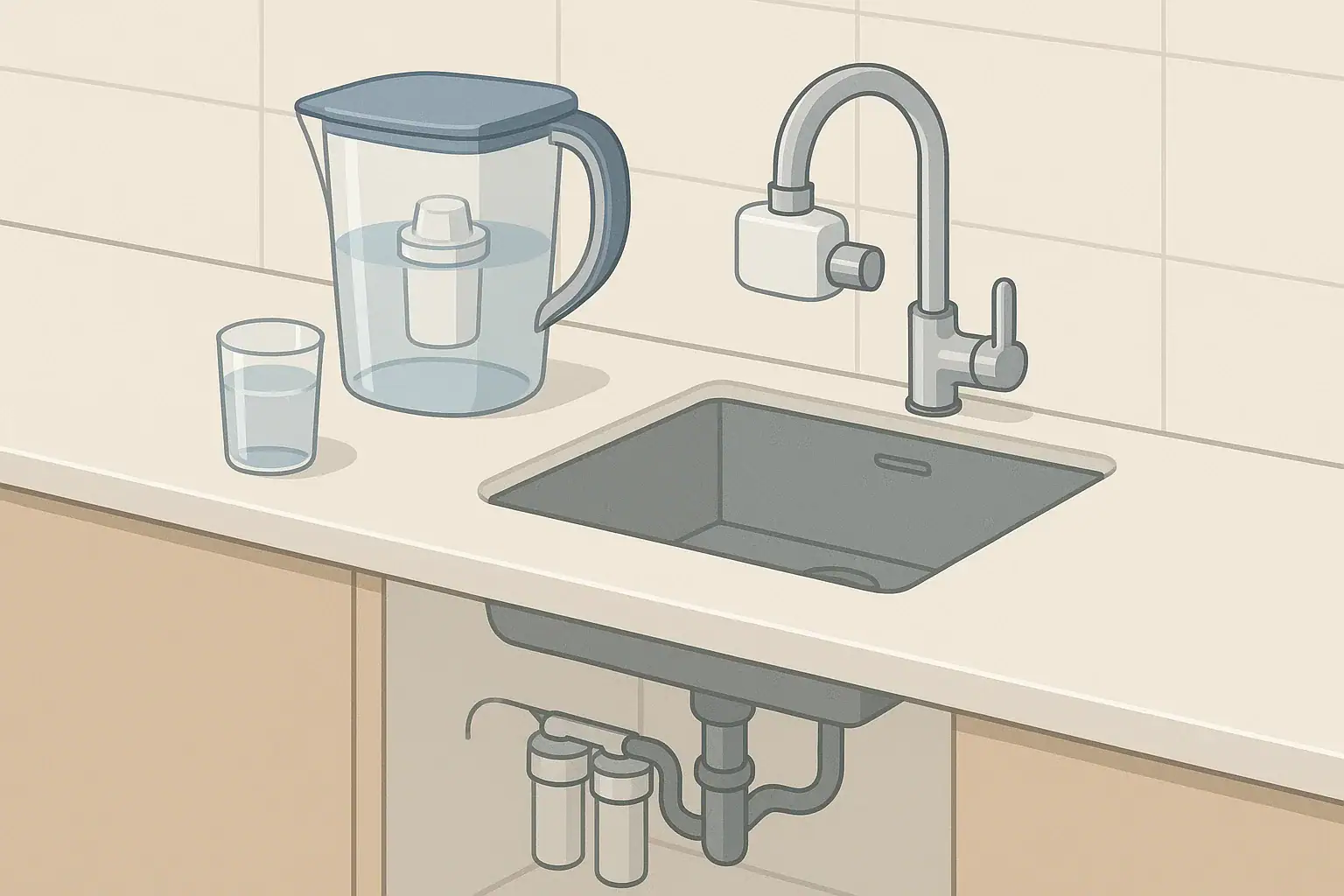
Why Chlorine Taste Shows Up in Tap Water
Many U.S. water utilities use chlorine-based disinfectants to control microbes in public water systems. This treatment is important for safety, but it often leaves a noticeable taste or smell, sometimes described as swimming pool-like or chemical.
Key points about chlorine in city water:
- It is usually added in low, controlled amounts as a disinfectant.
- Taste and odor sensitivity varies; some people notice it at very low levels.
- Chlorine can react with natural organic material and other substances, influencing overall water taste.
Chlorine taste and odor are among the most common reasons people look for home filtration. Fortunately, several common filters are good at reducing chlorine taste: pitcher filters, faucet-mounted filters, and under-sink systems that use activated carbon.
How Filters Reduce Chlorine Taste
Most systems that improve chlorine taste rely on some form of carbon filtration. While designs vary, the basic idea is similar: water passes over or through carbon media, and the media adsorbs many chlorine-related compounds and other taste- and odor-causing substances.
Activated Carbon Basics
Activated carbon comes in different forms:
- Granular activated carbon (GAC) – loose granules in a cartridge or bed.
- Carbon block – powdered carbon compressed into a solid block with tiny pores.
- Blended media – carbon combined with other materials for specific contaminants.
Factors that affect chlorine taste reduction include:
- Contact time – more time between water and carbon generally means better taste reduction.
- Carbon quality and amount – larger, denser carbon blocks usually offer more capacity than thin layers.
- Flow rate – slower flow allows more interaction with the carbon.
- Filter age – chlorine reduction typically declines as the filter media becomes exhausted.
Pitcher, faucet, and under-sink filters all use these principles but in different configurations, which is why their performance, convenience, and cost vary. See Pitcher vs Under-Sink vs RO: Which Fits Your Budget and Water? for a closer look.
Example values for illustration.
| Feature | Pitcher Filter | Faucet Filter | Under-Sink Filter |
|---|---|---|---|
| Typical installation | No tools, countertop use | Attaches to faucet spout | Plumbed under sink |
| Chlorine taste reduction | Basic to moderate | Moderate | Moderate to strong |
| Flow rate | Slow gravity fill | Reduced vs raw tap | Near-normal at kitchen tap |
| Upfront complexity | Very low | Low | Medium (basic plumbing) |
| Typical filter life (example) | 1–2 months | 2–3 months | 6–12 months |
| Best for | Renters, small spaces | Quick sink upgrade | Main kitchen drinking water |
| Approximate cost range | Lowest | Low to moderate | Moderate |
This table summarizes general patterns and does not represent specific products.
Pitcher Filters for Chlorine Taste
Pitcher filters are one of the simplest ways to reduce chlorine taste. They usually combine a small carbon cartridge with a gravity-fed reservoir. You fill the top, water slowly passes through the filter, and the treated water collects in the bottom.
How Pitcher Filters Work
A typical pitcher filter includes:
- A plastic pitcher and lid.
- An upper reservoir where you pour tap water.
- A replaceable cartridge, often with activated carbon and sometimes additional media.
As water trickles through the cartridge, the carbon adsorbs many chlorine-related compounds that contribute to taste and odor. Because the flow is gravity-driven and relatively slow, contact time with the carbon can be good compared with some pressurized filters.
Advantages of Pitcher Filters
- Very easy setup – no tools, no plumbing, suitable for almost any kitchen or office.
- Portable – can be moved, stored in the refrigerator, or taken to temporary housing.
- Low upfront cost – pitchers are generally inexpensive compared with plumbed systems.
- Good option for renters – no modifications to fixtures required.
Limitations of Pitcher Filters
- Limited capacity – cartridges are small and may need replacement every few weeks to a couple of months, depending on use and design.
- Manual refilling – you have to keep filling the reservoir, which can be inconvenient for larger households.
- Variable performance – chlorine taste reduction can weaken as the cartridge nears the end of its life, especially if it is used heavily.
- Small volume – suitable for drinking water and maybe coffee or tea, but less practical for cooking large amounts.
Best Fit for Pitcher Filters
Consider a pitcher filter if:
- You mainly want to improve taste for drinking water only.
- You live in a rental or dorm and cannot change fixtures.
- You prefer something you can keep in the refrigerator for chilled filtered water.
- Your household water use is relatively low.
Faucet-Mounted Filters for Chlorine Taste
Faucet-mounted filters attach directly to a standard kitchen faucet. They typically include a small carbon-based cartridge and a diverter that lets you switch between filtered and unfiltered water.
How Faucet Filters Work
A faucet filter usually involves:
- A housing that screws onto the faucet spout or adapter.
- A replaceable cartridge with activated carbon, often in block or compact form.
- A lever or switch to choose regular tap flow or filtered flow.
When set to filtered mode, water is directed through the cartridge, where chlorine and some other taste and odor compounds are reduced before exiting the spout. Flow is pressurized by your plumbing, but restricted by the cartridge to allow adequate contact time.
Advantages of Faucet Filters
- On-demand filtration – no waiting for a pitcher to drip through; just turn the tap to filtered mode.
- Moderate capacity – cartridges often last longer than small pitcher cartridges, depending on usage.
- Convenient for cooking – easy to fill pots, kettles, and glasses directly from the tap.
- Relatively simple installation – many attach without tools, though some use basic hand tools and faucet adapters.
Limitations of Faucet Filters
- Compatibility issues – may not fit all faucet styles, especially non-standard or pull-out sprayers.
- Reduced flow rate – filtered mode usually has slower flow than unfiltered tap water.
- Sink clutter – adds bulk to the faucet area and can interfere with some sink activities.
- Filter life – cartridges still need replacement several times per year for consistent chlorine taste reduction.
Best Fit for Faucet Filters
Faucet filters are a solid middle-ground choice if:
- You want filtered water directly at the kitchen sink without a separate tap.
- You cook frequently and want easier access than refilling a pitcher.
- You are okay with a basic installation but do not want under-sink plumbing.
- You have a compatible faucet and do not mind a larger device at the spout.
Under-Sink Filters for Chlorine Taste
Under-sink filters install beneath the kitchen sink and connect to the cold-water line. Some feed a dedicated drinking-water faucet; others connect inline to the main cold tap or a pull-out spray hose, depending on design and local plumbing practices.
Many under-sink systems use one or more carbon cartridges, sometimes combined with sediment pre-filters or additional stages. They generally offer more carbon media and longer contact paths than small pitchers or faucet units.
How Under-Sink Carbon Systems Work
Typical under-sink chlorine taste reduction systems may include:
- Sediment pre-filter – captures particles that could clog or shorten carbon filter life.
- Carbon block or GAC cartridge – performs most of the taste and odor reduction.
- Optional extra stages – such as specialty media for additional contaminants.
Pressurized water flows through the stages at a controlled rate. Because under-sink cartridges are larger, they usually offer more surface area and contact time than pitcher and faucet cartridges, which can support more consistent chlorine taste reduction over a longer service life.
Advantages of Under-Sink Filters
- Strong, consistent taste improvement – larger carbon volume often maintains performance longer between changes.
- Convenience – filtered water is available at the sink without refilling or switching devices once installed.
- Higher capacity – many cartridges are designed for several months to a year of typical household use.
- Cleaner sink area – most components are hidden in the cabinet.
Limitations of Under-Sink Filters
- Installation effort – often requires basic plumbing work, and in some cases professional installation is a prudent choice.
- Higher upfront cost – systems and dedicated faucets cost more initially than pitchers or faucet units.
- Space requirements – takes up room in the under-sink cabinet.
- Access for maintenance – replacing cartridges involves working under the sink and occasionally shutting off water valves.
Best Fit for Under-Sink Filters
An under-sink system is worth considering if:
- Chlorine taste is a daily annoyance and you use a lot of kitchen water.
- You want a more permanent solution that you do not have to refill.
- You own your home or have permission to modify plumbing.
- You are comfortable with, or can hire, proper installation and periodic maintenance.
Pitcher vs Faucet vs Under-Sink: Key Decision Points
When your primary goal is reducing chlorine taste, these filter types can all work. The better choice depends on your kitchen layout, budget, and how you actually use water.
1. Taste Improvement and Consistency
- Pitchers – can noticeably improve taste for small volumes. Performance tends to vary as the cartridge ages since they are small and may saturate quickly.
- Faucet filters – usually provide more consistent chlorine reduction than small pitchers, especially for moderate use.
- Under-sink carbon systems – often deliver the most consistent experience over time due to larger carbon blocks and better flow control.
2. Upfront Cost vs Ongoing Cost
- Pitchers – lowest entry cost but relatively frequent cartridge replacement. Good when you are testing whether filtration helps your taste concerns.
- Faucet filters – moderate initial cost, moderate cartridge cost. You may replace cartridges several times a year.
- Under-sink systems – higher upfront investment, but cartridges can last longer, sometimes offsetting initial costs over time.
3. Convenience and Kitchen Workflow
- Pitchers – best if you only want occasional glasses of water or chilled filtered water. Less ideal if multiple people are filling large bottles or cooking with filtered water.
- Faucet filters – help when you frequently switch between filtered water for drinking and normal tap water for rinsing dishes.
- Under-sink systems – most convenient if a dedicated drinking faucet or fully filtered cold tap fits your cooking and drinking habits.
4. Space, Plumbing, and Rental Considerations
- Limited counter or fridge space – may favor a faucet or under-sink filter.
- No permission to modify plumbing – usually rules out installing under-sink systems.
- Unusual faucets – may reduce compatibility with faucet-mounted filters, making pitchers or under-sink options more practical.
5. Other Contaminants Beyond Chlorine
This article focuses on chlorine taste, but you may care about additional issues, such as sediment, lead, PFAS, or hardness. Different systems can add stages tailored to these concerns:
- Pitchers – some cartridges include extra media for specific contaminants, but capacity is limited.
- Faucet filters – some include multi-stage cartridges, but space inside the housing is tight.
- Under-sink systems – easiest to expand, for example by adding sediment pre-filters or multi-stage carbon cartridges. More complex systems like reverse osmosis can also address broader water quality concerns, though they involve additional components and considerations.
If you want a deeper look at what reverse osmosis can remove, see Reverse Osmosis 101: What RO Removes (and What It Doesn’t).
Filter Maintenance and Chlorine Taste Over Time
Whatever system you choose, maintenance strongly affects how well it continues to reduce chlorine taste. Even a well-designed filter will lose effectiveness if cartridges are used beyond their intended capacity.
Recognizing When Chlorine Taste Returns
Common signs that a chlorine-taste filter may be near the end of its useful life include:
- Taste or odor gradually returning – water begins to remind you of untreated tap water.
- Flow changes – a noticeable drop in flow can indicate clogging or buildup in the cartridge.
- Time since last change – if you are past typical replacement guidance for your filter type, taste performance is likely declining even if changes are subtle.
Why Replacement Schedules Matter
Manufacturers usually provide a recommended replacement interval based on average water use and quality. These intervals are designed to help maintain taste and odor reduction as well as flow. In real homes, several factors can shift those timelines:
- Higher water usage – larger families or frequent cooking may exhaust filters sooner.
- Water quality – more sediment or organic material can load filters faster.
- Intermittent use – long periods without use may allow stagnant water in filters; flushing according to instructions is often recommended after extended downtime.
Basic Maintenance Practices
To keep chlorine taste reduction reliable over time, consult a replacement planner to estimate your next change and follow cartridge replacement guidance.
- Follow cartridge replacement guidance for time or gallons used, whichever comes first.
- Mark filter-change dates on a calendar or device reminder.
- Flush new cartridges according to their instructions to clear carbon fines and fully wet the media.
- Keep pitchers and faucet housings clean to avoid buildup or off-odors unrelated to chlorine.
- Check under-sink systems periodically for moisture, leaks, or unusual sounds.
Example values for illustration.
| Filter Type | Household Usage Level | Example Replacement Interval | Reminder Strategy |
|---|---|---|---|
| Pitcher filter | 1–2 people, light use | Every 6–8 weeks | Label on pitcher with change date |
| Pitcher filter | 3–4 people, frequent refills | Every 4 weeks | Monthly calendar or phone reminder |
| Faucet-mounted filter | 2–3 people, daily cooking | Every 2–3 months | Note on kitchen cabinet interior |
| Under-sink single carbon cartridge | Average household | Every 6–12 months | Twice-yearly home maintenance checklist |
| Under-sink multi-stage system | Larger family | Staggered changes by stage | Simple log taped inside sink cabinet |
| Any filter type | Notable taste change | Check and possibly replace | Sensory check when filling drinking glass |
Always refer to the specific guidance provided with your filter for capacity and timing.
Related guides: Pitcher vs Under-Sink vs RO: Which Fits Your Budget and Water? • Whole House vs Under-Sink: Taste vs Whole-Home Protection • Best Water Filter Setup for Apartments (Renters, Space, No Drill) • Carbon Block vs GAC vs Ion Exchange: Quick Guide to Filter Media
Choosing the Best Filter Type for Your Situation
When chlorine taste is your main concern, all three options—pitcher, faucet-mounted, and under-sink carbon filters—can help. The best choice depends less on theoretical performance and more on how closely each option matches your household’s habits and constraints.
Ask yourself:
- How much filtered water do we use in a typical day?
- Do we mainly need it for drinking, or also for cooking and making beverages?
- Are we able and allowed to modify plumbing under the sink?
- How much under-sink and counter space do we have?
- Will we reliably keep up with filter changes on the schedule we choose?
By matching the filter style to your answers, you can choose a practical setup that keeps chlorine taste in check with minimal disruption to your normal kitchen routine.
Frequently asked questions
How often should I replace filters to keep chlorine taste reduced?
Follow the manufacturer’s guidance and replace by time or gallons used. Typical example intervals: pitcher cartridges often need changing every 4–8 weeks, faucet cartridges every 2–3 months, and under-sink carbon cartridges every 6–12 months. Adjust timing for heavier use or poor source water and set reminders for changes.
Do these filters remove chlorine completely?
Activated carbon is effective at reducing free chlorine that causes taste and odor, but removal is rarely guaranteed to be complete. Effectiveness depends on carbon type, contact time, flow rate, and whether the cartridge is fresh or near end-of-life. Expect noticeable taste improvement rather than absolute removal in most home systems.
Which option is easiest if I rent?
Pitcher filters are the simplest because they require no installation. Many faucet-mounted filters also work without permanent changes if your faucet is compatible. Under-sink systems usually need permission and some plumbing work, so they are less suitable for most rentals.
Can I use filtered water from these systems for cooking and making beverages?
Yes. Filtered water from any of these systems is fine for cooking, coffee, and tea. For larger volumes or frequent cooking, faucet-mounted or under-sink systems are more convenient; pitchers work well for drinking glasses and chilled water but require more frequent refills for big jobs.
Recommended next:
- Pitcher vs Under-Sink vs RO: Which Fits Your Budget and Water?
- Whole House vs Under-Sink: Taste vs Whole-Home Protection
- Carbon Block vs GAC vs Ion Exchange: Quick Guide to Filter Media
- Best Water Filter Setup for Apartments (Renters, Space, No Drill)
- Best Filters for Hard Water Problems (Scale, Feel, Appliances)
- More in Comparisons & Buying Guides →
- NSF/ANSI standards explained (42/53/401/58)
- Clear trade-offs: pitcher vs faucet vs under-sink vs RO
- Maintenance planning: cost per gallon and replacement cadence