
Why Lead in Tap Water Is a Filtration Priority
Lead reduction is one of the most important reasons people add home water filtration. Lead can enter drinking water through older service lines, household plumbing, solder, and brass fixtures. It usually does not come from the water source itself but from contact with lead-containing materials on the way to your tap.
If you have limited time or budget, lead reduction is a reasonable place to start. Filters that are specifically designed and tested for lead reduction can generally also help with other metals and improve taste and odor. However, not every filter that “improves taste” meaningfully reduces lead. Choosing the right type makes a big difference.
This article focuses on practical decisions: what to test, how to read certifications generally, and which filter types usually offer the most effective lead reduction for typical U.S. homes.
Step One: Test and Assess Your Lead Risk
Before choosing a filter, get a basic understanding of your lead risk. You do not need a full laboratory background, just enough to match your situation to an appropriate filter.
Check your plumbing and local information
Consider the following indicators:
- Age of home and neighborhood: Homes and buildings built before the late 1980s are more likely to have lead service lines, lead solder, or higher-lead brass fixtures.
- City vs. well water: Lead is commonly a distribution and plumbing issue. City water can pick up lead from service lines or indoor plumbing. Private wells can also have lead if plumbing or well components contain leaded materials.
- Utility reports: Your water provider’s annual water quality report may describe lead sampling results and whether lead service lines are present in the system.
Use testing to guide filter choice
If feasible, testing for lead helps you decide how aggressive your filtration strategy should be. Options include:
- Certified lab test kits: Typically involve mailing water samples to a lab for analysis. These can provide numerical results.
- Point-in-time checks: Some households do a before-and-after comparison when considering changes, such as replacing fixtures or adding filters.
Even a single test result can help you decide whether you need whole-house treatment, under-sink treatment at key taps, or more portable options.
Example values for illustration.
| Situation | Common Goal | Typical First Filter Choice | Notes (Example Only) |
|---|---|---|---|
| Older home, city water, no test yet | Quick kitchen protection | Certified faucet filter or pitcher | Start at main drinking tap while planning testing |
| Lab test shows elevated lead at kitchen tap | High reduction at one tap | Certified under-sink carbon block or RO | Point-of-use treatment where you drink and cook |
| Infant or pregnant person in home | More conservative reduction | Under-sink carbon block, RO, or both | Focus on all taps used for drinking and formula |
| Apartment, cannot modify plumbing | No-permit installation | Faucet filter, countertop unit, or pitcher | Choose systems that attach with adapters or are free-standing |
| Whole building suspected to have lead service lines | Broad coverage | Point-of-use at multiple taps | Whole-house treatment is possible but more complex |
| Well water with older plumbing components | Lead plus other metals | Under-sink filter; consider whole-house as needed | May also need treatment for iron, hardness, or other issues |
How Lead-Reducing Filters Work
Lead reduction relies on a combination of physical removal and chemical interactions. Most consumer systems designed for lead reduction use one or more of these technologies:
Activated carbon (especially carbon block)
Activated carbon is a highly porous material that can reduce many contaminants. For lead, the most effective consumer designs usually use carbon block cartridges rather than loose carbon granules.
Carbon block filters work by:
- Mechanical filtration: Very fine pores physically trap particles and some forms of particulate lead.
- Adsorption: Dissolved lead can be attracted to and held on the surface of treated carbon, especially when combined with other treatment media.
These cartridges are common in under-sink systems, some faucet filters, and some higher-end pitcher or countertop designs.
Ion exchange resins
Ion exchange resins are plastic-like beads that can swap harmless ions (often sodium, hydrogen, or others) for certain dissolved metals, including lead. In lead-reducing filters, resin is often combined with carbon in a single cartridge to handle both metals and taste/odor issues.
Different resins have different selectivity and capacity, so performance and lifespan vary by design. The key point is that ion exchange can target dissolved lead that might otherwise pass through a basic sediment or taste-only filter.
Reverse osmosis (RO) membranes
Reverse osmosis systems push water through a semi-permeable membrane that rejects a wide range of dissolved contaminants, including lead. RO is often paired with pre-filters (sediment and carbon) and a post-filter to improve taste.
RO tends to provide high reduction of many dissolved substances at a single tap. However, it introduces some considerations:
- Requires a drain connection for wastewater.
- Typically uses a storage tank or has a specific flow rate.
- Reduces many minerals along with lead, which may affect taste or appliance use.
Specialty media for lead
Some cartridges include proprietary or specialty media designed for lead and other heavy metals. These materials are often blended with carbon or resin to broaden contaminant coverage.
Because designs vary, it is especially important for these products to be tested against lead-reduction protocols, not just general chlorine or taste tests.
Understanding Certifications and Claims (Without Brand Hype)
For lead reduction, general “cleans water” or “improves taste” claims are not enough. Look for filters that are specifically tested for lead reduction by recognized third-party organizations. Although this article does not list particular standards by number, you can usually find them on product packaging or technical data sheets.
What certification language generally means
In broad terms, certification for lead reduction usually indicates that:
- The filter was tested on water containing lead at specific challenge levels.
- It reduced lead to at or below a specified performance level during the test.
- Tests considered both particulate and dissolved forms, where applicable.
Because tests are conducted under controlled conditions, real-world performance depends on installation, maintenance, water chemistry, and respecting rated filter life and flow rate.
Why flow rate and filter life matter
Lead-reducing filters are designed to work within specific flow and usage limits. Exceeding these can reduce performance:
- Flow rate: If water moves too quickly, contact time with carbon, resin, or membrane is reduced. Some devices have flow restrictors for this reason.
- Filter capacity: Cartridges have a rated volume of water or months of service. Past that point, adsorptive sites can become saturated, and lead reduction may decline.
Replacing cartridges on schedule and avoiding modifications to flow controls helps keep performance closer to tested conditions.
Filter Types for Lead Reduction: What to Buy First
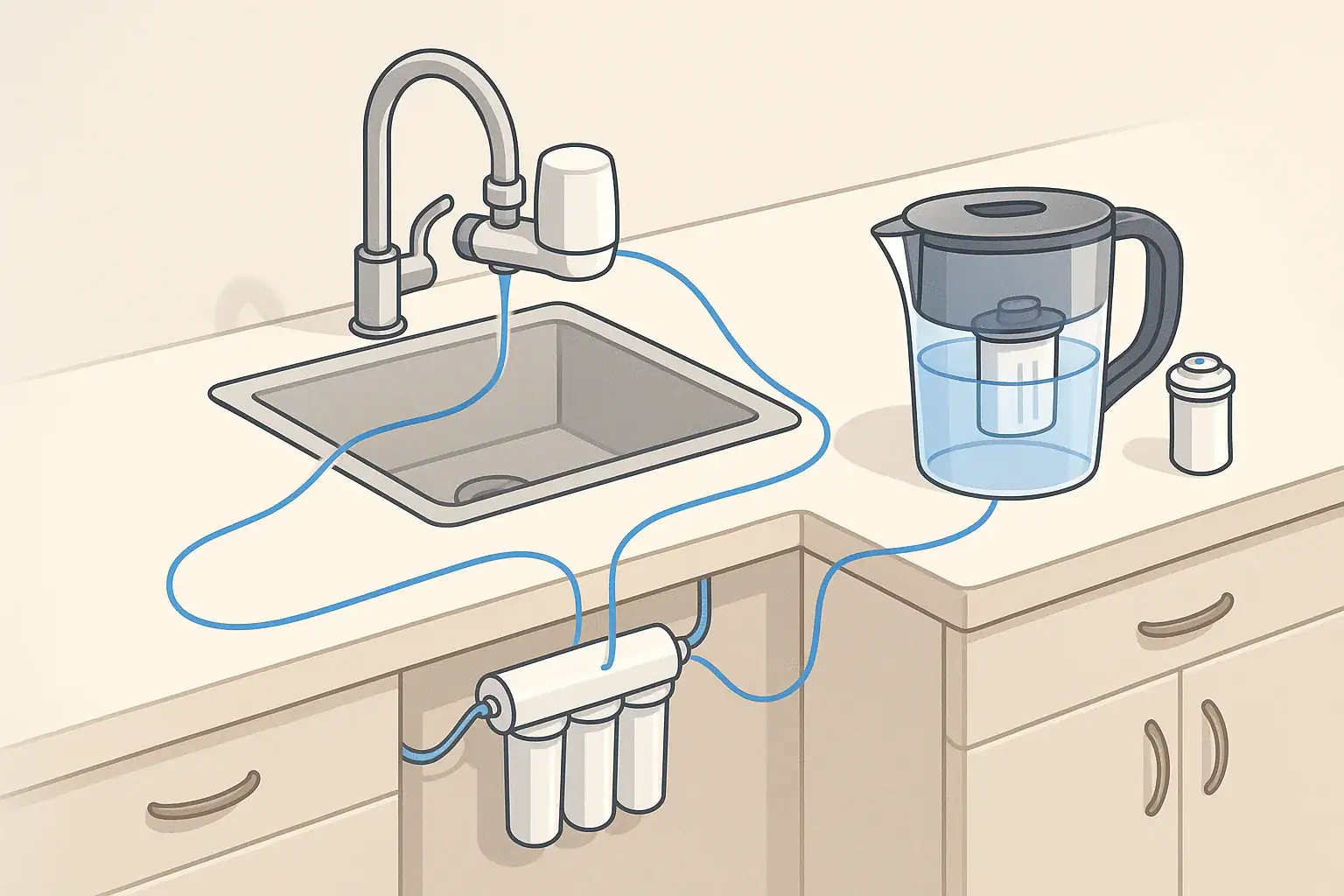
Once you know your likely risk level and understand how filters work, you can prioritize what to buy first. For most households, this decision focuses on the kitchen sink and any locations used for drinking water or formula preparation.
Pitcher filters
Best for: Renters, students, small households, backup lead protection.
Some pitcher filters are specifically designed and tested for lead reduction, often using fine carbon block or carbon-plus-resin cartridges. Advantages include:
- Countertop convenience with no plumbing changes.
- Easy to move between homes.
- Low upfront cost.
Limitations include limited capacity, slower gravity flow, and the need to refill frequently. If you rely heavily on a pitcher for lead reduction, be diligent about replacing cartridges on time and following instructions about flushing and storage.
Faucet-mounted filters
Best for: Apartments and homes where under-sink access is limited.
Many faucet filters use compact carbon or carbon-plus-resin cartridges. Some are tested for lead reduction; others focus on chlorine and taste. When comparing, pay attention to:
- Whether the product is specifically tested for lead reduction.
- Filter life in gallons and expected replacement interval.
- Flow rate settings and whether unfiltered “bypass” modes are clearly identified.
These devices are convenient for quickly switching between filtered and unfiltered water (for dishes vs. drinking). Ensure you know which position provides filtered water so you do not accidentally bypass filtration when filling drinking containers.
Under-sink carbon block filters
Best for: Households that want dedicated, higher-capacity filtration at the kitchen sink without RO.
Under-sink systems can house larger carbon block cartridges compared with pitchers or faucet filters. Benefits often include:
- Higher capacity and longer cartridge life.
- More stable flow rate and better contact time.
- Dedicated filtered faucet, so you know which water is treated.
Many systems combine carbon with other media to target lead and additional contaminants. When lead is your primary focus, look for systems that are specifically tested for lead reduction, not just taste and odor.
Reverse osmosis systems
Best for: Homes seeking broad contaminant reduction, including lead and many dissolved solids, at one tap.
Under-sink RO systems typically include:
- A sediment pre-filter.
- A carbon pre-filter.
- The RO membrane.
- A post-filter and possibly a storage tank.
RO can significantly reduce lead along with many other ions. Consider RO if:
- Your testing shows notable levels of lead and other dissolved substances.
- You want a single system that addresses a broad range of contaminants at a key tap.
- You are comfortable with a more complex installation that involves a drain connection.
Be aware that RO water can have a different taste due to reduced mineral content. Some systems add a remineralization stage for taste preference.
Whole-house filtration options
Best for: Specific situations where you need treatment for all taps, not just drinking water taps.
Whole-house systems can address certain particulates and other contaminants at every fixture, but reliable whole-house lead treatment is more complex than point-of-use treatment. In many cases, focusing on lead reduction at drinking and cooking taps is a more practical first step, while whole-house solutions are considered on a case-by-case basis.
Prioritizing Your Budget: Where Lead Filters Matter Most
If you cannot filter every tap, prioritize the locations that matter most for lead exposure and everyday use.
Focus on water you drink and cook with
Most households start with:
- Kitchen sink: Often the main source for drinking water, cooking, and making beverages.
- Bathroom sink used for brushing teeth: Some choose to add a small device or rely on kitchen-filtered water for rinsing.
- Any tap used to mix infant formula: This is a key point-of-use for households with infants.
Sequence of purchases for many homes
A practical purchase order for many U.S. households might look like this:
- Interim solution: A certified lead-reducing pitcher or faucet filter for the kitchen. This provides a quick start while you gather more information.
- Primary solution: An under-sink lead-reducing carbon block or RO system at the kitchen sink as budget and installation allow.
- Additional taps: If needed, add point-of-use devices for other frequently used drinking taps.
- Plumbing upgrades: Over time, replacing older fixtures, certain valves, or other components can complement filtration efforts.
Maintenance Habits That Protect Lead Reduction Performance
Even a well-chosen filter will not perform as intended without proper maintenance. Lead reduction depends on keeping cartridges fresh, preventing clogging, and respecting design limits.
Replace cartridges on time
Cartridge replacement is one of the most important habits. Common examples of rated life (for illustration only) include:
- Pitcher and faucet filters: often every 1–3 months or a set number of gallons.
- Under-sink carbon block cartridges: often every 6–12 months, depending on capacity and water quality.
- RO pre-filters and post-filters: usually every 6–12 months.
- RO membranes: often every 2–5 years, depending on use and feed water.
Using filters well beyond their rated life can lead to reduced performance and slower flow. For lead, that means the reduction level you expect may no longer be reliable.
Follow flushing and storage instructions
Most cartridges need an initial flush to remove loose fines and activate media. This step also helps ensure that water contacting the media is representative of how the filter was tested.
If you are away from home for an extended period, some manufacturers recommend additional flushing before regular use resumes. For portable devices like pitchers, avoid leaving water stagnant for long periods and follow any guidance about refrigerator storage or room-temperature limits.
Do not modify safety or flow controls
Some filters include built-in flow restrictors or check valves. These help maintain the contact time needed for lead reduction and can also prevent backflow. Avoid drilling, removing, or bypassing these components. If flow is too slow, check for clogged pre-filters, sediment buildup, or cartridges that are due for replacement rather than altering safety features.
Watch for pressure and leak issues
Regularly check connections, hoses, and fittings for dampness or drips. If you notice sudden changes in flow or pressure from a filtered faucet, consider:
- Whether sediment pre-filters are clogged.
- Whether carbon or lead-specific cartridges are overdue for replacement.
- Whether supply pressure has changed due to plumbing work or utility issues.
Addressing these issues early helps protect filter housings and nearby cabinetry and reduces the risk of leaks.
Example values for illustration.
| Filter Type | Typical Rated Life (Example) | Practical Reminder Strategy |
|---|---|---|
| Pitcher cartridge | 1–3 months | Mark calendar or set phone reminder after each change |
| Faucet-mount cartridge | 2–3 months or set gallons | Note average daily use; check indicator if present |
| Under-sink carbon block | 6–12 months | Align with seasonal home maintenance tasks |
| RO sediment pre-filter | 6–12 months | Inspect for discoloration; change on schedule even if flow seems fine |
| RO carbon pre-/post-filter | 6–12 months | Change at same time as sediment pre-filter for simplicity |
| RO membrane | 2–5 years | Check rejection performance periodically if you track TDS |
| Specialty lead media cartridge | Varies, often 6–12 months | Follow manufacturer guidance; consider lab retesting at intervals |
Frequently asked questions
How can I tell if my tap water contains lead?
Get a certified lab test or an approved test kit for a baseline result. Check your water utility’s reports and the age of your home plumbing to estimate risk; those indicators help guide which filters to consider.
Which filter should I buy first for quick protection?
For immediate, low-cost protection at the kitchen tap, a certified pitcher or faucet-mounted filter is a common first step while you arrange testing and evaluate longer-term options.
How often do lead-reducing filters need replacing?
Replace cartridges per the product’s rated life: pitchers and faucet cartridges are often 1–3 months, under-sink carbon cartridges 6–12 months, and RO membranes 2–5 years. Set reminders and follow flushing instructions.
Can a whole-house system replace point-of-use filters for lead?
Whole-house treatment can be complex and may not reliably address lead at every tap. Many households find point-of-use filtration at drinking and cooking taps to be the most practical first step.
Related guides: Pitcher vs Under-Sink vs RO: Which Fits Your Budget and Water? • Whole House vs Under-Sink: Taste vs Whole-Home Protection • Best Water Filter Setup for Apartments (Renters, Space, No Drill) • Carbon Block vs GAC vs Ion Exchange: Quick Guide to Filter Media
Recommended next:
- Pitcher vs Under-Sink vs RO: Which Fits Your Budget and Water?
- Whole House vs Under-Sink: Taste vs Whole-Home Protection
- Carbon Block vs GAC vs Ion Exchange: Quick Guide to Filter Media
- Best Water Filter Setup for Apartments (Renters, Space, No Drill)
- Best Filters for Hard Water Problems (Scale, Feel, Appliances)
- Best Filters for Chlorine Taste: Pitcher vs Faucet vs Under-Sink
- More in Comparisons & Buying Guides →
- NSF/ANSI standards explained (42/53/401/58)
- Clear trade-offs: pitcher vs faucet vs under-sink vs RO
- Maintenance planning: cost per gallon and replacement cadence