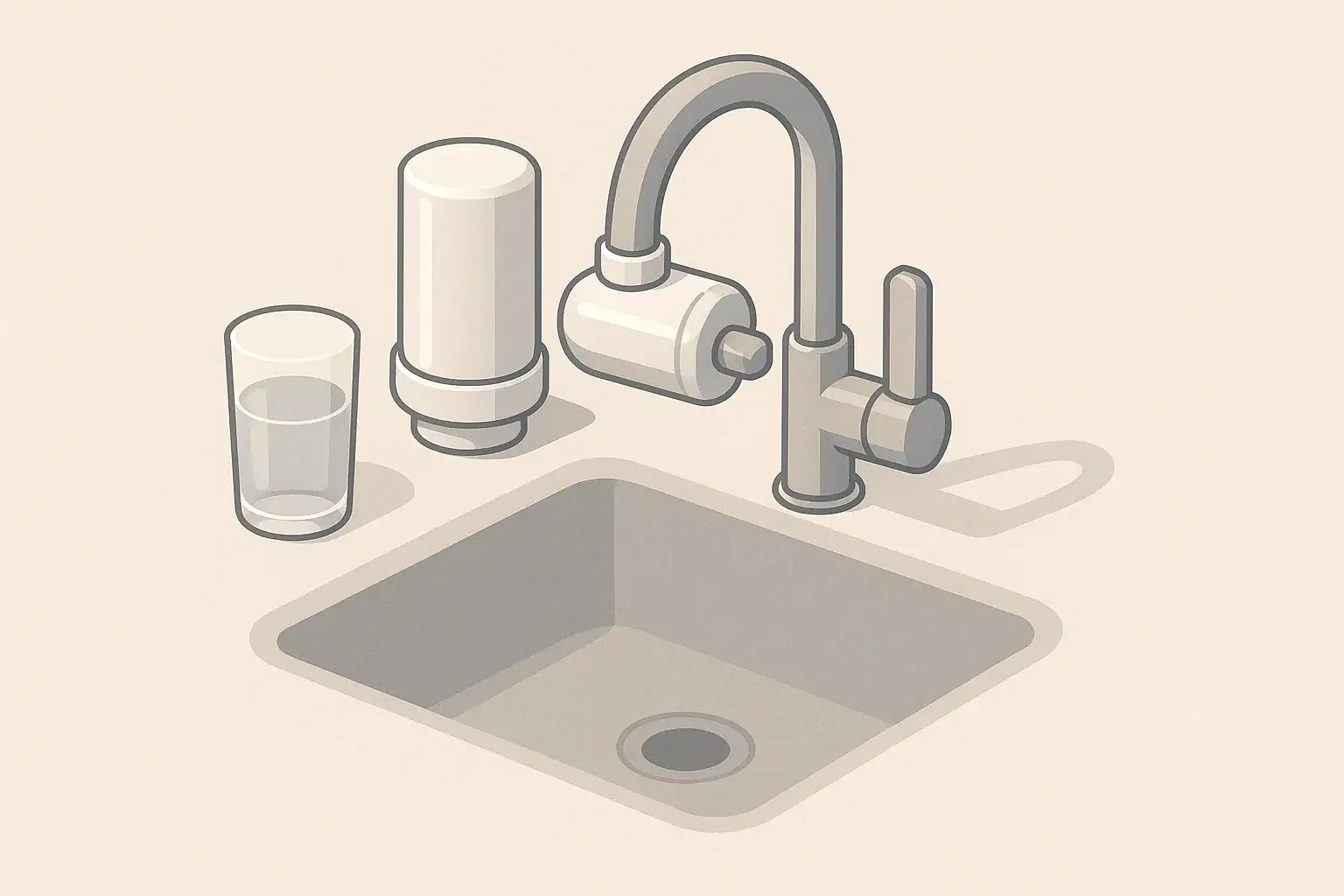
Faucet-mount filters are often chosen because they are compact, renter-friendly, and easy to attach to many kitchen faucets. But if your sink already has low water pressure or slow flow, the wrong model can feel frustrating from the first day.
A faucet-mounted filter adds resistance as water passes through filter media, fittings, and a small outlet. That resistance is normal. The goal is to choose a filter that matches your faucet, water conditions, and daily use without making the sink impractical.
Before buying, it helps to separate three issues that people often describe as “low pressure”: actual home water pressure, faucet flow restriction, and filter-related pressure drop. Each one has different causes and different buying implications.
Why Low Pressure Matters With Faucet-Mount Filters
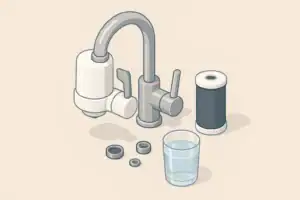
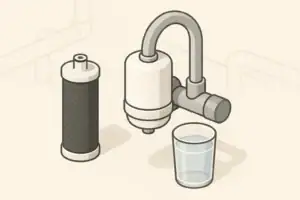
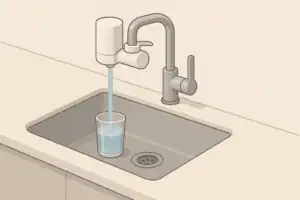
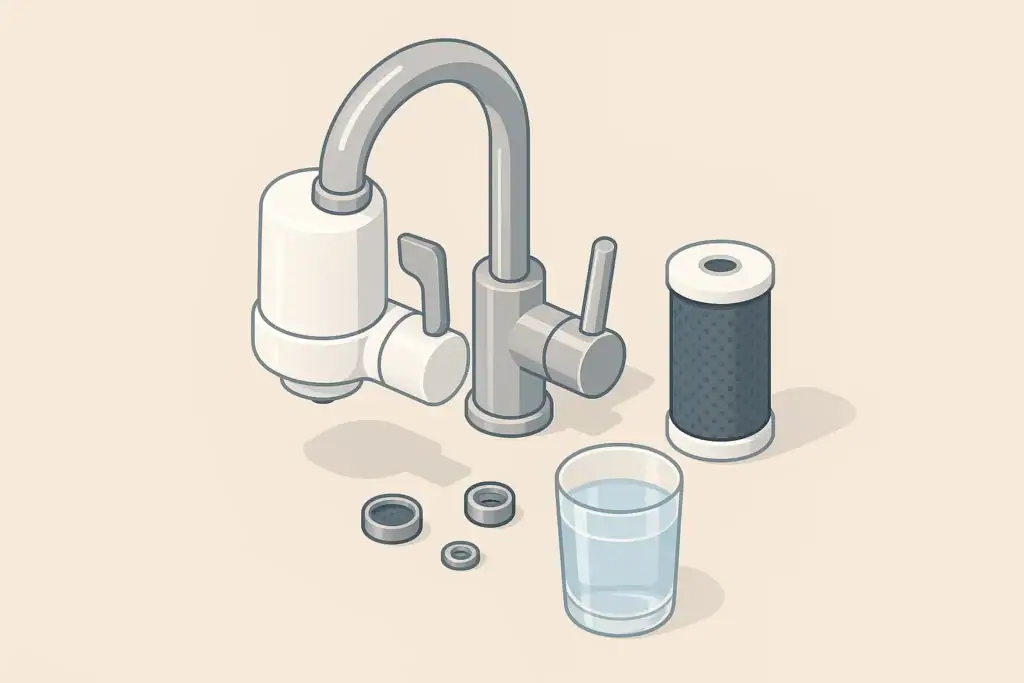
A faucet-mount filter connects directly to the end of a faucet. When switched to filtered mode, water is routed through a cartridge before it reaches your glass, kettle, or cooking pot. Most faucet filters use activated carbon, sometimes combined with other media, to reduce taste, odor, chlorine, and certain other substances depending on the cartridge design and testing.
Because the cartridge is small, it has limited surface area compared with many under-sink systems. If the media is dense, the cartridge is near the end of its life, or the incoming flow is already weak, the filtered stream can become noticeably slower.
This does not automatically mean the filter is defective. A slower filtered stream is expected to some degree. The question is whether the filtered flow is acceptable for your household’s routine.
Common signs the filter may feel too slow
- It takes too long to fill a coffee maker, kettle, or cooking pot.
- The unfiltered faucet flow is already weak before any filter is attached.
- The filtered stream drops sharply after only a short period of use.
- Flow changes noticeably when other fixtures are running.
- The faucet has a specialty design that does not accept standard adapters well.
If several of these apply, it is worth checking your sink setup before choosing a faucet-mounted option. A quick look at water pressure vs flow rate can also help you tell whether the problem is the plumbing or the filter itself.
First Confirm Whether the Problem Is Pressure or Flow
In everyday use, “pressure” and “flow” are often used interchangeably, but they are not the same. Pressure is the force moving water through the plumbing. Flow is the amount of water delivered over time. A faucet can have normal household pressure but still deliver low flow because of a clogged aerator, narrow waterway, partially closed valve, or restrictive fixture design.
For filter shopping, flow is usually the more practical number because it affects how long it takes to fill a container. Manufacturers may list a filtered flow rate, but those values are often based on specific test conditions. Your real-world flow can vary with water temperature, pressure, cartridge age, and feed water quality.
A simple non-plumbing check
You can do a basic flow check without modifying plumbing. Use the kitchen faucet in its normal unfiltered state, fill a container for a measured amount of time, and compare how much water was collected. This gives a general sense of whether the faucet itself is slow before adding a filter.
Also compare hot and cold water flow. Faucet-mount filters are generally used with cold water only, but a large difference between hot and cold may point to a fixture or supply issue rather than a filter issue.
If flow is suddenly much lower than it used to be, check simple maintenance items first, such as a dirty aerator or sediment caught at the faucet outlet. A helpful next step is reviewing faucet-mount filter compatibility before assuming any one model will solve the problem. Avoid unsafe plumbing changes or attempts to bypass pressure-control or backflow-related safety features.
Example values for illustration.
| Check | Why it matters | What to look for |
|---|---|---|
| Unfiltered faucet flow | Shows whether the sink is already slow | A steady stream that fills everyday containers in a reasonable time |
| Aerator condition | Debris can restrict flow before a filter is added | Clean screen, no visible mineral buildup or sediment |
| Faucet thread type | Adapters must seal securely | Standard removable aerator with compatible threads |
| Faucet style | Some designs do not accept faucet filters | Conventional fixed faucet rather than pull-down, sprayer, or unusual outlet |
| Cold-water use | Most cartridges are intended for cold water | Household routine supports using cold water for filtered mode |
| Cartridge age indicator | Old cartridges often reduce flow | Clear replacement schedule by time or gallons |
| Sink clearance | The filter housing takes up space | Enough room for washing dishes and filling tall containers |
Check Faucet Compatibility Before You Compare Filters
Compatibility is one of the most important buying checks for faucet-mount filters. These units usually attach where the aerator screws onto the faucet. If your faucet does not have a removable aerator or has a nonstandard outlet, a faucet-mounted filter may not be suitable.
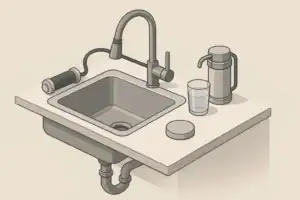
Many pull-down, pull-out, handheld sprayer, and designer faucets are not good candidates for typical faucet-mount filters. The filter may not attach securely, may interfere with the faucet’s movement, or may place extra weight on parts not designed to support it.
Look at the faucet end, not just the sink
Two sinks that look similar can have different aerator threads. Some faucets have outside threads, some have inside threads, and some use recessed or specialty aerators. Faucet filters commonly include adapters, but adapters are not universal.
Before buying, check whether the aerator can be removed by hand or with a basic aerator key supplied for that faucet. Do not force parts that are stuck or corroded. If the aerator cannot be removed safely, a different filtration format may be more practical.
Consider the weight and clearance
A faucet-mounted filter adds weight to the faucet outlet. On a sturdy fixed faucet, this is usually manageable. On a lightweight or flexible faucet, the added weight may be inconvenient.
Also consider where the filter body will sit. It may reduce sink workspace, bump into large pots, or make it harder to use a shallow sink. If your sink is already tight, a countertop or under-sink option may be easier to live with.
Understand How Filter Media Affects Flow
Most faucet-mount filters rely mainly on activated carbon. Carbon is valued in home water filtration because it can improve taste and odor and reduce chlorine in many municipal water supplies. Some cartridges include additional media or fine screens to target specific concerns.
The denser and more specialized the cartridge, the more resistance it may create. That is not necessarily bad; filtration requires contact time. But it means you should compare expected flow with realistic use rather than assuming every faucet filter will feel the same.
Carbon block versus granular carbon
Carbon block cartridges are made from finely powdered carbon formed into a solid structure. They can provide consistent contact with water, but they may also create more pressure drop than looser media, depending on design.
Granular activated carbon allows water to pass through a bed of carbon granules. It may offer less resistance in some designs, but performance depends on cartridge construction, contact time, and how water flows through the media.
The important point is not that one format is always better. Instead, look for a cartridge that has been tested for the substances you care about and has a flow rate that fits your expectations.
Fine filtration can slow faster in sediment-heavy water
If your water carries visible sediment, rust particles, or frequent debris from older plumbing, a small faucet cartridge can clog sooner. This is more common in some well-water situations or older building plumbing, but it can happen in municipal systems after repairs or main flushing.
A faucet-mount filter is not usually the best first-stage sediment solution for a whole home. If sediment is a recurring issue, the filter may need frequent replacement, and another filtration format may be more appropriate.
Match Expectations to Your Sink and Daily Use
A faucet-mount filter is best suited for point-of-use drinking and cooking water in moderate amounts. It is not designed to deliver the same high flow as an unfiltered faucet, and it is usually not the best choice for filling very large containers many times per day.
Think about what you will use filtered water for most often. A slow filtered stream may be acceptable for drinking glasses and a small coffee maker. It may be frustrating for large pasta pots, humidifier tanks, or frequent batch cooking.
Estimate your daily filtered water need
You do not need an exact calculation, but a rough estimate helps. Consider:
- Drinking water for each person in the household
- Coffee, tea, and ice-making routines
- Cooking water for rice, soup, pasta, and vegetables
- Pet water bowls, if you choose to fill them with filtered water
- How often several people need water at the same time
If a household relies heavily on filtered water throughout the day, a faucet-mounted unit can still work, but cartridge life and flow rate become more important.
Understand filtered mode versus bypass mode
Most faucet-mount filters have a switch or lever that lets you choose filtered or unfiltered water. This is useful because you do not need to filter water for handwashing, rinsing dishes, or cleaning the sink.
Using bypass mode for non-drinking tasks can help preserve cartridge life and maintain flow longer. However, the bypass should be used only as designed by the manufacturer. Do not alter the unit to force higher flow through the cartridge.
Installation and Maintenance Checks That Protect Flow
Even a well-matched faucet filter can perform poorly if it is installed incorrectly or neglected. Small leaks, tilted adapters, trapped debris, and old cartridges can all reduce performance. If flow changes after setup, low pressure after installing a filter is usually a better clue than the product spec sheet alone.
Install only on a compatible faucet
Follow the product instructions for adapter selection, gasket placement, and hand-tightening. Over-tightening can damage threads or gaskets, while under-tightening can cause leaks. If the unit does not sit straight or seal properly, do not keep using it while hoping it will improve.
After installation, run water according to the cartridge startup directions. Many carbon filters require a short flush to remove loose carbon fines and prepare the cartridge for regular use.
Replace cartridges on schedule
Cartridge life is commonly stated in gallons, months, or both. The right interval depends on usage and water quality. A household that uses several gallons of filtered water per day will reach the gallon rating sooner than a one-person apartment.
Flow that declines gradually can be a sign that the cartridge is loading with particles or reaching the end of its useful life. Taste and odor changes may also suggest replacement is due, but they should not be the only maintenance signal.
Watch for leaks and stress on the faucet
Because a faucet filter is exposed and moves with the faucet outlet, it should be checked periodically. Look for drips around adapters, cracks in plastic housings, and looseness at the connection point. Stop using the unit if it leaks or appears damaged.
In rentals or apartments, also consider lease rules and building maintenance policies. A faucet-mount filter is usually less invasive than under-sink plumbing work, but it still must attach safely and be removable without damage.
When a Faucet-Mount Filter May Not Be the Best Fit
Faucet-mount filters are convenient, but they are not the right answer for every low-pressure sink. If your faucet is incompatible, the stream is already very weak, or you need filtered water in larger volumes, another format may be more practical.
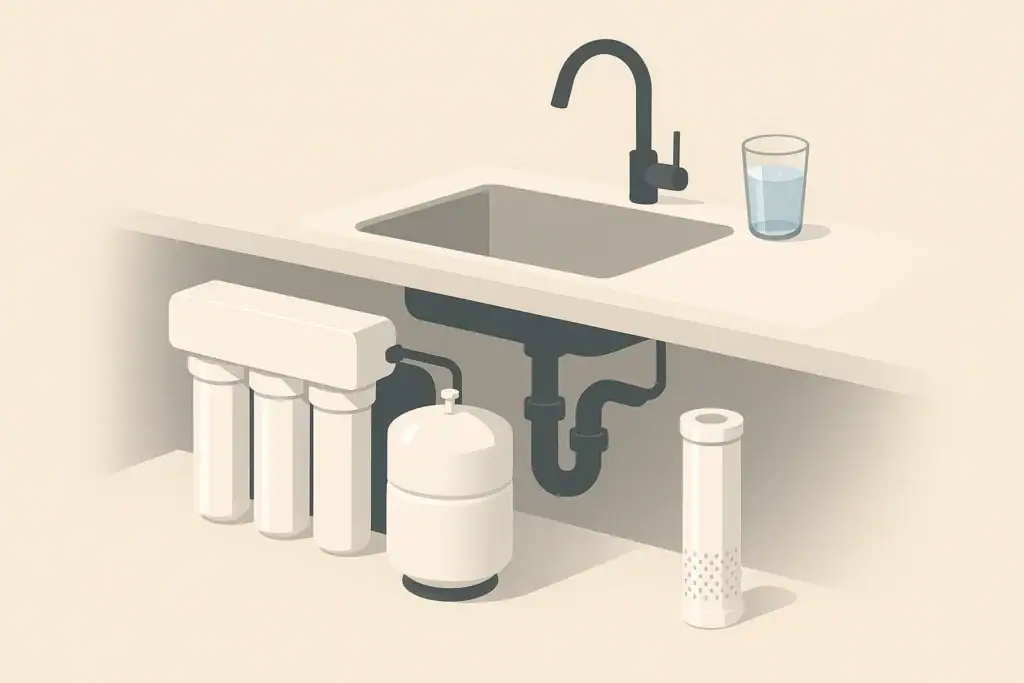
Under-sink carbon systems often provide a separate filtered-water faucet and larger cartridges. They may offer better flow and longer cartridge life, but installation is more involved. Countertop filters can work for some renters because they connect to the faucet with a diverter, though compatibility still matters. Pitchers and dispensers avoid faucet pressure issues but require refilling and refrigerator or counter space.
Consider water quality goals
Choose the filtration type based on what you want to address. For taste and odor from chlorine, carbon-based options are common. For concerns such as lead, PFAS, VOCs, or other specific substances, look for products tested to relevant standards for those reduction claims. Standards and certifications should be read carefully because a filter is tested for specific claims, not for every possible contaminant.
If you use private well water, a faucet filter should not be treated as a substitute for appropriate well testing and any needed treatment. Well water can vary widely, and low flow may be related to sediment, pressure equipment, or plumbing conditions beyond the filter itself.
Example values for illustration.
| Observation | Possible meaning | Buying implication |
|---|---|---|
| Strong unfiltered flow | Faucet supply is likely adequate | A faucet-mount filter may be reasonable if compatible |
| Weak unfiltered flow | Restriction may already exist | Fix basic faucet issues before judging filter options |
| Flow drops only in filtered mode | Normal cartridge resistance or clogging | Compare rated flow and replacement schedule |
| Flow gets worse over weeks | Cartridge may be loading with particles | Expect more frequent cartridge changes |
| Flow changes when other fixtures run | Shared plumbing demand may affect delivery | Filtered stream may vary during busy water use |
| Filter leaks at adapter | Thread or gasket mismatch may be present | Do not use until connection is corrected safely |
| Large-volume filling is common | Small cartridge may feel inconvenient | Consider under-sink, countertop, or dispenser formats |
Related guides: Faucet-Mount Filter Compatibility: How to Check Your Faucet Type • Faucet-Mount vs Under-Sink Filters: Convenience vs Performance • Troubleshooting a Faucet-Mount Filter with Slow Flow • How to Install a Faucet-Mount Filter Without Leaks
Final Pre-Purchase Checklist
Before buying a faucet-mount filter for a low-pressure or slow-flow sink, focus on the practical details that affect daily use.
- Confirm that your faucet has a removable, compatible aerator.
- Check the unfiltered faucet flow before adding any filter.
- Make sure the filter is intended for cold-water use and your routine supports that.
- Compare the listed filtered flow rate, treating it as a general reference rather than a guarantee.
- Review cartridge life in both gallons and months.
- Look for testing or certification claims that match your water quality goals.
- Consider sink clearance, faucet strength, and ease of switching between filtered and unfiltered water.
- Choose another format if the faucet is incompatible or your filtered-water demand is high.
A faucet-mount filter can be a practical choice when the faucet is compatible, the household needs are moderate, and the expected flow is acceptable. If low flow is already a daily frustration, checking these points first can prevent a purchase that technically fits but does not fit how you use the sink.
Frequently asked questions
Will a faucet-mount filter make my water pressure worse?
It can reduce flow somewhat because water must pass through the cartridge, but that is normal. If the stream becomes very slow, the faucet may already have a flow restriction or the cartridge may be too dense or overdue for replacement.
How do I know if my faucet is compatible?
Check whether the faucet has a removable aerator and standard threads. Pull-down, pull-out, sprayer, and specialty faucets often do not work well with faucet-mounted filters.
What is the best filter type for low-flow sinks?
The best choice depends on your faucet and how much filtered water you use. If the sink is already slow or the faucet is incompatible, an under-sink system, countertop filter, or pitcher may be easier to use.
Why does filtered water slow down over time?
Cartridges collect particles and gradually fill with filtered material use. As that happens, resistance rises and flow can drop, which is one sign that replacement is due.
Can I use a faucet-mount filter with hot water?
Most are intended for cold water only. Using hot water can affect the cartridge and may go against the manufacturer’s instructions.
Do I need to test my water before buying?
Testing is helpful if you want to address specific water concerns, such as sediment or certain contaminants. If your main issue is slow flow, first check the faucet condition and compatibility before buying a filter.
- NSF/ANSI standards explained (42/53/401/58)
- Clear trade-offs: pitcher vs faucet vs under-sink vs RO
- Maintenance planning: cost per gallon and replacement cadence